Role of crystal structure on CO2 capture by limestone derived CaO subjected to carbonation/recarbonation/calcination cycles at Ca-looping conditions

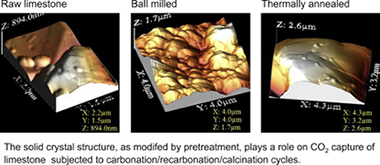
Large scale pilot plants are currently demonstrating the feasibility of the Calcium-looping (CaL) technology built on the multicyclic calcination/carbonation of natural limestone for post-combustion and precombustion CO2 capture. Yet, limestone derived CaO exhibits a drop of conversion when subjected to multiple carbonation/calcination cycles, which lessens the efficiency of the technology. In this paper we analyze…

Multicyclic conversion of limestone at Ca-looping conditions: The role of solid-sate diffusion controlled carbonation

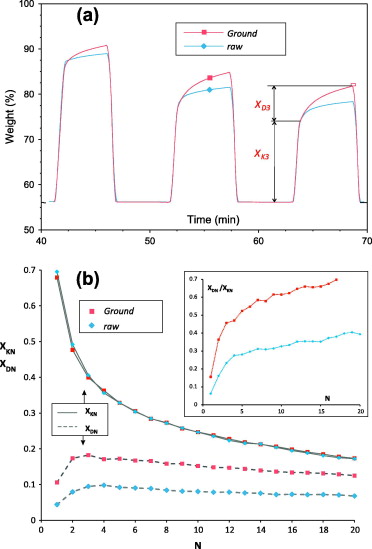
Limestone derived CaO conversion when subjected to multiple carbonation/calcination cycles is a subject of interest currently fueled by several industrial applications of the so-called Ca-looping (CaL) technology. The multicyclic CaO conversion at Ca-looping conditions exhibits two main features as demonstrated by thermogravimetric analysis (TGA). On one hand, carbonation occurs by two well differentiated phases: a…

A study of the optical properties of metal-doped polyoxotitanium cages and the relationship to metal-doped titania

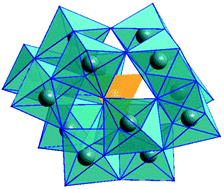
To what extent the presence of transition metal ions can affect the optical properties of structurally well-defined, metal-doped polyoxotitanium (POT) cages is a key question in respect to how closely these species model technologically important metal-doped TiO2. This also has direct implications to the potential applications of these organically-soluble inorganic cages as photocatalytic redox systems…

The role of boron oxide and carbon amounts in the mechanosynthesis of ZrB2–SiC–ZrC nanocomposite via a self-sustaining reaction in the zircon/magnesium/boron oxide/graphite system

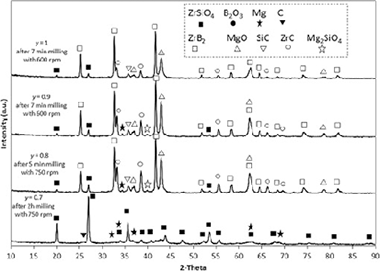
Herein, ZrSiO4/B2O3/Mg/C system was used to synthesize a ZrB2-based composite by means of a high energy ball milling process. A mechanically induced self-sustaining reaction was achieved in this system. A nanocomposite powder of ZrB2–SiC–ZrC was prepared with an ignition time of approximately 6 min of milling. The role of the stoichiometric amounts of B2O3 and…

The Flexible Surface Revisited: Adsorbate-Induced Reconstruction, Homocoupling, and Sonogashira Cross-Coupling on the Au(100) Surface

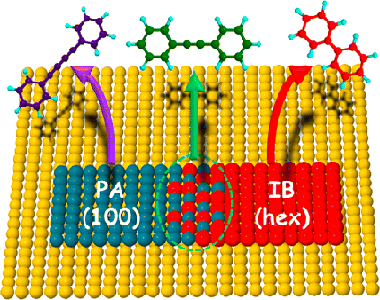
Phenylacetylene (PA) and iodobenzene (IB) are prototypical reactants in Sonogashira cross-coupling. Their adsorption behavior and reactivity on the Au(100) surface were studied by STM, temperature-programmed desorption and reaction, and DFT calculations that included the effect of dispersion forces. The two species exhibited very different behavior. Thus, even at 200 K, PA rearranged Au surface atoms…

A General Perspective of the Characterization and Quantification of Nanoparticles: Imaging, Spectroscopic, and Separation Techniques

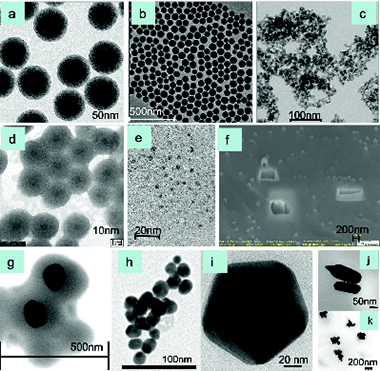
This article gives an overview of the different techniques used to identify, characterize, and quantify engineered nanoparticles (ENPs). The state-of-the-art of the field is summarized, and the different characterization techniques have been grouped according to the information they can provide. In addition, some selected applications are highlighted for each technique. The classification of the techniques…

Materials characteristics of Roman and Arabic mortars and stuccoes from The Patio de Banderas in the Real Alcazar of Seville (SPAIN)

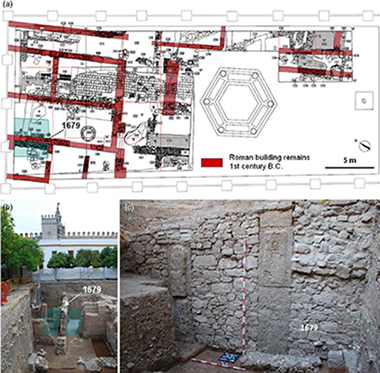
This study discusses the materials and traditional knowledge used in the manufacture and application of lime mortars and stuccoes by Romans and Arabs in Seville (southern Iberian Peninsula). All of the samples studied contain calcite as a binder, combined with aggregates based on river sand from the filling materials of the Guadalquivir River’s depression, located…