One-Step Synthesis and Polyacrylic Acid Functionalization of Multifunctional Europium-Doped NaGdF4 Nanoparticles with Selected Size for Optical and MRI Imaging

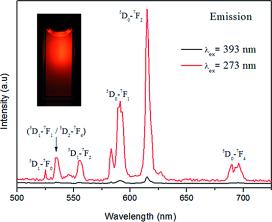
Multifunctional Eu:NaGdF4 nanospheres functionalized with polyacrylic acid (PAA) polymer have been prepared for the first time by a simple one-pot method that consists of a homogeneous precipitation reaction at 120 °C. The size of the nanospheres, which were polycrystalline and crystallized into a hexagonal structure, could be altered in the 60–95 nm range by adjusting the…

Improvement of Vickers hardness measurement on SWNT/Al2O3 composites consolidated by spark plasma sintering

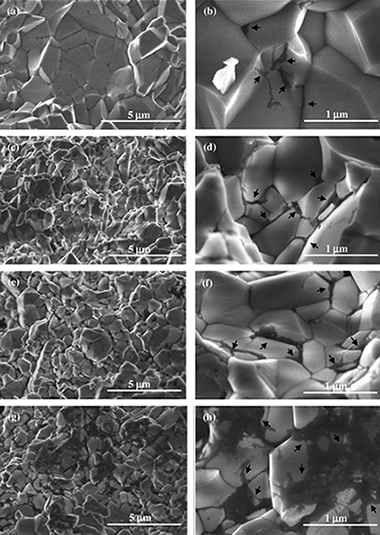
Dense alumina composites with different carbon nanotube content were prepared by colloidal processing and consolidated by Spark Plasma Sintering (SPS). Single-wall carbon nanotubes (SWNTs) were distributed at grain boundaries and also into agglomerates homogeneously dispersed. Carrying out Vickers hardness tests on the cross-section surfaces instead of top (or bottom) surfaces has shown a noticeable increase…

Role of precalcination and regeneration conditions on postcombustion CO2 capture in the Ca-looping technology

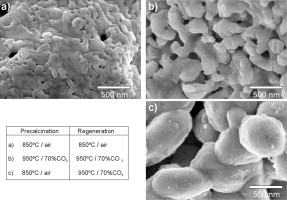
The Ca-looping (CaL) technology is already recognized as a potentially viable method to capture CO2 from postcombustion gas in coal fired power plants. In this process, CO2 is chemisorbed by CaO solid particles derived from precalcination of cheap and widely available natural limestone. The partially carbonated solids are regenerated by calcination under high CO2 concentration.…

Heterogeneous selective oxidation of fatty alcohols: Oxidation of 1-tetradecanol as a model substrate

Selective oxidation of fatty alcohols, i.e., linear long-chain alkanols, has been scarcely investigated to date, despite its potential application in high value chemical’s production. We report for the first time the liquid phase heterogeneous oxidation of 1-tetradecanol, used as a model molecule for fatty alcohols, according to green chemistry principles by using a Au/CeO2-Al2O3 catalyst…

Quantification and comparison of the reaction properties of FEBEX and MX-80 clays with saponite: Europium immobilisers under subcritical conditions

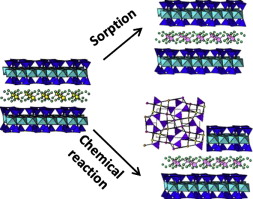
The evaluation of the retention mechanisms in FEBEX and MX-80 bentonites, selected as reference materials to construct engineered barriers, carries major implications in the safe storage of immobilisation capacity through a recently discovered chemical retention mechanism and the structural analysis of the reaction products. Hydrothermal treatments were accomplished with immobilisation capacity through a recently discovered…

Chemistry, nanostructure and magnetic properties of Co-Ru-B-O nanoalloys

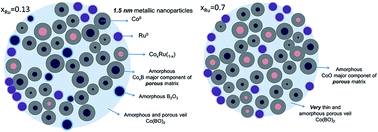
In our previous works, Co–B–O and Co–Ru–B–O ultrafine powders with variable Ru content (xRu) were studied as catalysts for hydrogen generation through sodium borohydride hydrolysis. These materials have shown a complex nanostructure in which small Co–Ru metallic nanoparticles are embedded in an amorphous matrix formed by Co–Ru–B–O based phases and B2O3. Catalytic activity was correlated…

Ceramic Barrier Layers for Flexible Thin Film Solar Cells on Metallic Substrates: A Laboratory Scale Study for Process Optimization and Barrier Layer Properties

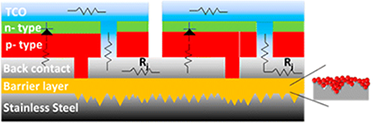
Flexible thin film solar cells are an alternative to both utility-scale and building integrated photovoltaic installations. The fabrication of these devices over electrically conducting low-cost foils requires the deposition of dielectric barrier layers to flatten the substrate surface, provide electrical isolation between the substrate and the device, and avoid the diffusion of metal impurities during…

Properties of mechanochemically synthesized nanocrystalline Bi2S3 particles

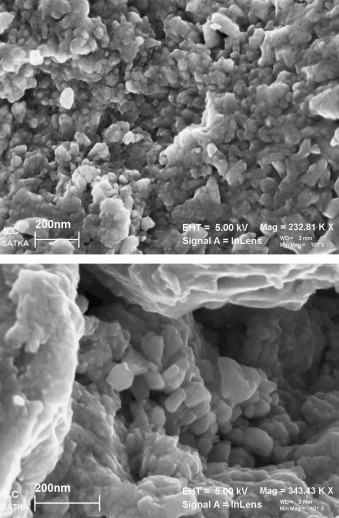
Nanocrystalline Bi2S3 particles have been synthesized from Bi and S powders by high-energy milling in a planetary mill. Structural and microstructural characterization of the prepared particles, including phase identification, specific surface area measurement and particle size analysis has been carried out. The optical properties were measured by spectroscopic methods and the structural stability up to 500 °C…