Additive-free superhard B4C with ultrafine-grained dense microstructures

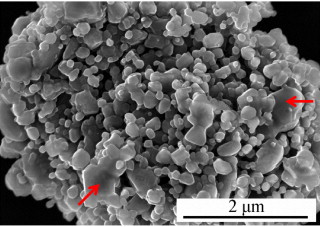
A unique combination of high-energy ball-milling, annealing, and spark-plasma sintering has been used to process superhard B4C ceramics with ultrafine-grained, dense microstructures from commercially available powders, without sintering additives. It was found that the ultrafine powder prepared by high-energy ball-milling is hardly at all sinterable, but that B2O3 removal by gentle annealing in Ar provides…

Osteoblasts Interaction with PLGA Membranes Functionalized with Titanium Film Nanolayer by PECVD. In vitro Assessment of Surface Influence on Cell Adhesion during Initial Cell to Material Interaction

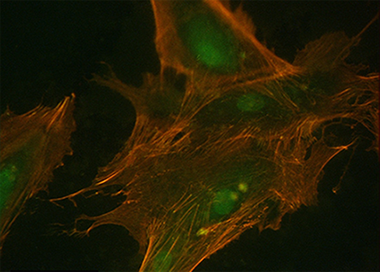
New biomaterials for Guided Bone Regeneration (GBR), both resorbable and non-resorbable, are being developed to stimulate bone tissue formation. Thus, the in vitro study of cell behavior towards material surface properties turns a prerequisite to assess both biocompatibility and bioactivity of any material intended to be used for clinical purposes. For this purpose, we have…

Mineralogical Characterization of the Polychrome in Cultural Heritage Artifacts (Antiquity to Date) from Southern Spain Using Micro-Raman Spectroscopy and Complementary Techniques

This work reports on the use of micro-Raman spectroscopy for the characterization of materials used for producing the polychrome in cultural heritage artifacts from southern Spain. The micro-Raman technique was applied for the characterization of several types of artworks or for cross-sections from these works, which were produced along different historical epochs. This technique was…

An investigation on the formation mechanism of nano ZrB2 powder by a magnesiothermic reaction

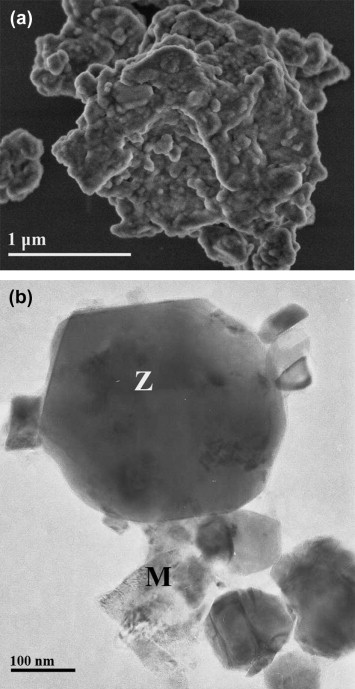
Nanocrystalline zirconium diboride (ZrB2) powder was produced by mechanochemistry from the magnesiothermic reduction in the Mg/ZrO2/B2O3 system. The use of high-energy milling conditions was essential to induce a mechanically induced self-sustaining reaction (MSR) and significantly reduce the milling time required for complete conversion. Under these conditions, it was found that the ignition time for ZrB2…

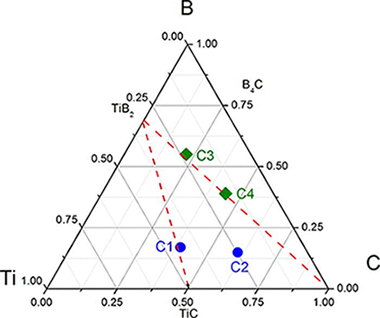
Mechanical and phase stability of TiBC coatings up to 1000 degrees C

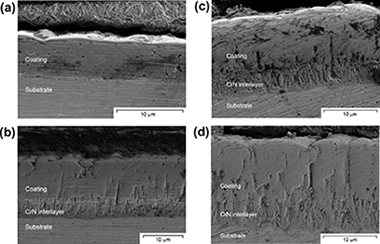
TiBC coatings with different phase compositions (nanocrystalline TiBxCy or TiB2 phases mixed or not with amorphous carbon, a-C) were prepared by magnetron sputtering. These coatings were comparatively studied in terms of phase stability after thermal annealing at 250, 500, 750, and 1000 °C in argon using Raman and x-ray absorption near-edge spectroscopy techniques. The main differences…

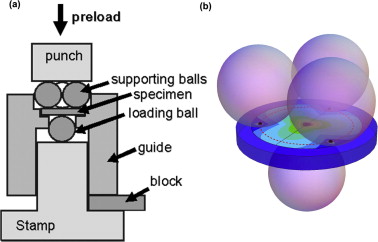
Analysis on the mechanical strength of WC-Co cemented carbides under uniaxial and biaxial bending

The mechanical strength of three WC-Co grades was determined and compared under uniaxial and biaxial bending. Uniaxial four-point bending was conducted on bar-shaped specimens; biaxial testing was performed on discs using the ball-on-three-balls (B3B) method. Strength results were analysed within the frame of the Weibull theory. Differences in characteristic strength between uniaxial and biaxial bending…

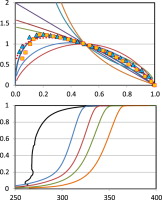
Enhanced general analytical equation for the kinetics of the thermal degradation of poly(lactic acid)/montmorillonite nanocomposites driven by random scission

An enhanced general analytical equation has been developed in order to evaluate the kinetic parameters of the thermal degradation of nanocomposites, composed of poly(lactic acid) (PLA) and organo-modified montmorillonite (OMMT) nanoparticles. This improvement has consisted of replacing the n-order conversion function by a modified form of the Sestak–Berggren equation f(α) = c (1 − α)nαm…

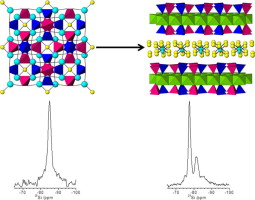
A new route of synthesis of Na-Mica-4 from sodalite

Synthesis of Na-Mica-4 has been achieved by a “mix and calcine” method using sodalite and magnesium fluoride as the only precursors. Previous research found sodalite as a key intermediate reaction product in the formation of Na-Mica-4 when the NaCl melt method was employed. Similarities in structure, chemical composition and cation distribution in products using the…

Effect of carbonization temperature on the microplasticity of wood-derived biocarbon

The uniaxial compression strength under stepped loading and the 325-nm-stepped deformation rate of biocarbon samples obtained by carbonization of beech wood at different temperatures in the 600–1600°C range have been measured using high-precision interferometry. It has been shown that the strength depends on the content of nanocrystalline phase in biocarbon. The magnitude of deformation jumps…