Impact of the biogas impurities on the quality of the precipitated calcium carbonate in the regenaration stage of a chemical absorption biogas upgrading unit

Combining Carbon Capture and Storage (CCS) with producing competitive secondary raw materials is key to decarbonizing industry and reducing resource extraction. Biogas upgrading to biomethane stand out as an alternative, but a significant gap remains in integrating this process within a circular economy framework. This issue has been recently addressed by a process that integrates…

Analysis of the impact of remote oxygen plasma treatment on the surface chemistry and electrochemical properties of graphite felt electrodes for redox flow batteries

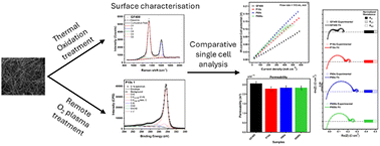
The effects of a remote oxygen plasma (ROP) treatment on the surface of commercial graphite felts were investigated and compared against a conventional thermal treatment. In contrast to methodologies where the sample is directly exposed to the plasma, ROP allows for a high control of sample-plasma interaction, thereby avoiding extensive etching processes on the fibre…

Microstructural and mechanical properties of TiN/CrN and TiSiN/CrN multilayer coatings deposited in an industrial-scale HiPIMS system: Effect of the Si incorporation

Surface engineering through the deposition of advanced coatings, particularly multilayer coatings has gained significant interest for enhancing the performance of coated parts. The incorporation of Si into TiN coatings has shown promise for improving hardness, oxidation resistance, and thermal stability, while high-power impulse magnetron sputtering (HiPIMS) has emerged as a technique to deposit coatings with…

Strong Grain Boundary Passivation Effect of Coevaporated Dopants Enhances the Photoemission of Lead Halide Perovskites

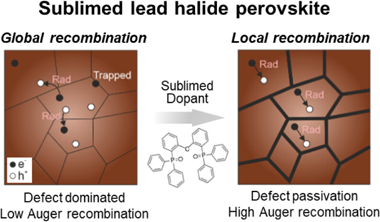
Herein, we demonstrate that coevaporated dopants provide a means to passivate buried interfacial defects occurring at perovskite grain boundaries in evaporated perovskite thin films, thus giving rise to an enhanced photoluminescence. By means of an extensive photophysical characterization, we provide experimental evidence that indicate that the codopant acts mainly at the grain boundaries. They passivate…

Application of novel Zn-MIL53(Fe) for removal of micropollutants using an activated peroxymonosulphate system

Novel zinc-doped Metal-Organic Framework based on MIL53(Fe) (Zn-MIL53(Fe)) has been successfully synthesised in one-step, exhibiting dual applications as adsorbent and catalyst. Initially, the adsorption capacity of MIL53(Fe) and Zn-MIL53(Fe) for removing Rhodamine B was assessed through kinetic and isotherm studies. The bimetallic variant exhibited superior performance, showcasing enhanced adsorption capabilities, particularly in the context of…

A Circular Economy Perspective: Recycling Wastes through the CO2 Capture Process in Gypsum Products. Fire Resistance, Mechanical Properties, and Life Cycle Analysis

In recent years, the implementation of CO2 capture systems has increased. To reduce the costs and the footprint of the processes, different industrial wastes are successfully proposed for CO2 capture, such as gypsum from desulfurization units. This gypsum undergoes an aqueous carbonation process for CO2 capture, producing an added-value solid material that can be valorized.…

Controlling copper location on exchanged MOR-type aluminosilicate zeolites for methanol carbonylation: In situ/operando IR spectroscopic studies

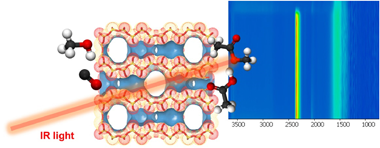
Replacing homogeneous catalytic processes by heterogeneous routes based on the utilization of solid catalysts is of great interest from an environmental point of view. Owing to their genuine pore structure, zeolites such as mordenites (MOR) have emerged as game-changing materials to enable the heterogenization of catalytic processes including methanol carbonylation. Cu-exchange zeolites take the edge over pristine zeolites, leading to enhanced…

A sustainable lecithin-based ligand for the bio-functionalization of iron and hybrid metal organic frameworks (MOFs) nanoparticles with the sugar mannose

The functionalization of nanoparticles with specific ligands, such as antibodies, peptides, and small molecules, plays a critical role in achieving targeted delivery, enhancing biocompatibility, and controlling drug release. However, to date, practically no attention has been paid to the design of green ligands. Herein, an innovative approach to develop a sustainable ligand for nanoparticle functionalization…

Redefining the Symphony of Light Aromatic Synthesis Beyond Fossil Fuels: A Journey Navigating through a Fe-Based/HZSM-5 Tandem Route for Syngas Conversion

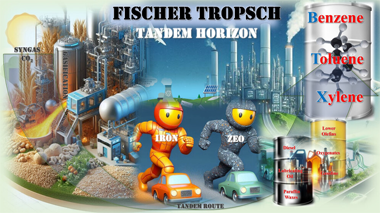
The escalating concerns about traditional reliance on fossil fuels and environmental issues associated with their exploitation have spurred efforts to explore eco-friendly alternative processes. Since then, in an era where the imperative for renewable practices is paramount, the aromatic synthesis industry has embarked on a journey to diversify its feedstock portfolio, offering a transformative pathway…