MoS2 2D materials induce spinal cord neuroinflammation and neurotoxicity affecting locomotor performance in zebrafish

MoS2 nanosheets belong to an emerging family of nanomaterials named bidimensional transition metal dichalcogenides (2D TMDCs). The use of such promising materials, featuring outstanding chemical and physical properties, is expected to increase in several fields of science and technology, with an enhanced risk of environmental dispersion and associated wildlife and human exposures. In this framework, the…

Preparation of Geopolymeric Materials from Industrial Kaolins, with Variable Kaolinite Content and Alkali Silicates Precursors

In the present work, the development of geopolymeric materials with Na or K based on industrial kaolin samples, with variable kaolinite content and alkaline silicates, is studied. XRF, XRD, FTIR and SEM-EDS have been used as characterization techniques. Three ceramic kaolin samples, two from Algeria and one from Charente (France), have been considered. In particular,…

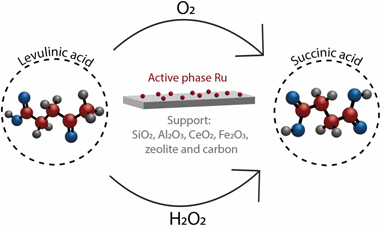
Levulinic to succinic acid transformation over Ru based catalysts

In this work ruthenium based catalysts are tested as catalytic systems for the selective oxidation of levulinic to succinic acid. Very different in nature supports have been chosen in order to elucidate the effect of their textural and acidic properties on the final catalytic activity. The influence of Ru particle size is also discussed and proposed as one of the key factors. Medium…

Direct Laser Writing: From Materials Synthesis and Conversion to Electronic Device Processing

Direct Laser Writing (DLW) has been increasingly selected as a microfabrication route for efficient, cost-effective, high-resolution material synthesis and conversion. Concurrently, lasers participate in the patterning and assembly of functional geometries in several fields of application, of which electronics stand out. In this review, recent advances and strategies based on DLW for electronics microfabrication are…

Reforming of biomass-derived producer gas using toluene as model tar: Deactivation and regeneration studies in Ni and K-Ni catalysts

Within the syngas production from biomass gasification, tar removal constitutes a chief issue to overcome for advanced catalytic systems. This work investigates the performance of Ni and Ni-K catalysts for reforming of derived-biomass producer gas using toluene as model tar. At 750 degrees C and 60Lg(-1)h(-1), the stability test (70 h) revealed stable performances (CO2, CH4 and C7H8 conversions of 60, 95 and 100%, correspondingly) uniquely for the Ni-K catalyst. Although the efficient protection towards coking…

Unlocking archaeological data online via the PEPAdb (Prehistoric Europe’s Personal Adornment Database) initiative for Open Science

PEPAdb (Prehistoric Europe’s Personal Adornment Database) is a long-term, open-ended project that aims to improve access to archaeological data online. Its website (https://pepadb.us.es) publishes and analyses datasets about prehistoric personal adornment, drawing on the results of various research projects and bibliographic references.

Synergistic Effect of He for the Fabrication of Ne and Ar Gas-Charged Silicon Thin Films as Solid Targets for Spectroscopic Studies

Sputtering of silicon in a He magnetron discharge (MS) has been reported as a bottom-up procedure to obtain He-charged silicon films (i.e., He nanobubbles encapsulated in a silicon matrix). The incorporation of heavier noble gases is demonstrated in this work with a synergistic effect, producing increased Ne and Ar incorporations when using He–Ne and He–Ar…

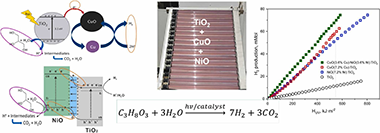
H2 production based on a ternary mixture of commercial CuO-NiO-TiO2 in a solar pilot plant

Glycerol is a by-product in biodiesel production (in the range of g·L−1), so its photoreforming by photocatalysis is a way of valorising it. TiO2 in photocatalysis has been widely studied, although its efficiency is limited by the high energy band gap, and the electron-hole recombination. Its combination with different semiconductors should improve charge separation, extending also…