Optimising anode supported BaZr1-xYxO3-δ electrolytes for solid oxide fuel cells: Microstructure, phase evolution and residual stresses analysis

Yttrium-doped BaZrO3 is a promising electrolyte for intermediate-temperature protonic ceramic fuel cells. In the anode-supported configuration, a slurry containing the electrolyte is deposited on the surface of a calcined porous anode and sintered. Differences in sintering behaviour and thermal expansion coefficients for the anode and electrolyte result in elastic residual stresses that can impact the long-term…

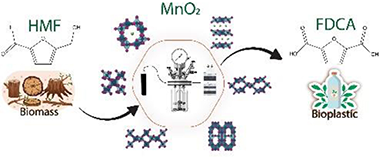
Highly Effective Non-Noble MnO2 Catalysts for 5-Hydroxymethylfurfural Oxidation to 2,5-Furandicarboxylic Acid

Noble metal-free catalyst or catalytic oxidation of 5-hydroxymethylfurfural into 2,5-furandicarboxylic acid are proposed in this study as a proposal to solve one of the great disadvantages of this reaction of using preferably noble metal-based catalysts. The catalytic activity of six MnO2 crystal structures is studied as alternative. The obtained results showed a strong connection between…

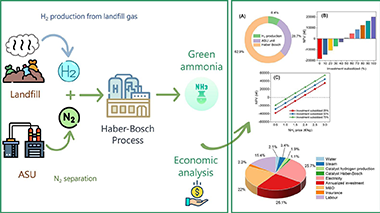
A profitability study for catalytic ammonia production from renewable landfill biogas: Charting a route for the next generation of green ammonia

This study introduces a novel techno-economic approach to renewable ammonia production using landfill biogas. The proposed process involves bio-hydrogen generation from landfill biogas, nitrogen production via air separation, and the Haber-Bosch process. Building on our prior research, which demonstrated the economic competitiveness of renewable hydrogen production from landfill gas, we extend our investigation to analyze the feasibility of producing…

Revalorization of Yerba Mate Residues: Biopolymers-Based Films of Dual Wettability as Potential Mulching Materials

Biodegradable mulching films are a very attractive solution to agronomical practices intended to achieve more successful crop results. And, in this context, the employment of agricultural and industrial food residues as starting material for their production is an alternative with economic and environmental advantages. This work reports the preparation of bilayer films having two different…

Surface Defect Engineered Nano-Cu/TiO2 Photocatalysts for Hydrogen Production

Surface defects engineered nano-Cu/TiO2 photocatalysts are synthesized through an easy and cost-effective microwave-assisted hydrothermal synthesis, mixing commercial P25 titania (TiO2) and oxalic acid (Ox), followed by 2.0 wt% Cu co-catalyst (labeled as Cu2.0) loading through in situ photodeposition during reaction. The hydrothermal treatment does not affect the catalyst crystalline structure, morphology, nor the surface area. However,…

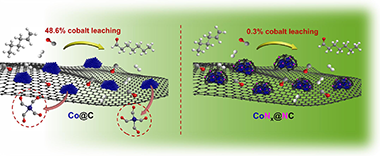
Developing and understanding Leaching-Resistant cobalt nanoparticles via N/P incorporation for liquid phase hydroformylation

The ultimate target in heterogeneous catalysis is the achievement of robust, resilient and highly efficient materials capable of resisting industrial reaction conditions. Pursuing that goal in liquid -phase hydroformylation poses a unique challenge due to carbon monoxide -induced metal carbonyl species formation, which is directly related to the formation of active homogeneous catalysts by metal…

Effect of olive-pruning fibres as reinforcements of alkali-activated cements based on electric arc furnace slag and biomass bottom ash

In this work, alkali-activated composites using electric arc furnace slag (50 wt%) and biomass bottom ash (50 wt%) were manufactured, adding olive-pruning fibres as reinforcement. The objective of adding fibres is to improve the flexural strength of composites, as well as to prevent the expansion of cracks as a result of shrinkage. For this reason,…