Enhanced extraction of bioactive compounds from tea waste for sustainable polylactide-based bioplastic applications in active food packaging

Active and sustainable food packaging materials were prepared through solvent casting, by blending tea waste (TW) extract rich in bioactive molecules with a neat polylactide (PLA) polymeric matrix. The optimization of tea waste extraction using a response surface methodology allowed achieving efficient yield and high phenolic content, which significantly enhanced the antioxidant properties of the…

Influence of the chemical activation with KOH/KNO3 on the CO2 adsorption capacity of activated carbons from pyrolysis of cellulose

Plant biomass is an attractive precursor to prepare activated carbons with high surface area for CO2 adsorption due to its low-cost and easy regeneration. Despite this interest, there are still remaining questions regarding the optimal processing conditions and the choice of activating agent. Moreover, since plant biomass shows a highly variable proportion of different biopolymers…

Electrochemical Deposition of Manganese Oxide on Paper-Based Laser-Induced Graphene for the Fabrication of Sustainable High-Energy-Density Supercapacitors

Laser-induced graphene (LIG) is widely used to fabricate microsupercapacitors (MSCs) on various sustainable substrates, such as wood, cork, and lignin. However, the fabrication of MSCs, especially high energy density devices on paper, has rarely been reported. In this work, LIG electrodes are fabricated on wax-coated paper, followed by electrochemical deposition of manganese oxide (MnO2). The…

Textile microfibers valorization by catalytic hydrothermal carbonization toward high-tech carbonaceous materials

Microplastics fibers shed from washing synthetic textiles are released directly into the waters and make up 35% of primary microplastics discharged to the aquatic environment. While filtration devices and regulations are in development, safe disposal methods remain absent. Herein, we investigate catalytic hydrothermal carbonization (HTC) as a means of integrating this waste (0.28 million tons…

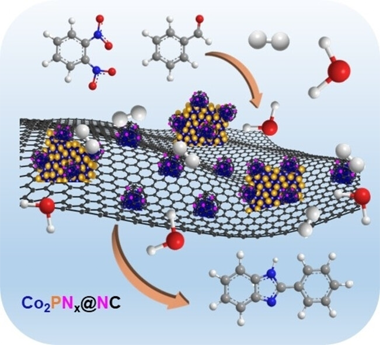
Multifunctional Heterogeneous Cobalt Catalyst for the One-Pot Synthesis of Benzimidazoles by Reductive Coupling of Dinitroarenes with Aldehydes in Water

The endeavor of sustainable chemistry has led to significant advancements in green methodologies aimed at minimizing environmental impact while maximizing efficiency. Herein, a straightforward synthesis of benzimidazoles by reductive coupling of o-dinitroarenes with aldehydes is reported for the first time in aqueous media while using a non-noble metal catalyst. This work demonstrates that the combination…

Decontamination and Circular Economy of Dredged Material and Mining Waters Using Adiabatic Sonic Evaporation and Crystallization (ASEC) Technology

Dredged material is a common environmental and economic issue worldwide. Tons of highly contaminated material, derived from cleaning the bottoms of bays and harbours, are stored until depuration. These volumes occupy huge extensions and require costly treatments. The Ria of Huelva (southwest Spain) receives additionally high metal contamination inputs from the Odiel and Tinto Rivers…