


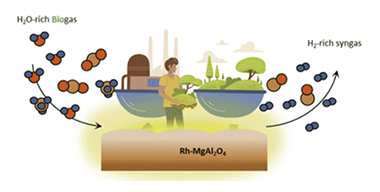
Monitoring the influence of steam on highly-active rhodium catalyst during the combined reforming of biogas by transient and steady-state operando spectroscopic studies

The impact derived from incorporating water into CH4/CO2 biogas stream for the generation of syngas was investigated over the Rh/MgAl2O4 catalyst using operando steady-state and transient DRIFT spectroscopy coupled with MS. The incorporation of steam resulted in improved CH4 conversion rates and attained syngas streams with higher H-2/CO ratios. It was demonstrated that in the presence of steam, the generation of CHxO species through the reaction of CO* with active *OH species is favored at the metal support surface. Besides, the enhanced resistance delivered by water molecules towards deactivating the coking phenomena was associated with easier…
Novel heterostructured NaTaO3/WO3 systems with improved photocatalytic properties for water decontamination under UV and Visible illumination

In this work, we present the preparation of NaTaO3/WO3 systems, a broad-bandgap and a narrow-bandgap semiconductor, respectively, for photocatalytic applications. The samples were prepared by two different methods, microwave-assisted and conventional hydrothermal method, with different NaTaO3/WO3 molar ratios. All samples were extensively characterized, and the photocatalytic behavior was studied in the degradation reaction of rhodamine B under…

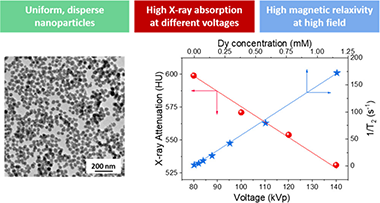
Nanoparticulated Bimodal Contrast Agent for Ultra-High-Field Magnetic Resonance Imaging and Spectral X-ray Computed Tomography

Bimodal medical imaging based on magnetic resonance imaging (MRI) and computed tomography (CT) is a well-known strategy to increase the diagnostic accuracy. The most recent advances in MRI and CT instrumentation are related to the use of ultra-high magnetic fields (UHF-MRI) and different working voltages (spectral CT), respectively. Such advances require the parallel development of…

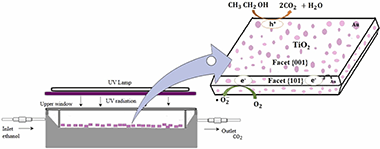
Photocatalytic activity enhancement by noble metal deposition on faceted F-TiO2 synthesised by microwave assisted method. A study of selective oxidation of gas-phase ethanol in a FBPR reactor

In the present work, fluorinated titanium dioxide (TiO2-F) with high exposition of facet {001} was prepared by following a facile and high yield hydrothermal method assisted by microwave. This faceted TiO2 was then modified by Au or Ag deposition at two different metal loadings (0.125 and 0.25 wt%). A wide physicochemical characterisation of the materials was performed.…

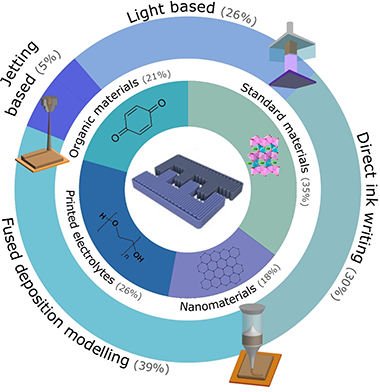
Materials for 3D Printed Metal and Metal-Ion Batteries

The review provides an overview of the latest innovations, trends, and challenges in the field of 3D-printed metal and metal-ion batteries. It focuses on the materials used in the printing of batteries, including electrodes, electrolytes, and other electroactive components. Compared to other high-quality reviews on the topic, this review provides a broader selection of materials…

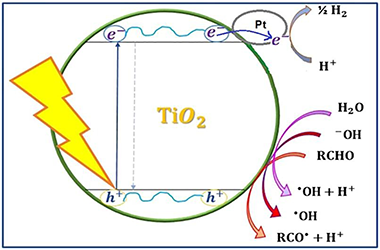
Evaluation of Pt/TiO2-Nb2O5 systems in the photocatalytic reforming of glucose for the generation of H2 from industrial effluents

Different Pt-TiO2-Nb2O5 systems were synthesized and studied in the photocatalytic reforming of glucose for the generation of H2. The physicochemical properties of the synthesized photocatalysts were analyzed using different characterization techniques from which it was found that fluoridation and sulphation have different effects on the oxides under study such as a protective effect on the crystalline…

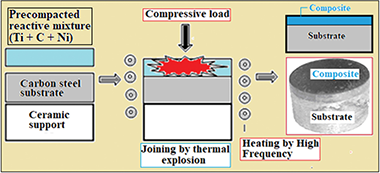
Complex TiC-Ni-based composites joined to steel support by thermal explosion under load: synthesis, microstructure and tribological behavior

  The combustion in thermal explosion mode of reactive mixtures of Ti-Ni-graphite(carbides, borides, oxides), under load, was used to produce complex composite materials, densified and joined to a C55 carbon steel support. The ignition of the exothermic reaction, carried out thanks to the rapid high-frequency heating of a green compact up to 1573 K, was…

Highly Stable Photoluminescence in Vacuum-Processed Halide Perovskite Core–Shell 1D Nanostructures

Hybrid organometal halide perovskites (HP) present exceptional optoelectronic properties, but their poor long-term stability is a major bottleneck for their commercialization. Herein, a solvent-free approach to growing single-crystal organic nanowires (ONW) is presented, along with nanoporous metal oxide scaffolds and HP, to form a core@multishell architecture. The synthesis is carried out under mild vacuum conditions…

Green Fabrication of Stackable Laser-Induced Graphene Micro-Supercapacitors under Ambient Conditions: Toward the Design of Truly Sustainable Technological Platforms

Extensive research into green technologies is driven by the worldwide push for eco-friendly materials and energy solutions. The focus is on synergies that prioritize sustainability and environmental benefits. This study explores the potential of abundant, non-toxic, and sustainable resources such as paper, lignin-enriched paper, and cork for producing laser-induced graphene (LIG) supercapacitor electrodes with improved…

Al2O3/Y3Al5O12 (YAG)/ZrO2 composites by single-step powder synthesis and spark plasma sintering

Alumina-yttrium aluminum garnet (YAG)-zirconia composites are often produced by the melt solidification method. In the present study, we investigated the fabrication of α-Al2O3/Y3Al5O12 (YAG)/ZrO2 composite by Spark Plasma Sintering (SPS) of powders synthesized by Pechini’s sol-gel method. The ternary composites with homogenous microstructure and high density were produced by SPS at 1300 °C for 15 min. The addition of…