Sol-Gel Synthesis of Endodontic Cements: Post-Synthesis Treatment to Improve Setting Performance and Bioactivity

The sol-gel process is a wet chemical technique that allows very fine control of the composition, microstructure, and final textural properties of materials, and has great potential for the synthesis of endodontic cements with improved properties. In this work, the influence of different sol-gel synthesis variables on the preparation of endodontic cement based on calcium…

Optimization of anion exchange membrane water electrolyzers using ionomer-free electrodes

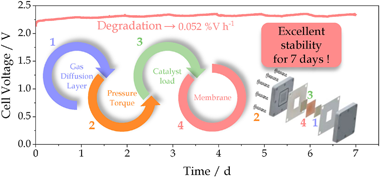
This work is carried out in the context of the anion exchange membrane water electrolysis (AEMWE) and pursuits to determine the influence of different cell components on the global electrochemical performance. Ionomer-free electrodes consisting of anodic Ni-Fe and cathodic Ni electrocatalysts deposited by magnetron sputtering in an oblique angle deposition configuration were utilized for this study. In addition to the characteristics and equivalent thickness of the electrocatalysts, other factors affecting the…

Unraveling the Mo/HZSM-5 reduction pre-treatment effect on methane dehydroaromatization reaction

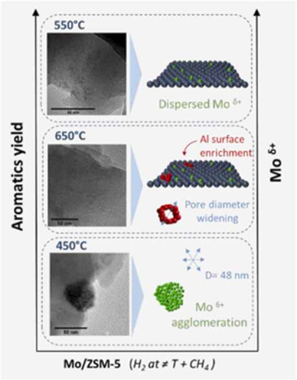
Reduction pre-treatment at different temperatures were performed over Mo/HZSM-5 system before methane dehydroaromatiztion reaction. We have shown the crucial effect of reduction temperature on the final catalytic performance. Outstanding improvement in the aromatics conversion has been attained. Thus, H-2 formation form methane cracking reaction seems to be hindered for pre-treated catalysts. As a consequence, the…

Influence of the carbon incorporation on the mechanical properties of TiB2 thin films prepared by HiPIMS

Nanostructured TiB2 and TiBC thin films with carbon contents up to 11 at. % were prepared by physical vapor deposition using high power impulse magnetron sputtering (HiPIMS) technology. The influence of carbon incorporation during the deposition of TiB2 coatings was investigated on the chemical composition, microstructure and mechanical properties by means of scanning electron microscopy,…

Tuning the co-catalyst loading for the optimization of thermo-photocatalytic hydrogen production over Cu/TiO2

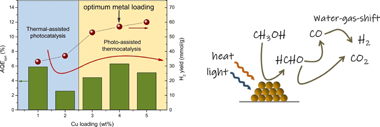
We have optimized the H-2 production by methanol thermo-photocatalytic reforming in the gas phase using Cu/TiO2 catalyst by tuning metal loading. Metal co-catalyst has been deposited by means of chemical reduction deposition. We have stated that thermo- and thermo-photocatalytic process leads to a notable H-2 production at 200 C. By in-situ FTIR studies we evidenced…

Structure effect of modified biochar in Ru/C catalysts for sugar mixture hydrogenation

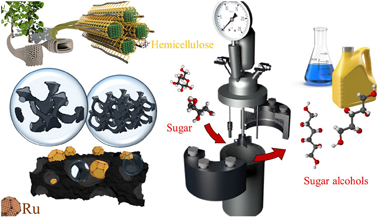
This study deals with the production and activation of biochars and their use as supports for a series of ruthenium catalysts for hydrogenation of L-arabinose/D-galactose sugar mixture. The synthesized biochars differ in physicochemical properties and surface chemistry influencing ruthenium metal uptake and dispersion and as a consequence its catalytic behaviour. Selectivity exceeding 95% was observed for both hexitols. The catalytic performance of the prepared Ru supported catalysts is also compared to the already known Ru/activated carbon commercial catalyst.

Emerging natural and tailored perovskite-type mixed oxides-based catalysts for CO2 conversions

The rapid economic and societal development have led to unprecedented energy demand and consumption resulting in the harmful emission of pollutants. Hence, the conversion of greenhouse gases into valuable chemicals and fuels has become an urgent challenge for the scientific community. In recent decades, perovskite-type mixed oxide-based catalysts have attracted significant attention as efficient CO2…

Chemical, Radiometric and Mechanical Characterization of Commercial Polymeric Films for Greenhouse Applications

In the agricultural sector, companies involved in the production of plastic greenhouses are currently searching for a suitable covering adapted for every climate in the world. For this purpose, this research work has determined the chemical, radiometric and mechanical properties of 53 polymeric films samples from Europe and South America. The chemical tests carried out…

Assessment of construction and demolition wastes (CDWs) as raw materials for the manufacture of low-strength concrete and bases and sub-bases of roads

A chemical (XRF) and mineralogical (XRD) characterisation has been carried out, as well as the determination of the main properties, of construction and demolition wastes (CDWs). This waste has been applied as recycled aggregate. The objective was to search for its reuse for the manufacture of concrete and road bases and sub-bases. Chemical analysis revealed…