


Is the RWGS a viable route for CO2 conversion to added value products? A techno-economic study to understand the optimal RWGS conditions

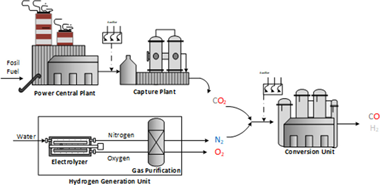
Understanding the viability of the RWGS from a thermodynamic and techno-economic angle opens new horizons within CO2 conversion technologies. Unfortunately, profitability studies of this technology are scarce in literature and mainly focused on overall conversion and selectivity trends with tangential remarks on energy demands and pro-cess costs. To address this research gap, herein we present…
Pd supported on defective TiO2 polymorphic mixtures: Effect of metal-support interactions upon glycerol selective oxidation

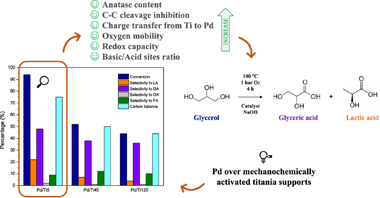
Palladium catalysts supported on defective mixes of anatase, TiO2 (II) and rutile crystalline phases, previously obtained by high-energy ball milling, were synthesized and tested for glycerol selective oxidation. A deep characterization of these unusual materials was carried out to elucidate catalytic and physicochemical features. Electron density transfer from support to metal or vice versa, depending…

Theoretical Analysis of Polynuclear Zinc Complexes Isolobally Related to Hydrocarbons

Based on the isolobal analogy of ZnCp (Cp = eta(5)-C5H5) and ZnR (R = alkyl or aryl group) fragments with hydrogen atom and fragment [Zn(CO)(2)] with a CH2 carbene, the following complexes [(ZnCp)(2){mu-Zn(CO)(2)}], 1, [(ZnPh)(2){mu-Zn(CO)(2)}], 2, [(ZnPh){mu-Zn(CO)(2)}(ZnCp)], 3, [(ZnCp)(2){mu-Zn-2(CO)(4)}], 4, [(ZnPh)(2){mu-Zn-2(CO)(4)}], 5, [(ZnPh){mu-Zn(CO)(2)}(2)(ZnCp)], 6, [Zn-3(CO)(6)], 7 and [Zn-5(CO)(10)], 8, were built. These polynuclear zinc compounds…

Materials challenges and opportunities to address growing micro/ nanoplastics pollution: a review of thermochemical upcycling

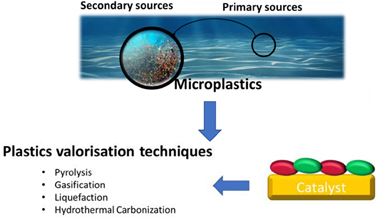
Micro/nanoplastics have sparked attention in recent years due to their widespread presence in the environment. Currently, several waste valorization approaches are under development in order to upcycle micro/nanoplastics. Thermal conversion technologies such as pyrolysis, gasification, liquefaction, or hydrothermal carbonization can yield high-value solid products, oil, and gases from plastics waste. The common thermal conversion technologies…

Development of Power-to-X Catalytic Processes for CO2 Valorisation: From the Molecular Level to the Reactor Architecture

Nowadays, global climate change is likely the most compelling problem mankind is facing. In this scenario, decarbonisation of the chemical industry is one of the global challenges that the scientific community needs to address in the immediate future. Catalysis and catalytic processes are called to play a decisive role in the transition to a more…

CO2 methanation on Ni/YMn1-xAlxO3 perovskite catalysts

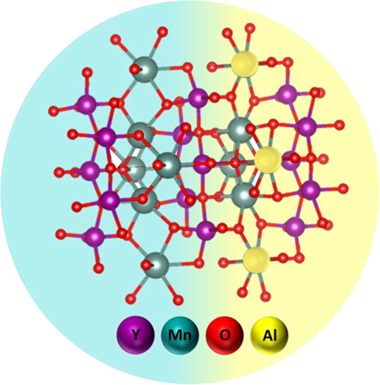
Seeking for advanced catalytic systems for the CO2 methanation reaction, the use of Ni supported catalysts over redox materials is often proposed. Profiting the superior redox properties described for layered perovskite systems, this work has investigated a series Ni supported YMn1-xAlxO3 (x = 0, 0.2, 0.5, 0.8, 1) perovskite catalysts. The obtained results evidenced the…

Assessment of pilot-plant scale solar photocatalytic hydrogen generation with multiple approaches: Valorization, water decontamination and disinfection

The main goal of the present study was to explore pilot-scale combination of H-2 generation with simultaneous water disinfection or decontamination. Performance of a TiO2-CuO mixture for solar-to-hydrogen (STH) con-version was studied, focusing on treatment optimization (catalyst dose, proportion of semiconductors in the mixture and concentration of the sacrificial agent). Experiments were performed in a…

Pd supported on defective TiO2 polymorphic mixtures: Effect of metal-support interactions upon glycerol selective oxidation

Palladium catalysts supported on defective mixes of anatase, TiO2 (II) and rutile crystalline phases, previously obtained by high-energy ball milling, were synthesized and tested for glycerol selective oxidation. A deep characterization of these unusual materials was carried out to elucidate catalytic and physicochemical features. Electron density transfer from support to metal or vice versa, depending…

Theoretical Analysis of Polynuclear Zinc Complexes Isolobally Related to Hydrocarbons

Based on the isolobal analogy of ZnCp (Cp = eta(5)-C5H5) and ZnR (R = alkyl or aryl group) fragments with hydrogen atom and fragment [Zn(CO)(2)] with a CH2 carbene, the following complexes [(ZnCp)(2){mu-Zn(CO)(2)}], 1, [(ZnPh)(2){mu-Zn(CO)(2)}], 2, [(ZnPh){mu-Zn(CO)(2)}(ZnCp)], 3, [(ZnCp)(2){mu-Zn-2(CO)(4)}], 4, [(ZnPh)(2){mu-Zn-2(CO)(4)}], 5, [(ZnPh){mu-Zn(CO)(2)}(2)(ZnCp)], 6, [Zn-3(CO)(6)], 7 and [Zn-5(CO)(10)], 8, were built. These polynuclear zinc compounds…