Sintering behaviour of a clay containing pyrophyllite, sericite and kaolinite as ceramic raw materials: Looking for the optimum firing conditions

The sintering behaviour of a pyrophyllite clay has been investigated. The mineralogical composition by X-ray diffraction (XRD) of this sample was -35 wt.% pyrophyllite, -25 wt.% sericite/illite, -15 wt.% kaolinite and -20 wt.% quartz. The chemical composition was consistent with these results, with a total flux content of 4.18 wt.%. Prismatic bars were prepared by…

Thermal arrest analysis of the reverse martensitic transformation in a Ni55Fe19Ga26 Heusler alloy obtained by melt-spinning

Ni55Fe19Ga26 ribbons obtained by melt-spinning technique exhibit a martensitic transformation from L2(1) cubic austenite phase to 14 M martensite phase above room temperature. We have taken advantage of the existence of thermal hysteresis of the martensitic phase transition (similar to 11 K) to analyze the effect of isothermal treatments on the reverse martensitic transformation, which…

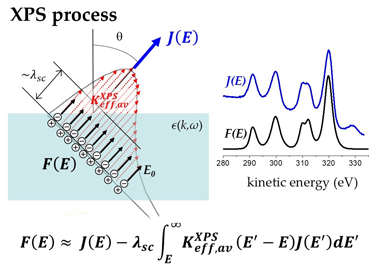
Determination of the Primary Excitation Spectra in XPS and AES

This paper reviews a procedure that allows for extracting primary photoelectron or Auger electron emissions from homogeneous isotropic samples. It is based on a quantitative dielectric description of the energy losses of swift electrons travelling nearby surfaces in presence of stationary positive charges. The theory behind the modeling of the electron energy losses, implemented in…

Formic Acid Dehydrogenation over Ru- and Pd-Based Catalysts: Gas- vs. Liquid-Phase Reactions

Formic acid has recently been revealed to be an excellent hydrogen carrier, and interest in the development of efficient and selective catalysts towards its dehydrogenation has grown. This reaction has been widely explored using homogeneous catalysts; however, from a practical and scalable point of view, heterogeneous catalysts are usually preferred in industry. In this work,…

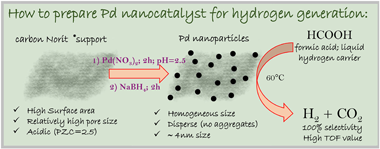
Microstructure and activity of Pd catalysts prepared on commercial carbon support for the liquid phase decomposition of formic acid

In this work, a series of Pd catalysts supported on commercially available activated carbon (Norit (R)) were prepared by employing different metal precursors (Pd(NO3)2 and Na2PdCl4) by the impregnation-reduction method at different pH. Catalysts were tested for the liquid phase decomposition of formic acid to generate hydrogen. The best results, in terms of small particle…

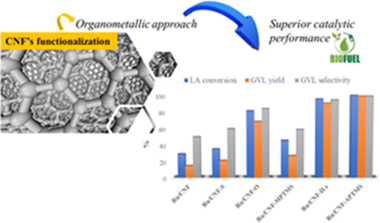
Selective hydrodeoxygenation of levulinic acid to gamma-valerolactone over Ru supported on functionalized carbon nanofibers

In this work, carbon nanofibers (CNFs) have been successfully functionalized by using different approaches and finally used for the preparation of Ru based catalysts. The organometallic approach has been demonstrated to be suitable for CNF functionalization, leading to well-defined Ru NPs (by adding organosilane, amino or mercapto functionalities, among others) in comparison with mineral acid treatments conventionally…

ICTAC Kinetics Committee recommendations for analysis of thermal decomposition kinetics

In this review article, the Kinetics Committee of the International Confederation for Thermal Analysis and Calorimetry (ICTAC) delivers a collection of recommendations for the kinetic analysis of thermal decomposition processes. These recommendations specifically focus on the thermal decomposition processes in inorganic, organic, and polymeric materials, as well as biomass and solid fuels. A general introduction…

Highly Nonstoichiometric YAG Ceramics with Modified Luminescence Properties

Y3Al5O12 (YAG) is a widely used phosphor host. Its optical properties are controlled by chemical substitution at its YO8 or AlO6/AlO4 sublattices, with emission wavelengths defined by rare-earth and transition-metal dopants that have been explored extensively. Nonstoichiometric compositions Y3+xAl5-xO12 (x not equal 0) may offer a route to new emission wavelengths by distributing dopants over…

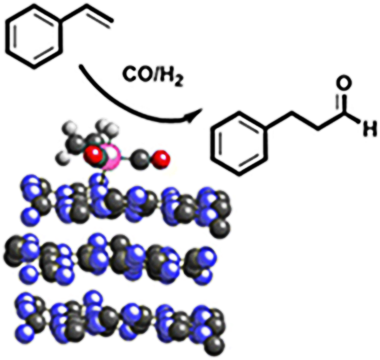
Highly dispersed Rh single atoms over graphitic carbon nitride as a robust catalyst for the hydroformylation reaction

Rhodium-catalysed hydroformylation, effective tool in bulk and fine-chemical synthesis, predominantly uses soluble metal complexes. For that reason, the metal leaching and the catalyst recycling are still the major drawbacks of this process. Single-atom catalysts have emerged as a powerful tool to combine the advantages of both homogeneous and heterogeneous catalysts. Since using an appropriate support…

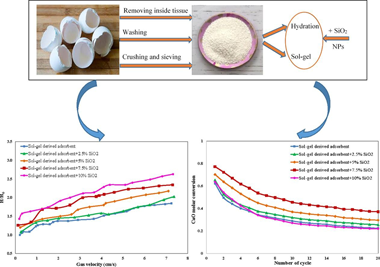
A novel, green, cost-effective and fluidizable SiO2-decorated calcium-based adsorbent recovered from eggshell waste for the CO2 capture process

The reduction, storage, and reuse of greenhouse gas carbon dioxide (CO2) is a crucial concern in modern society. Bio-waste adsorbents have recently aroused the investigator’s attention as auspicious materials for CO2 capture. However, the adsorption capacity decaying and poor fluidizability during carbonation/calcination cycles of all natural adsorbents used in the calcium-looping process (CaL) are important…