Low Temperature Magnetic Transition of BiFeO3 Ceramics Sintered by Electric Field-Assisted Methods: Flash and Spark Plasma Sintering

Low temperature magnetic properties of BiFeO3 powders sintered by flash and spark plasma sintering were studied. An anomaly observed in the magnetic measurements at 250 K proves the clear existence of a phase transition. This transformation, which becomes less well-defined as the grain sizes are reduced to nanometer scale, was described with regard to a…

A Holistic Solution to Icing by Acoustic Waves: De-Icing, Active Anti-Icing, Sensing with Piezoelectric Crystals, and Synergy with Thin Film Passive Anti-Icing Solutions

Icing has become a hot topic both in academia and in the industry given its implications in transport, wind turbines, photovoltaics, and telecommunications. Recently proposed de-icing solutions involving the propagation of acoustic waves (AWs) at suitable substrates may open the path for a sustainable alternative to standard de-icing or anti-icing procedures. Herein, the fundamental interactions…

Nanocrystalline Skinnerite (Cu3SbS3) Prepared by High-Energy Milling in a Laboratory and an Industrial Mill and Its Optical and Optoelectrical Properties

Copper, antimony and sulfur in elemental form were applied for one-pot solid-state mechanochemical synthesis of skinnerite (Cu3SbS3) in a laboratory mill and an industrial mill. This synthesis was completed after 30 min of milling in the laboratory mill and 120 min in the industrial mill, as corroborated by X-ray diffraction. XRD analysis confirmed the presence…

Methanation of CO2 over High Surface Nickel/Aluminates Compounds Prepared by a Self-Generated Carbon Template

Catalytic gas-phase hydrogenation of CO2 into CH4 was tested under three different nickel/aluminate catalysts obtained from precursors of hexaaluminate composition (MAl16O19, M = Mg, Ca, Ba). These catalysts were prepared using a carbon template method, where carbon is self-generated from a sol-gel that contains an excess of citric acid and the Al and M salts…

A national data-based energy modelling to identify optimal heat storage capacity to support heating electrification

Heating decarbonisation through electrification is a difficult challenge due to the considerable increase in peak power demand. This research proposes a novel modelling approach that utilises easily accessible national-level data to identify the required heat storage volume in buildings to decrease peak power demand and maximises carbon reductions associated with electrified heating technologies through smart demand-side response. The approach assesses the optimal shifting of heat pump operation to meet thermal heating demand according to different heat storage capacities in buildings, which are defined in relation to the time (in hours) in which…

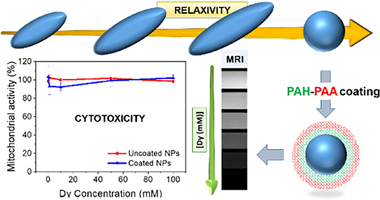
Carboxylate functionalized NaDy(MoO4)(2) nanoparticles with tunable size and shape as high magnetic field MRI contrast agents

Uniform sodium-dysprosium double molybdate (NaDy(MoO4)(2)) nanoparticles having different morphologies (spheres and ellipsoids) and tunable size have been synthesized for the first time in literature. The procedure is based on a homogeneous precipitation process at moderated temperatures (<= 220 ?) from solutions containing appropriated precursors dissolved in ethylene glycol-water mixtures, in the absence (spheres) or the…

Engineering morphologies of yttrium oxide supported nickel catalysts for hydrogen production

The catalytic performance is highly related to the catalyst structure. Herein, a series of Ni nanoparticles supported on Y2O3 with different morphologies were successfully synthesized via hydrothermal process screening different pH environments. These Ni/Y2O3 catalysts were applied to efficiently produce COx-free H-2 through ammonia decomposition. We identify a significant impact of Y2O3 supports on nickel…

New Types and Dosages for the Manufacture of Low-Energy Cements from Raw Materials and Industrial Waste under the Principles of the Circular Economy and Low-Carbon Economy

The cement manufacturing industry is one of the main greenhouse gas emission producers and also consumes a large quantity of raw materials. It is essential to reduce these emissions in order to comply with the Paris Agreement and the principles of the circular economy. The objective of this research was to develop different types of…

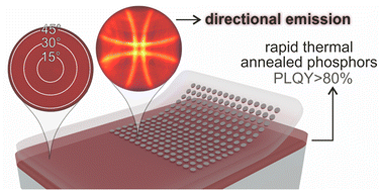
Collective plasmonic resonances enhance the photoluminescence of rare-earth nanocrystal films processed by ultrafast annealing

Herein, we demonstrate that rapid thermal annealing allows achieving close-to-one photoluminescence quantum yield while preserving the transparency of rare-earth nanocrystal films, which further enables their integration with nanophotonics. The combination with periodic arrays of aluminum nanodisks that support collective plasmonic resonances leads to enhanced directional emission.

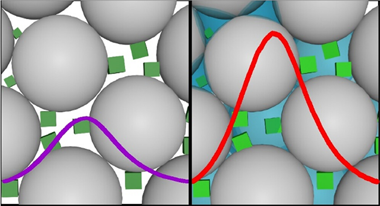
Responsive Optical Materials Based on Ligand-Free Perovskite Quantum Dots Embedded in Mesoporous Scaffolds

Herein we show that dispersing inorganic cesium lead bromide (CsPbBr3) perovskite quantum dots (QDs) in optical quality films, possessing an accessible and controlled pore size distribution, gives rise to fluorescent materials with a controlled and highly sensi t i v e response to ambient changes. A scaffold-based synthesis approach is employed to obtain ligand-free QDs, whose pristine surface endows them with high sensit i v i t…