


Fine Tuning the Emission Properties of Nanoemitters in Multilayered Structures by Deterministic Control of their Local Photonic Environment

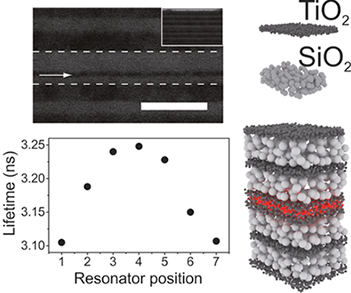
Deterministic control on the dynamics of organic nanoemitters is achieved through precise control of its photonic environment. Resonators are fabricated by a combination of spin- and dip-coating techniques, which allows placement of the emitters at different positions within the sample, thus acting as a probe of the local density of states.
Environmental Effects on the Photophysics of Organic-Inorganic Halide Perovskites

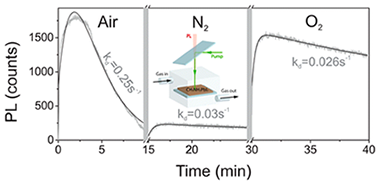
The photophysical properties of films of organic-inorganic lead halide perovskites under different ambient conditions are herein reported. We demonstrate that their luminescent properties are determined by the interplay between photoinduced activation and darkening processes, which strongly depend on the atmosphere surrounding the samples. We have isolated oxygen and moisture as the key elements in each…

Core-shell polydopamine magnetic nanoparticles as sorbent in micro-dispersive solid-phase extraction for the determination of estrogenic compounds in water samples prior to high-performance liquid chromatography-mass spectrometry analysis

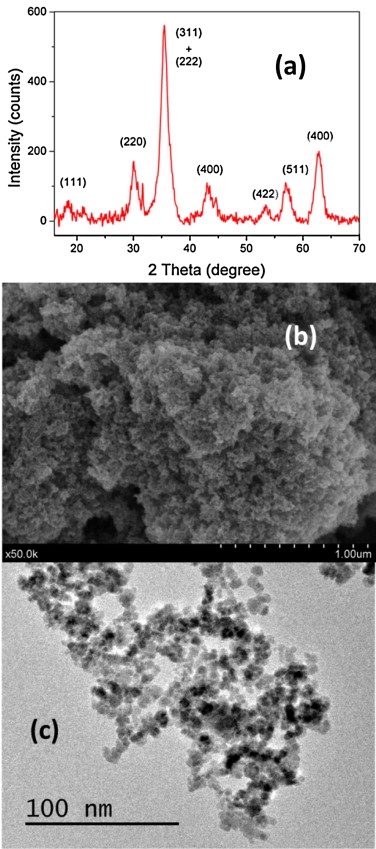
In this work, core-shell Fe3O4@poly(dopamine) magnetic nanoparticles (m-NPs) were prepared and characterized in our laboratory and applied as sorbents for the magnetic-micro solid phase extraction (m-mu SPE) of twelve estrogenic compounds of interest (i.e. 17 alpha-estradiol, 17 beta-estradiol, estrone, hexestrol, 17 alpha-ethynylestradiol, diethylstibestrol, dienestrol, zearalenone, alpha-zearalanol,beta-zearalanol, alpha-zearalenol and beta-zearalenol) from different water samples. Separation, determination…

A novel two-steps solvothermal synthesis of nanosized BiPO4 with enhanced photocatalytic activity

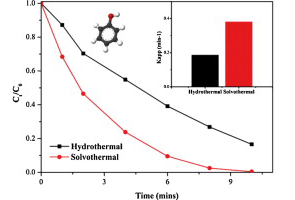
Nano-sized BiPO4 has been successfully synthesized via a novel designed two-steps solvothermal route using ethylene glycol as solvent. Comparing with traditional hydrothermal method, the novel approach could readily prepare BiPO4 with shorter time. The photocatalytic activity of prepared BiPO4 has been tested via degradation of methylene blue (MB) under light irradiation. The experimental results show that the BiPO4 prepared…

Porous, robust highly conducting Ni-YSZ thin film anodes prepared by magnetron sputtering at oblique angles for application as anodes and buffer layers in solid oxide fuel cells

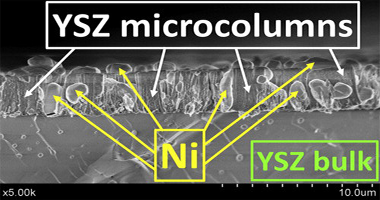
Uniform, highly porous, columnar thin films incorporating YSZ and NiO prepared by magnetron sputtering with deposition at glancing incidence exhibited stoichiometries close to that of the Y-Zr-Ni sputter target. Characterization by means of SEM, XRD, XPS and RBS revealed that the uniformly distributed nickel component in the as-deposited films consisted of NiO, and that the…

Free-Base Carboxyphenyl Porphyrin Films Using a TiO2 Columnar Matrix: Characterization and Application as NO2 Sensors

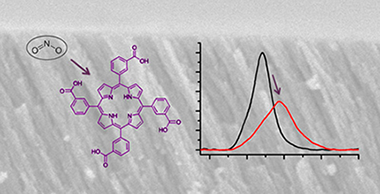
The anchoring effect on free-base carboxyphenyl porphyrin films using TiO2 microstructured columns as a host matrix and its influence on NO2 sensing have been studied in this work. Three porphyrins have been used: 5-(4-carboxyphenyl)10,15,20-triphenyl-21H,23H-porphyrin (MCTPP); 5,10,15,20-tetrakis(4-carboxyphenyl)-21H,23H-porphyrin (p-TCPP); and 5,10,15,20-tetrakis(3-carboxyphenyl)-21H,23H-porphyrin (m-TCPP). The analysis of UV-Vis spectra of MCTPP/TiO2, p-TCPP/TiO2 and m-TCPP/TiO2 composite films has revealed that m-TCPP/TiO2 films are the most stable, showing less…

The role of silver nanoparticles functionalized on TiO2 for photocatalytic disinfection of harmful algae

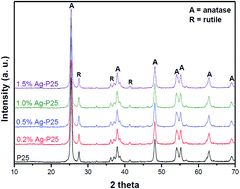
Silver loaded TiO2 samples were prepared by photodeposition of different amounts of Ag+ ions over commercial titanium dioxide (Evonik TiO2 P25) in aqueous media without the presence of sacrificial agents. The obtained photocatalysts were characterized by several techniques such as X-ray powder diffraction (XRD), UV-vis diffuse reflectance spectroscopy (DRS), transmission electron microscopy (TEM) and X-ray photoelectron spectroscopy (XPS)…

Electrochemical activation of an oblique angle deposited Cu catalyst film for H-2 production

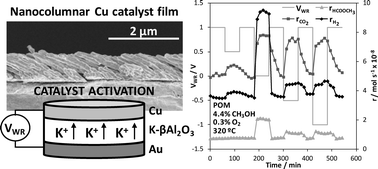
A novel Cu catalyst film was prepared by oblique angle physical vapour deposition (OAD) on a K-βAl2O3 solid electrolyte (alkaline ionic conductor) for catalytic/electrocatalytic purposes. This technique allowed us to obtain a highly porous and electrically conductive Cu catalyst electrode which was tested in the partial oxidation of methanol (POM) reaction for H2 production and its catalytic…