Boosting the activity of a Au/CeO2/Al2O3 catalyst for the WGS reaction

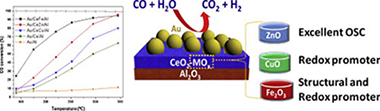
Herein a strategy to design highly efficient Au/CeO2/Al2O3 based WGS catalysts is proposed. The inclusion of transition metals, namely Fe, Cu and Zn as CeO2 dopant is considered. All the promoters successfully increased the WGS performance of the undoped sample. The activity improvement can be correlated to structural and/or redox features induced by the dopants. The comparative…

Biocompatible Films with Tailored Spectral Response for Prevention of DNA Damage in Skin Cells

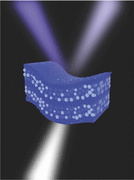
A hybrid nanostructured organic–in­organic biocompatible film capable of efficiently blocking a preselected range of ultraviolet light is designed to match the genotoxic action spectrum of human epithelial cells. This stack protects cultured human skin cells from UV-induced DNA lesions. As the shielding mechanism relies exclusively on reflection, the secondary effects due to absorption harmful radiation are…

Phyllite clay-cement composites having improved engineering properties and material applications

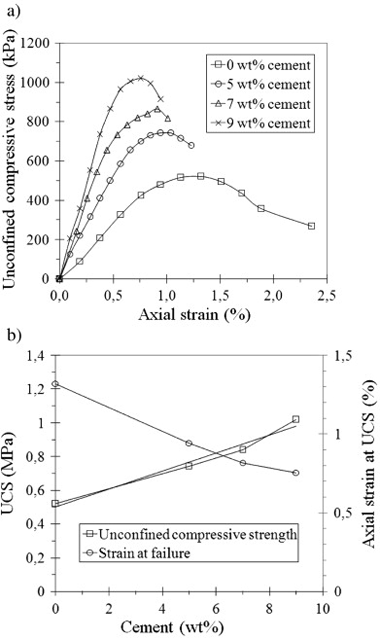
Phyllite clays contain clay minerals (chlorite, illite and mixed-layer illite smectite), quartz and feldspars. In this experimental laboratory study, new composites of phyllite clay and cement (5, 7 and 9 wt.%) were prepared and tested to determine their Atterberg limits, dry density and optimum water content for modified Proctor (MP) compaction, California Bearing ratio, swelling potential…

Uniform Poly(acrylic acid)-Functionalized Lanthanide-Doped LaVO4 Nanophosphors with High Colloidal Stability and Biocompatibility

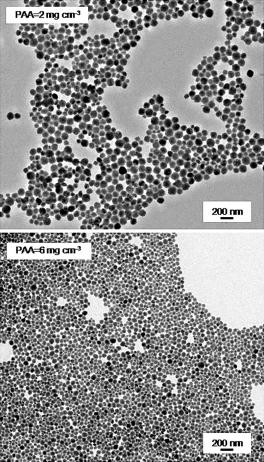
Ln-doped (Ln = Eu or Nd) LaVO4 nanoparticles functionalized with poly(acrylic acid) (PAA) were prepared from lanthanide and vanadate precursors in the presence of PAA by a simple one-pot method that consists of a homogeneous precipitation reaction in ethylene glycol/water at a moderate temperature (120 degrees C). The size of the nanoparticles could be modified…

Specific features of the electrical properties in partially graphitized porous biocarbons of beech wood

The electrical and galvanomagnetic properties of partially graphitized highly porous bioC(Ni) biocarbon matrices produced by pyrolysis (carbonization) of beech wood at temperatures T (carb) = 850-1600A degrees C in the presence of a Ni-containing catalyst have been studied in comparison with their microstructural features. The temperature dependences of the resistivity, the magnetoresistance, and the Hall…

Physiological Degradation Mechanisms of PLGA Membrane Films under Oxygen Plasma Treatment

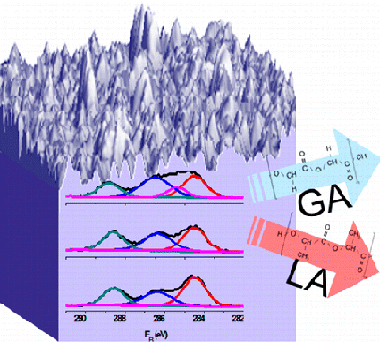
Degradation under simulated physiological conditions of poly(lactic-co-glycolic) (PLGA) copolymer membrane films subjected to an oxygen plasma treatment compared to its “as prepared” state has been studied by gas cluster ion beam assisted X-ray photoelectron spectroscopy for chemical depth profiling analysis. This investigation is complemented with atomic force microscopy, weight loss measurements, and visual inspection of…

Microreactors technology for hydrogen purification: Effect of the catalytic layer thickness on CuOx/CeO2-coated microchannel reactors for the PROX reaction

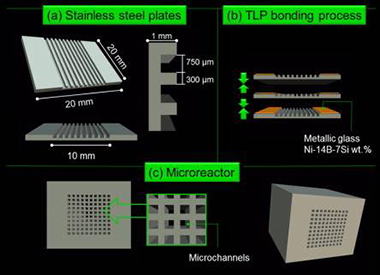
Two blocks of microreactors composed by 100 microchannels and coated, respectively, with 150 and 300 mg of a CuOx/CeO2 catalyst, were prepared and tested in the preferential oxidation of CO in presence of H2 (PROX). The deposition of different amount of catalyst resulted in different catalytic layer thicknesses thus modifying the catalytic performances of the microreactor. The evaluation…

Viability of adding gypsum and calcite for remediation of metal-contaminated soil: laboratory and pilot plant scales

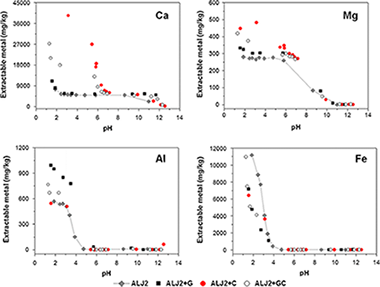
The effect of adding waste materials (gypsum and calcite) for the remediation of a soil contaminated by pyritic minerals was examined. Materials were characterised in terms of their acid neutralisation capacity (ANC), sorption capacity and structural components. Their effect on the contaminant leaching in soil + material mixtures over a wide range of pH was also evaluated.…