Nanocolumnar coatings with selective behavior towards osteoblast and Staphylococcus aureus proliferation

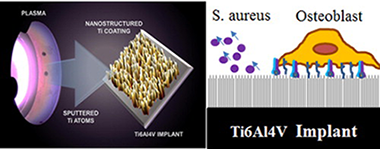
Bacterial colonization and biofilm formation on orthopedic implants is one of the worst scenarios in orthopedic surgery, in terms of both patient prognosis and healthcare costs. Tailoring the surfaces of implants at the nanoscale to actively promote bone bonding while avoiding bacterial colonization represents an interesting challenge to achieving better clinical outcomes. Herein, a Ti6Al4V…

Microstructure, elastic and inelastic properties of partially graphitized biomorphic carbons

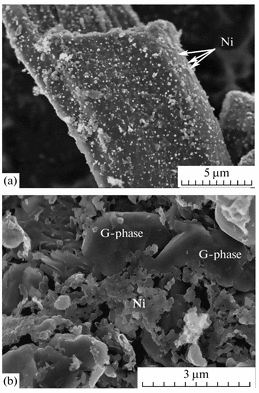
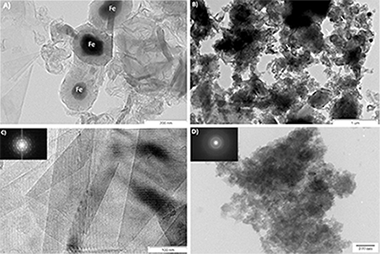
The microstructural characteristics and amplitude dependences of the Young’s modulus E and internal friction (logarithmic decrement delta) of biocarbon matrices prepared by beech wood carbonization at temperatures T (carb) = 850-1600A degrees C in the presence of a nickel-containing catalyst have been studied. Using X-ray diffraction and electron microscopy, it has been shown that the…

Sunlight Absorption Engineering for Thermophotovoltaics: Contributions from the Optical Design

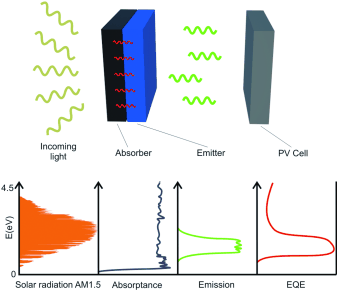
Nowadays, solar thermophotovoltaic systems constitute a platform in which sophisticated optical material designs are put into practice with the aim of achieving the long sought after dream of developing an efficient energy conversion device based on this concept. Recent advances demonstrate that higher efficiencies are at reach using photonic nanostructures amenable to mass production and…

Sliding wear resistance of sintered SiC-fiber bonded ceramics

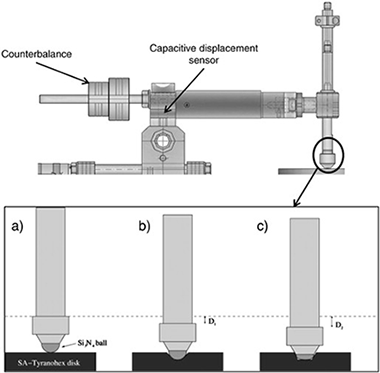
Advanced SiC-based ceramics and fiber reinforced composites are interesting materials for a wide variety of applications involving sliding wear conditions because of their excellent thermomechanical properties. The microstructure and wear resistance of sintered SiC fiber bonded ceramics (SA Tyrannohex) were studied. The material is composed of SiC-fibers in two orientations, with polygonal cross sections and…

Sliding wear resistance of biomorphic SiC ceramics

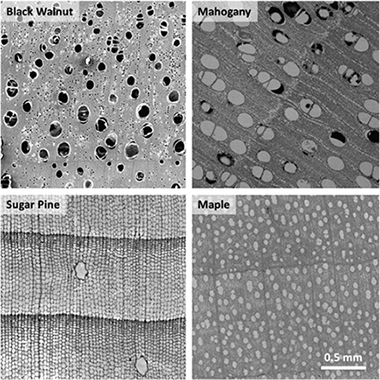
Biomorphic SiC ceramics were fabricated from four different wood precursors and their Knoop hardness and sliding wear resistance when sliding against a Si3N4 ball in air were studied. Tribological experiments were performed using a pin on disk apparatus, under normal loads of 2 and 5 N, at a sliding speed of 100 mm/s. The effects…

Ni-CeO2/C Catalysts with Enhanced OSC for the WGS Reaction

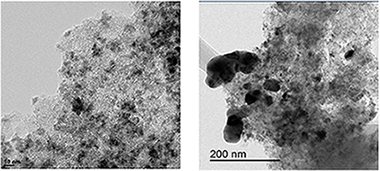
In this work, the WGS performance of a conventional Ni/CeO2 bulk catalyst is compared to that of a carbon-supported Ni-CeO2 catalyst. The carbon-supported sample resulted to be much more active than the bulk one. The higher activity of the Ni-CeO2/C catalyst is associated to its oxygen storage capacity, a parameter that strongly influences the WGS…

Ionic liquid immobilization on carbon nanofibers and zeolites: Catalyst design for the liquid-phase toluene chlorination

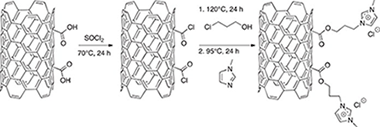
The environmental-friendly chlorination reaction of toluene by trichloroisocyanuric acid (TCCA, C3N3O3Cl3) was investigated applying immobilized ionic liquids (ILs) on different supports. Ionic liquids were grafted either on carbon nanofibers (CNF) or encapsulated in zeolites. Their influence on the chlorination activity as well as on the selectivity in different chlorinated products was studied. An unusually high…

Effect of catalytic graphitization on the electrochemical behavior of wood derived carbons for use in supercapacitors

Porous graphitic carbons were successfully obtained from wood precursors through pyrolysis using a transition metal as catalyst. Once the catalyst is removed, the resulting material mimics the microstructure of the wood and presents high surface area, open and interconnected porosity and large pore volume, high crystallinity and good electrical conductivity, making these carbons interesting for…