Novel approaches to flexible visible transparent hybrid films for ultraviolet protection

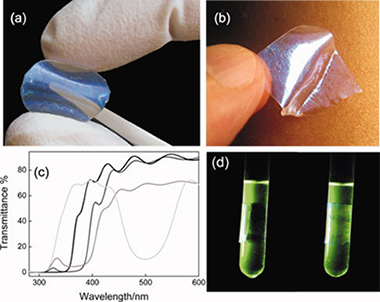
Herein, we present an overview of the most recent achievements and innovations regarding the development of flexible visible transparent films for selective ultraviolet (UV) shielding, with focus on those based on hybrid inorganic-organic materials. The main synthetic paths used nowadays to ensure a high degree of protection are reviewed. Polymers containing organic UV absorbing molecules,…

Absence of the core-rim microstructure in TixTa1-xCyN1-y-based cermets developed from a pre-sintered carbonitride master alloy

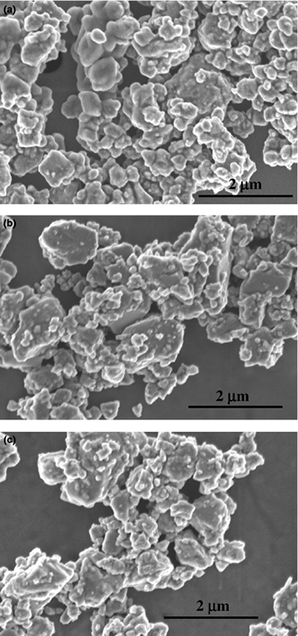
(Ti,Ta)(C,N) solid solution-based cermets with cobalt as the binder phase were synthesised by a two-step milling process. The titanium-tantalum carbonitride solid solution (the ceramic phase) was obtained via a mechanically induced self-sustaining reaction (MSR) process from stoichiometric elemental Ti, Ta, and graphite powder blends in a nitrogen atmosphere. Elemental Co (the binder phase) was added…

Processing of Swnt-Reinforced Yttria Stabilized Zirconia by Spark Plasma Sintering and Microstructure Characterization

Single wall carbon nanotube reinforced yttria stabilized zirconia ceramic materials have been obtained by means of spark plasma sintering technique. Single wall carbon nanotubes were treated in an acid solution before mixing with zirconia powders to obtain a uniform distribution of both powders. This method allows obtaining ceramic materials with a grain size between 200…

In Situ Synthesis of Ceramic Composite Materials in the Ti-B-C-N System by a Mechanically Induced Self-Sustaining Reaction

The synthesis of multicomponent ceramic materials in the titanium-diboride-carbide-nitride-carbonitride system by the mechanochemical process known as the mechanically induced self-sustaining reaction (MSR) was investigated. Ceramic composite powders containing TiB 2and TiC, TiN or TiC xN 1-xwere prepared from a blended mixture of the elements by exploiting the highly exothermic nature of the formation reactions. The…

Effect of nanostructured electrode architecture and semiconductor deposition strategy on the photovoltaic performance of quantum dot sensitized solar cells

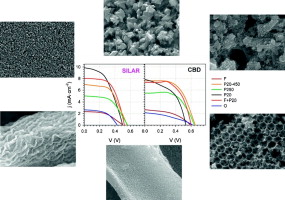
Here we analyze the effect of two relevant aspects related to cell preparation on quantum dot sensitized solar cells (QDSCs) performance: the architecture of the TiO 2 nanostructured electrode and the growth method of quantum dots (QD). Particular attention is given to the effect on the photovoltage, V oc, since this parameter conveys the main…

Oxidative Dehydrogenation of Ethanol over Au/TiO2 Photocatalysts

Au/TiO2 photocatalysts were used in ethanol oxidative dehydrogenation. Catalysts at gold loading ranging between 0.5-2 wt.% were synthesized by photodeposition (using different deposition times: 15 and 120 min) over an own-prepared TiO2 by sol-gel method. For reference purposes, a commercial 1 wt.% Au/TiO2 catalyst (AUROlite (TM), Strem Chemicals) was also tested. Photocatalytic reactions were carried…