Electrical resistivity and thermal conductivity of SiC/Si ecoceramics prepared from sapele wood biocarbon

Samples of β-SiC/Si ecoceramics with a silicon concentration of ∼21 vol % have been prepared using a series of consecutive procedures (carbonization of sapele wood biocarbon, synthesis of high-porosity biocarbon with channel-type pores, infiltration of molten silicon into empty channels of the biocarbon, formation of β-SiC, and retention of residual silicon in channels of β-SiC).…

Creep strength of nickel oxide/zirconia composites under different environmental atmospheres

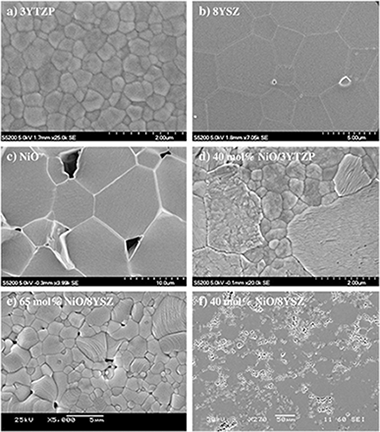
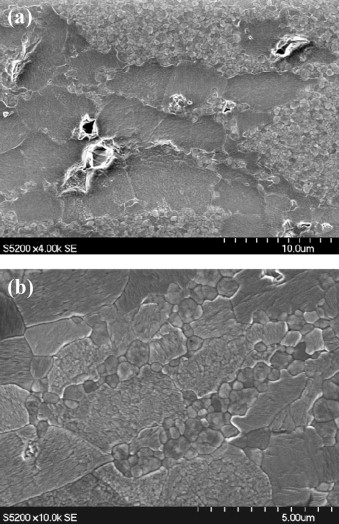
NiO/8YSZ (8 mol% Y2O3-stabilized cubic ZrO2) and NiO/3YTZP (3 mol% Y2O3-stabilized tetragonal ZrO2) composites with different NiO contents have been fabricated by a conventional route of mechanical mixing of NiO and zirconia powders and sintering at 1500 °C for 10 h in air. The resulting microstructures have been characterized by electron microscopy. The composites show…

Effect of deposition of silver on structural characteristics and photoactivity of TiO2-based photocatalysts

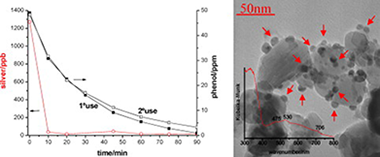
The homemade bare TiO2 photocatalyst obtained in a previous work was modified with nanosized silver particles by liquid impregnation and photodeposition methods to obtain different noble metal loadings (0.3–1 at.%). Characterization of the synthesized photocatalysts was carried out by the BET method, XPS, TEM, SEM-EDX, XRD and diffuse reflectance measurements. Photocatalytic activity of these silver-deposited…

High-temperature plastic deformation mechanisms of ytterbium-doped barium cerate proton conductor

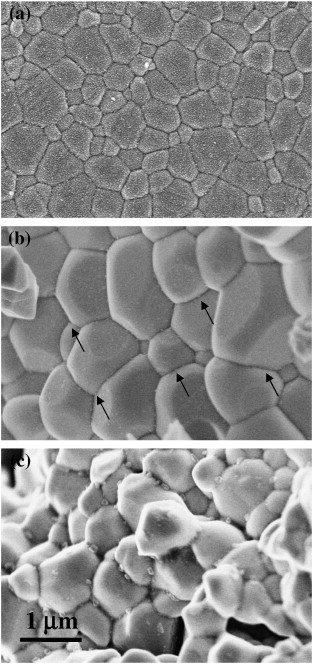
The enhanced proton conductivity exhibited by trivalent cation-doped barium cerate perovskites makes these materials excellent candidates for electrochemical applications, in particular as electrolytes for solid oxide fuel cells. These devices operate at elevated temperatures, where creep and other deformation processes influence the overall efficiency and lifetime. In this work, the high-temperature plastic deformation mechanisms of…

Following the Wetting of One-Dimensional Photoactive Surfaces

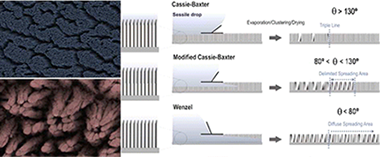
This article aims toward a full description of the wetting conversion from superhydrophobicity to superhydrophilicity under illumination with UV light of high-density ZnO nanorods surfaces by (i) following the evolution of the clusters and superstructures formed by the nanocarpet effect as a function of the water contact angle (WCA); (ii) characterization of the superhydrophobic and…

Microstructure and high-temperature mechanical behavior of melt-growth Al2O3/Er3Al5O12/ZrO2 ternary eutectic composites

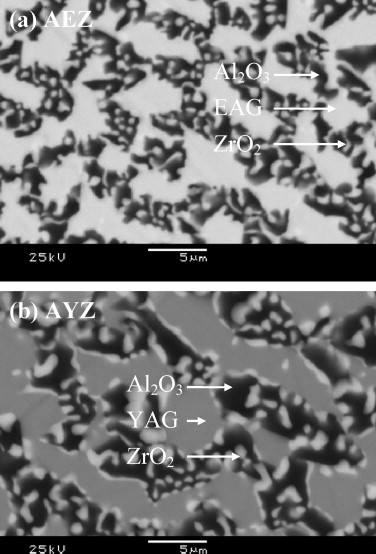
The microstructural and high-temperature mechanical characteristics of directionally solidified rods of Al2O3–Er3Al5O12–ZrO2 ternary eutectic oxides processed by the laser-heated floating zone method at different growth rates have been investigated. The eutectic microstructure displayed an entangled three-dimensional network of Al2O3 and Er3Al5O12 phases of similar sizes, elongated along the growth direction; the minority zirconia phase formed…

Insights towards the influence of Pt features on the photocatalytic activity improvement of TiO2 by platinisation

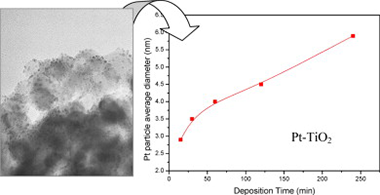
The influence of Pt features, such as particle size, dispersion, oxidation state and amount of metal, on the improvement of the photoactivity of TiO2 for phenol and methyl orange degradation was studied. The size of Pt deposits was precisely controlled by changing deposition time under medium light intensity during the photodeposition, with sizes ranging from…

Making Photo-selective TiO2 Materials by Cation–Anion Codoping: From Structure and Electronic Properties to Photoactivity

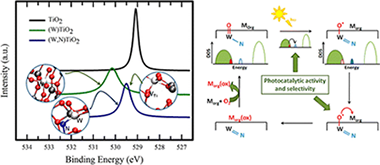
Photoselective oxidation yielding high-added value chemicals appears as a green novel process with potential to be explored. In this study we combine spectroscopic XPS (N 1s and O 1s) and multiwavelength Raman data with density functional theory calculations to explore the structural and electronic properties of W,N-codoped TiO2 anatase surfaces and interpret the outstanding photocatalytic…

Characterization of highly crosslinked polyethylenes by colorimetry

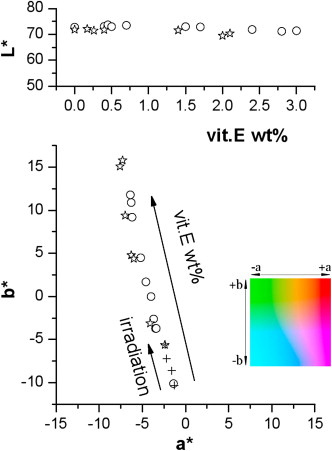
Colour analysis appears to be a robust technique for characterizing vitamin E doping and gamma irradiation of medical grade polyethylene samples. The analysis procedure described in this paper is of great interest because it can easily distinguish between polyethylene samples with differences in vitamin E (α-tocopherol) doping of about 0.1 wt% and gamma irradiation doses of…