Gas-phase Photocatalytic Partial Oxidation of Cyclohexane to Cyclohexanol and Cyclohexanone on Au/TiO2 Photocatalysts

The heterogeneous photocatalytic partial oxidation of cyclohexane in gas-phase as an alternative green process for fine chemicals synthesis was successfully achieved on Au/TiO2 photocatalysts prepared by photodeposition technique. Different gold loadings ranging between 0.5 and 2 wt.% of photodeposited Au on TiO2 synthesized by sol-gel method were obtained by changing the concentration of gold precursor…

Generalized master plots as a straightforward approach for determining the kinetic model: The case of cellulose pyrolysis

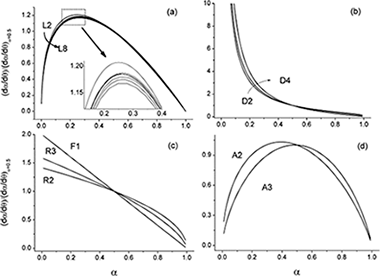
The thermal degradation of cellulose is a complex reaction and, despite the large amount of work by many investigators during the last decades, the actual understanding of the thermal decomposition kinetics is still very limited. Thus, while several mechanisms have been proposed to describe the process, the real model has not yet been clearly identified.…

Synthesis and functionalization of biocompatible Tb:CePO4 nanophosphors with spindle-like shape

Monoclinic Tb:CePO4 nanophosphors with a spindle-like morphology and tailored size (in the nanometer and micrometer range) have been prepared through a very simple procedure, which consists of aging, at low temperature (120 °C), ethylene glycol solutions containing only cerium and terbium acetylacetonates and phosphoric acid, not requiring the addition of surfactants or capping agents. The…

XPS and AES analyses of cerium conversion coatings generated on AA5083 by thermal activation

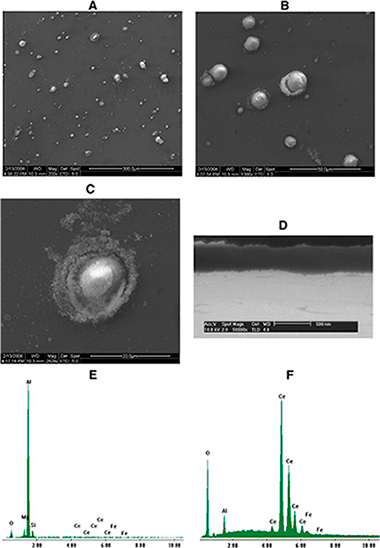
This paper describes the deep analysis of cerium conversion coatings developed with thermal activation on AA5083 under optimum processing conditions. Scanning electron microscopy (SEM), electron dispersive spectroscopy (EDX), X-ray photoelectron spectroscopy (XPS) and Auger electron spectroscopy (AES) were employed to study these layers. Ar+ sputtering was also employed to analyse the coatings’ core. Although conversion…

Bulk TiCxN1−x–15%Co cermets obtained by direct spark plasma sintering of mechanochemical synthesized powders

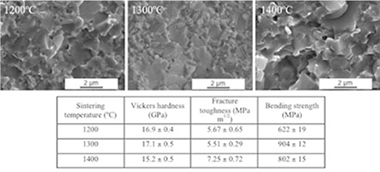
TiCxN1−x–15 wt.%Co cermets were obtained by a mechanically induced self-sustaining reaction (MSR) and sintered by spark plasma sintering (SPS) technique at different temperatures (1200–1400 °C) for 1 min in vacuum under a uniaxial load of 80 MPa. The evolution of microstructure and mechanical properties was investigated. SPS allowed high densification with limited grain growth at…

Nanoporous silica microparticle interaction with toll-like receptor agonists in macrophages

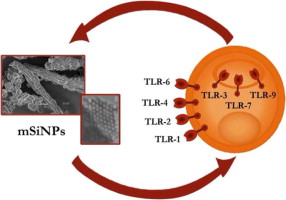
Nanoporous silica microparticles (NSiO2-MP) are considered to be potential drug delivery systems and scaffolding platforms in tissue engineering. However, few biocompatibility studies regarding NSiO2-MP interaction with the immune system have been reported. Toll-like receptors (TLR) are involved in host defence as well as autoimmune and inflammatory diseases. The results show that NSiO2-MP up to 100…

Chemical–physical characterization of isolated plant cuticles subjected to low-dose γ-irradiation

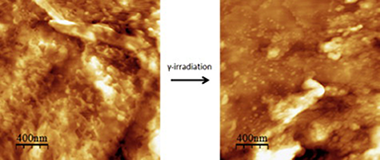
Isolated tomato fruit cuticles were subjected to low dose (80 Gy) γ-irradiation, as a potential methodology to prevent harvested fruit and vegetables spoilage. Both irradiated and non-irradiated samples have been morphologically and chemically characterized by scanning electron (SEM), atomic force (AFM), attenuated total reflectance Fourier transform infrared (ATR-FTIR) and X-ray photoelectron (XPS) spectroscopies. Additionally, electrochemical…

Hydrogenation of 2,2,2-trifluoroacetophenone: Molecular insight into the role of solvent in enantioselection

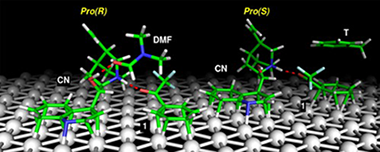
The unique solvent effect in the enantioselective hydrogenation of α-fluorinated ketones has been investigated in ten different solvents using the  hydrogenation of 2,2,2-trifluoroacetophenone (1) on cinchonine (CN)-modified Pt/Al2O3 as a model reaction. Application of strongly basic solvents – but also increasing hydrogen pressure or conversion – inverted the sense of enantiodifferentiation from (S)-alcohol (expected enantiomer…

Hydrogenation of 2,2,2-trifluoroacetophenone: Molecular insight into the role of solvent in enantioselection

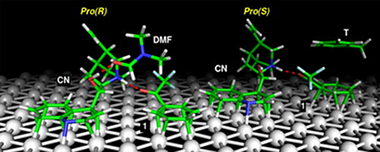
The unique solvent effect in the enantioselective hydrogenation of α-fluorinated ketones has been investigated in ten different solvents using the  hydrogenation of 2,2,2-trifluoroacetophenone (1) on cinchonine (CN)-modified Pt/Al2O3 as a model reaction. Application of strongly basic solvents – but also increasing hydrogen pressure or conversion – inverted the sense of enantiodifferentiation from (S)-alcohol (expected enantiomer…