Quantification of low levels of fluorine content in thin films

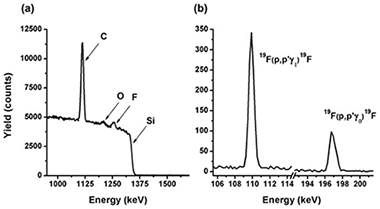
Fluorine quantification in thin film samples containing different amounts of fluorine atoms was accomplished by combining proton-Rutherford Backscattering Spectrometry (p-RBS) and proton induced gamma-ray emission (PIGE) using proton beams of 1550 and 2330 keV for p-RBS and PIGE measurements, respectively. The capabilities of the proposed quantification method are illustrated with examples of the analysis of…

Influence of plasma-generated negative oxygen ion impingement on magnetron sputtered amorphous SiO2 thin films during growth at low temperatures

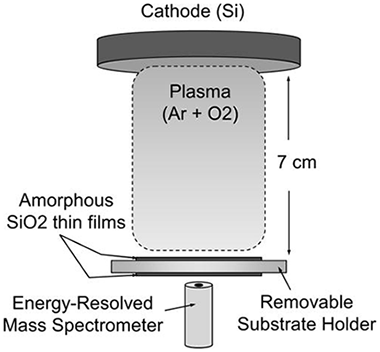
Growth of amorphous SiO2 thin films deposited by reactive magnetron sputtering at low temperatures has been studied under different oxygen partial pressure conditions. Film microstructures varied from coalescent vertical column-like to homogeneous compact microstructures, possessing all similar refractive indexes. A discussion on the process responsible for the different microstructures is carried out focusing on the…

Nanostructured Spark Plasma Sintered Ce-TZP Ceramics

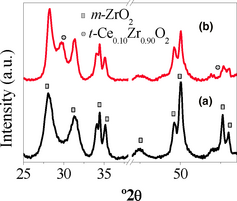
In this work, spark plasma sintering (SPS) of 10 mol% CeO 2-doped ZrO 2 nanocrystalline powders, obtained by a two-step synthesis procedure, allows the preparation of fully densified nanostructured ceramics. The CeO 2-ZrO 2 powders with particle size below 100 nm are obtained after CeO 2 deposition on hydrothermally synthesized ZrO 2 particles by the…

Inverse core-rim microstructure in (Ti,Ta)(C,N)-based cermets developed by a mechanically induced self-sustaining reaction

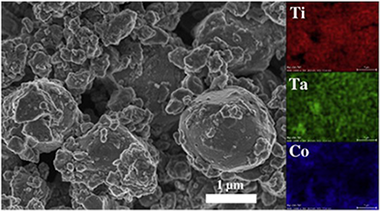
Cermets with a nominal composition (Tia(0.8)Ta(0.2)C(0.5)N(0.5)-20 wt.% Co) were synthesised by a mechanically induced self-sustaining reaction (MSR) process from stoichiometric elemental powder blends. The MSR allowed the production of a complex (Ti,Ta)(C,N) solid solution, which was the raw material used for the sintering process. The pressureless sintering process was performed at temperatures between 1400 degrees…

Nanoecotoxicity effects of engineered silver and gold nanoparticles in aquatic organisms

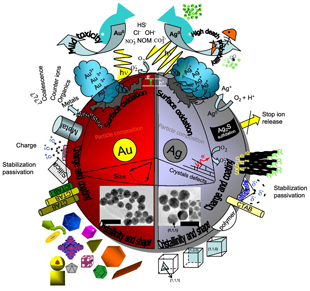
Engineered nanoparticles (ENPs) are increasingly being incorporated into commercial products. A better understanding is required of their environmental impacts in aquatic ecosystems. This review deals with the ecotoxicity effects of silver and gold ENPs (AgNPs and AuNPs) in aquatic organisms, and considers the means by which these ENPs enter aquatic environments, their aggregation status and…

Operando DRIFTS study of the redox and catalytic properties of CuO/Ce1−xTbxO2−δ (x = 0–0.5) catalysts: evidence of an induction step during CO oxidation

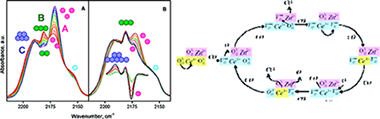
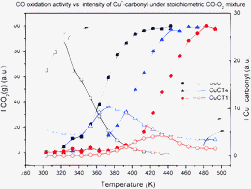
Catalysts of 1 wt% copper oxide supported on cerium oxide or cerium–terbium mixed oxides are comparatively examined with respect to their redox and catalytic properties for CO oxidation. Characterization of the catalysts had shown that they contain highly dispersed CuO-type entities on the corresponding nanostructured fluorite supports with copper dispersion increasing with increasing amounts of…

Thermal behaviour of ground and unground acid leached vermiculite

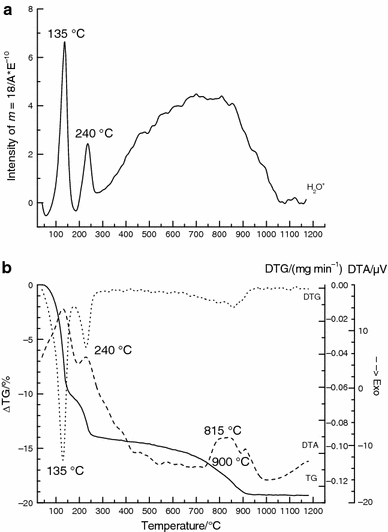
Acid leaching of vermiculite is an interesting procedure to prepare high surface area porous silica. Thermal behaviour of unground and ground vermiculite leached with HCl solutions has been studied by TG, DTA, ETA and high temperature XRD. Important differences have been observed in the thermal behaviour of unground and ground vermiculite after the acid treatments.…