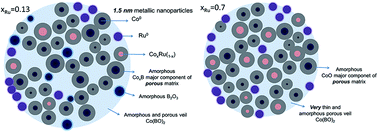
Chemistry, nanostructure and magnetic properties of Co-Ru-B-O nanoalloys

In our previous works, Co–B–O and Co–Ru–B–O ultrafine powders with variable Ru content (xRu) were studied as catalysts for hydrogen generation through sodium borohydride hydrolysis. These materials have shown a complex nanostructure in which small Co–Ru metallic nanoparticles are embedded in an amorphous matrix formed by Co–Ru–B–O based phases and B2O3. Catalytic activity was correlated…

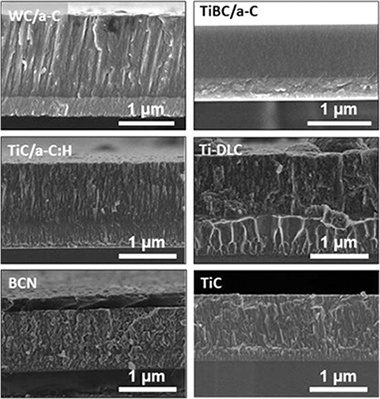
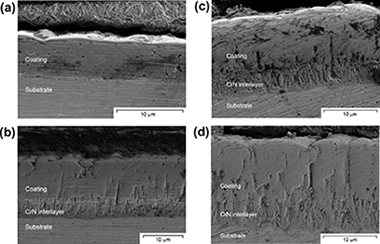
Tribological comparison of different C-based coatings in lubricated and unlubricated conditions

The use of carbon-based coatings (hydrogenated and non-hydrogenated DLC, doped and alloyed-DLC) is of wide interest due to its applications in mechanical components submitted to friction and wear including sliding parts in automotive engines. A tribological comparative analysis using a reciprocating (SRV) tester in lubricated and unlubricated conditions with a 4-stroke motor oil has been…

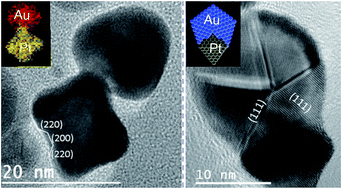
Shape-defined nanodimers by tailored heterometallic epitaxy

The systematic construction of heterogeneous nanoparticles composed of two distinct metal domains (Au and Pt) and exhibiting a broad range of morphologically defined shapes is reported. It is demonstrated that careful Au overgrowth on Pt nanocrystal seeds with shapes mainly corresponding to cubeoctahedra, octahedra and octapods can lead to heterometallic systems whose intrinsic structures result…

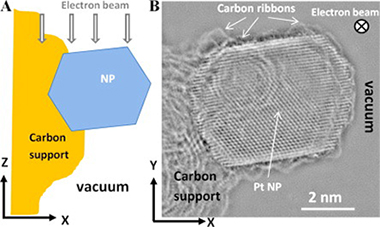
Impregnation of carbon black for the examination of colloids using TEM

Nanoparticles are frequently synthesised as colloids, dispersed in solvents such as water, hexane or ethanol. For their characterisation by transmission electron microscopy (TEM), a drop of colloid is typically deposited on a carbon support and the solvent allowed to evaporate. However, this method of supporting the nanoparticles reduces the visibility of fine atomic details, particularly…

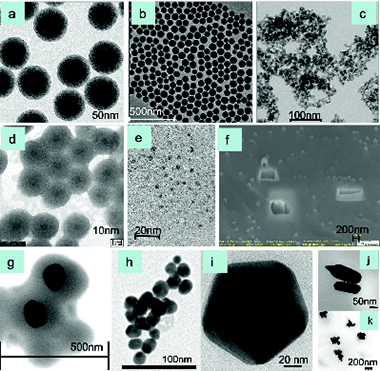
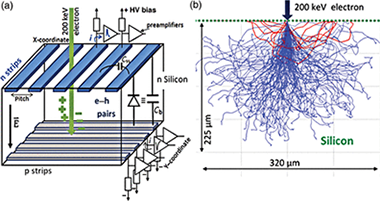
A General Perspective of the Characterization and Quantification of Nanoparticles: Imaging, Spectroscopic, and Separation Techniques

This article gives an overview of the different techniques used to identify, characterize, and quantify engineered nanoparticles (ENPs). The state-of-the-art of the field is summarized, and the different characterization techniques have been grouped according to the information they can provide. In addition, some selected applications are highlighted for each technique. The classification of the techniques…

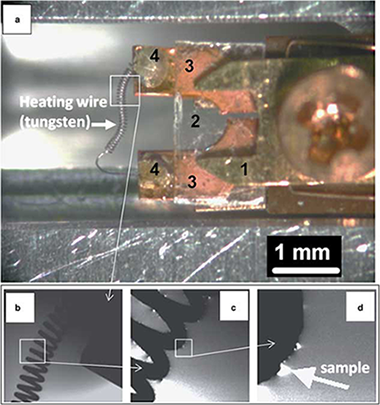
Desarrollo de procesos de combustión catalítica de hidrógeno y estudio de su integración en dispositivos para aplicaciones portátiles

El hidrógeno como vector de transporte y almacenamiento de energía es un candidato muy atractivo en el contexto de un mayor uso de las energías renovables y limpias. La producción y el uso de la energía basada en la tecnología del hidrógeno es de especial relevancia en pequeña escala para aplicaciones portátiles (y potencialmente escalable…

Mechanical and phase stability of TiBC coatings up to 1000 degrees C

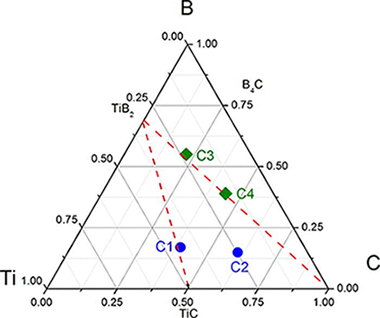
TiBC coatings with different phase compositions (nanocrystalline TiBxCy or TiB2 phases mixed or not with amorphous carbon, a-C) were prepared by magnetron sputtering. These coatings were comparatively studied in terms of phase stability after thermal annealing at 250, 500, 750, and 1000 °C in argon using Raman and x-ray absorption near-edge spectroscopy techniques. The main differences…