Effect of process parameters on mechanical and tribological performance of pulsed-DC sputtered TiC/a-C:H nanocomposite films

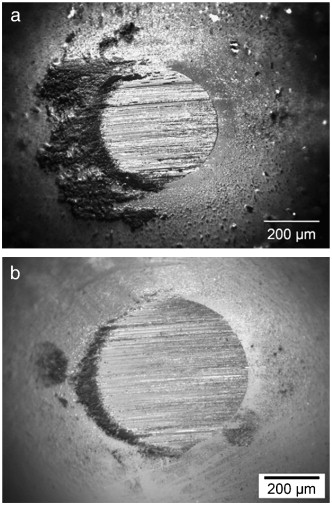
Mechanical, structural, chemical bonding (sp(3)/sp(2)). and tribological properties of films deposited by pulsed-DC sputtering of Ti targets in Ar/C2H2 plasma were studied as a function of the substrate bias voltage, Ti-target current, C2H2 flow rate and pulse frequency by nanoindentation, Raman spectroscopy and ball-on-disc tribometry. The new findings in this study comprise: dense, column-free, smooth,…

Si-doped multifunctional bioactive nanostructured films

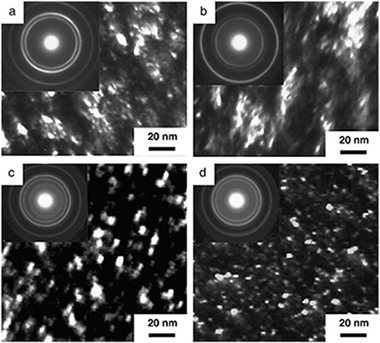
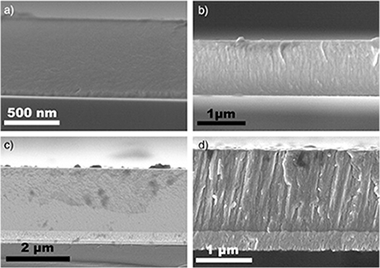
Si-doped multifunctional bioactive nanostructured films (MuBiNaFs) were deposited by DC magnetron sputtering of composite TiC0.5 + CaO + Si (A) and TiC0.5 + CaO + Si3N4 (B) targets produced by self-propagating high-temperature synthesis method. The films were characterized in terms of their structure, elemental and phase composition using X-ray diffraction, scanning and transmission electron microscopy,…

Microstructural study of the LiBH4-MgH2 reactive hydride composite with and without Ti-isopropoxide additive

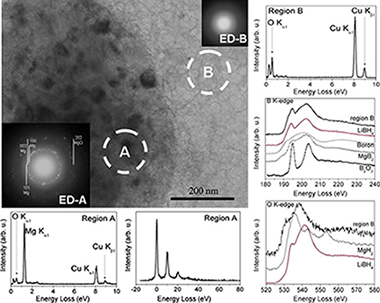
An exhaustive microstructural characterization is reported for the LiBH4-MgH2 reactive hydride composite (RHC) system with and without titanium isopropoxide additive. X-ray diffraction with Rietveld analysis, transmission electron microscopy coupled to energy dispersive X-ray analysis, selected-area electron diffraction and electron energy loss spectroscopy are presented in this paper for the first time for this system for…

Influence of carbon chemical bonding on the tribological behavior of sputtered nanocomposite TiBC/a-C coatings

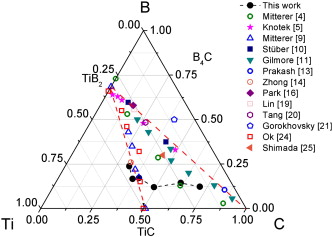
The tribological performance of nanocomposite coatings containing Ti-B-C phases and amorphous carbon (a-C) are studied. The coatings are deposited by a sputtering process from a sintered TiB2:TiC target and graphite, using pulsed direct current and radio frequency sources. By varying the sputtering power ratio, the amorphous carbon content of the coatings can be tuned, as…

Magnetometry and electron paramagnetic resonance studies of phosphine- and thiol-capped gold nanoparticles

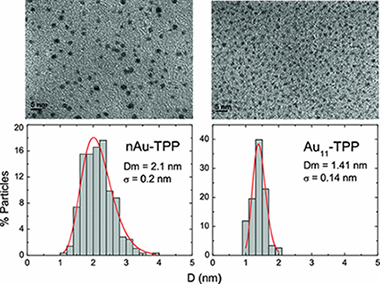
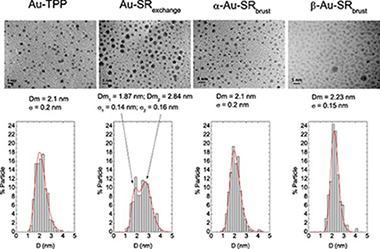
In the last years, the number of studies performed by wholly independent research groups that confirm the permanent magnetism, first observed in our research lab, for thiol-capped Au nanoparticles (NPs) has rapidly increased. Throughout the years, the initial magnetometry studies have been completed with element-specific magnetization measurements based on, for example, the x-ray magnetic circular…

Nanopartículas funcionalizadas para aplicaciones de hipertermia y evaluación de su ecotoxicidad

En este Proyecto de Excelencia se parte de la experiencia previa del grupo TEP-217 en el desarrollo y caracterización de nanopartículas funcionalizadas potencialmente biocompatibles y se pretende avanzar en cuatro direcciones. a) Continuar con el desarrollo de nanopartículas basadas principalmente en Au, Ag y óxidos magnéticos con distintas funcionalizaciones y microestructura. b) Profundizar en la…

Oxidation State and Local Structure of Ti-Based Additives in the Reactive Hydride Composite 2LiBH(4) + MgH2

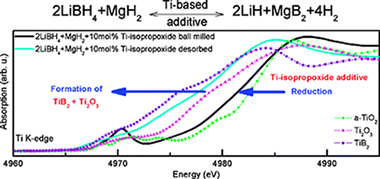
Nowadays, the technological utilization of reactive hydride composites (RHC) Lis hydrogen storage materials is limited by their reaction kinetics. However, addition of transition-metal-based additives, for instance titanium isopropoxide (Ti-iso), to the 2LiBH(4)+MgH2 system, results in a significant improvement of sorption kinetics. In this work, the evolution of chemical state and local structure of the Ti-based…