Low-temperature reverse water gas-shift reaction over highly efficient Cu-hydrotalcites: Mechanistic insights on the role of malachite phase

Carbon dioxide (CO2) transformation into valuable fuels and chemicals is in most cases a challenge far from readiness nowadays. One possible route for its conversion is the reverse water gas shift reaction (rWGS), crucial for syngas generation and required for the chemical conversion of CO2 to fuels and platform chemicals. In this paper, well organized Cu/Zn/Al structures were proposed as efficient catalysts for rWGS reaction at low tem-peratures. The results of in situ…

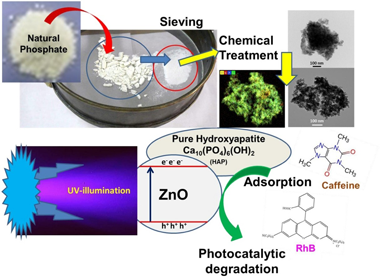
Fast photodegradation of rhodamine B and caffeine using ZnO-hydroxyapatite composites under UV-light illumination

Zinc oxide-hydroxyapatite composites were prepared using wet impregnation method. Firstly, a natural phosphate ore rich in silica and calcium phosphate was sieved to separate silica phase from phosphate phase. Then, through a chemical precipitation method, a pure hydroxyapatite (HAP) was obtained, which was used as a support for ZnO immobilization and applied for the photodegradation…

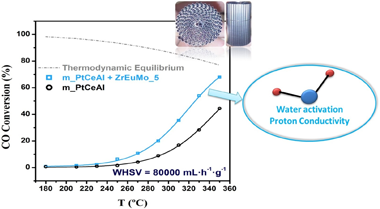
Boosting water activation determining-step in WGS reaction on structured catalyst by Mo-doping

Proton conductors Mo-Eu-Zr mixed oxide systems were synthesized and further mixed with a conventional Pt/CeO2/Al2O3 catalyst to develop a highly efficient water-gas-shift (WGS) catalyst. The designed catalyst, once structured, allows reach the equilibrium conversion at medium temperatures (similar to 350 degrees C) at 80 L.g(-1) h(-1) space velocity. The ability of the proton conductor to…

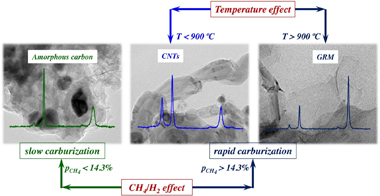
Performance of AISI 316L-stainless steel foams towards the formation of graphene related nanomaterials by catalytic decomposition of methane at high temperature

This work explores the preparation of graphene-related materials (GRMs) grown on stainless steel foams via catalytic decomposition of methane (CDM). The main active phases for the reaction are the Fe nanoparticles segregated from the stainless-steel after the activation stage of the foam. The effect of the feed composition and reaction temperature has been studied in…

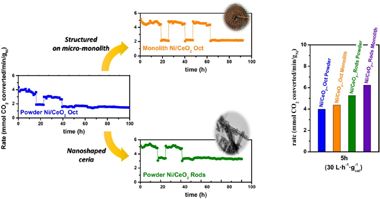
Enhanced catalytic activity and stability of nanoshaped Ni/CeO2 for CO2 methanation in micro-monoliths

Coupling inherently fluctuating renewable feedstocks to highly exothermic catalytic processes, such as CO2 methanation, is a major challenge as large thermal swings occurring during ON- and OFF- cycles can irreversible deactivate the catalyst via metal sintering and pore collapsing. Here, we report a highly stable and active Ni catalyst supported on CeO2 nanorods that can…

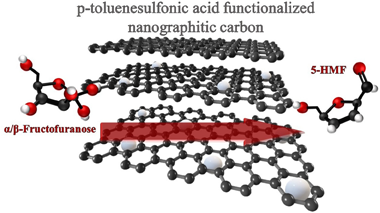
Fructose dehydration reaction over functionalized nanographitic catalysts in MIBK/H2O biphasic system

A series of functionalized nanographitic carbons is prepared, characterized and tested in fructose dehydration reaction to 5-hydroxymethylfurfural. The functionalization treatment was selected to introduce various Bro?nsted acid sites and to modify the textural and catalytic properties of the initial carbon material. Within the series, the sulfonated carbons present the most interesting catalytic behavior resulting in…

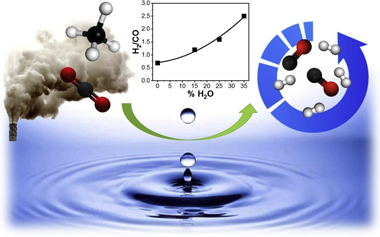
Flexible syngas production using a La2Zr2-xNixO7-delta pyrochlore-double perovskite catalyst: Towards a direct route for gas phase CO2 recycling

The bi-reforming of methane (BRM) has the advantage of utilising greenhouse gases and producing H2 rich syngas. In this work Ni stabilised in a pyrochlore-double perovskite structure is reported as a viable catalyst for both Dry Reforming of Methane (DRM) and BRM. A 10 wt.% Ni-doped La2Zr2O7 pyrochlore catalyst was synthesised, characterised and tested under both reaction conditions…

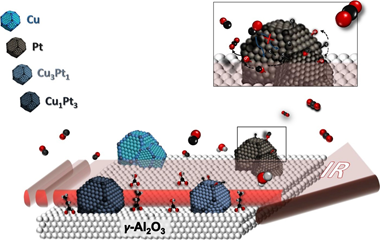
Upgrading the PtCu intermetallic compounds: The role of Pt and Cu in the alloy

This work is devoted to the study of the role of both metals in the intermetallic PtxCuy/ γ Al2O3 catalysts commonly employed in CO-PROX reaction. Therefore, monometallic Pt and Cu based catalysts and PtCu intermetallic compound with different molar ratios (Pt3Cu1 and Pt1Cu3) supported catalysts were carefully synthesized and deeply characterized. Room temperature CO adsorptions by FTIR spectroscopy were…