Enhanced up-conversion photoluminescence in fluoride-oxyfluoride nanophosphor films by embedding gold nanoparticles

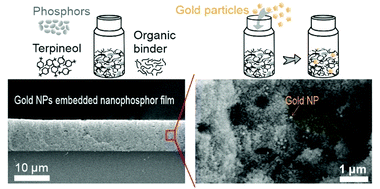
Owing to their unique non-linear optical character, lanthanide-based up-converting materials are potentially interesting for a wide variety of fields ranging from biomedicine to light harvesting. However, their poor luminescent efficiency challenges the development of technological applications. In this context, localized surface plasmon resonances (LSPRs) have been demonstrated as a valuable strategy to improve light conversion.…

Transparent Phosphor Thin Films Based on Rare-Earth-Doped Garnets: Building Blocks for Versatile Persistent Luminescence Materials

Afterglow properties of persistent phosphors are attracting a great deal of attention in the fields of bioimaging, sensing, labeling, safety, or security. Complex garnet oxides, especially those doped with Ce3+ and Cr3+, are particularly relevant to this end since their persistent luminescence can be tuned through matrix composition and activated by visible light, in contrast to…

Molecular Interface Engineering via Triazatruxene-Based Moieties/NiOx as Hole-Selective Bilayers in Perovskite Solar Cells for Reliability

Interface engineering is an effective approach to decrease nonradiative recombination and the energy barrier at the perovskite/hole transporting layer (HTL) interfaces. To overcome such limitations, an organic semiconductor (DTT-EHDI2) is proposed, which is, composed of dithienothiophene (DTT) as the core and a planar triazatruxene incorporating an alkyl chain as the side group. This is noted…

Nanophotonics for current and future white light-emitting devices

Photonic nanostructures have proven useful to enhance the performance of a wide variety of materials and devices for sensing, catalysis, light harvesting, or light conversion. Herein, we discuss the role of nanophotonics in current and next-generation designs of white light-emitting diodes (LEDs). We discuss recent developments on luminescent materials designed as alternatives to rare earth-doped…

Diseño óptico optimizado de dispositivos optoelectrónicos basados en puntos cuánticos de perovskita sin ligandos

La motivación del proyecto FreeDot es triple. Primero, proponer soluciones a los inconvenientes específicos que obstaculizan un mayor desarrollo de la tecnología optoelectrónica de perovskita (inestabilidad, durabilidad, sensibilidad ambiental, etc.). La aproximación propuesta se basa en el desarrollo de células solares nanoestructuradas y LED basados en nuevas matrices porosas que permiten la síntesis de ensamblados…

Persistent luminescent nanoparticles: Challenges and opportunities for a shimmering future

Persistent phosphors are luminescent sources based on crystalline materials doped with rare-earth or transition metal cations able to produce light after the excitation source vanishes. Although known for centuries, these materials gained renewed interest after the discovery of Eu2+,RE3+ co-doped aluminates and silicates in the late 1990s due to their unprecedented afterglow properties. In contrast,…

Light-Harvesting Properties of a Subphthalocyanine Solar Absorber Coupled to an Optical Cavity

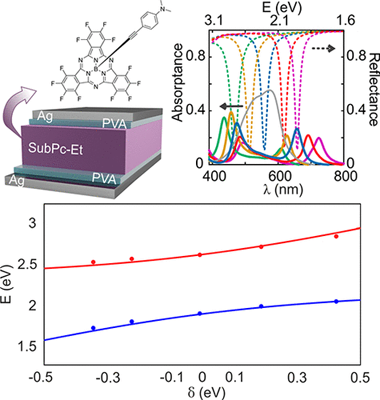
Herein, both from the experimental and theoretical point of view, the optical absorption properties of a subphthalocyanine (SubPc), an organic macrocycle commonly used as a sunlight harvester, coupled to metallic optical cavities are analyzed. How different electronic transitions characteristic of this compound and specifically those that give rise to excitonic (Q band) and charge transfer…

Ligand-Free MAPbI(3) Quantum Dot Solar Cells Based on Nanostructured Insulating Matrices

The stability, either chemical or thermal, and performance of colloidal quantum dot (CQD) devices are typically limited by the presence of surface-bonded organic ligands required to stabilize the nanocrystals. In addition, optimization of charge transport implies lengthy ligand exchange processing. Herein, evidence of efficient charge transport through a network of ligand-free perovskite quantum dots (PQDs)…