High temperature compressive strength and creep behavior of Si-Ti-C-O fiber-bonded ceramics

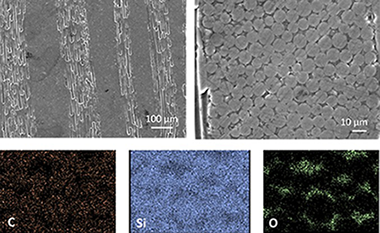
Fiber bonded silicon carbide ceramic materials provide cost-advantage over traditional ceramic matrix composites and require fewer processing steps. Despite their interest in extreme environment thermostructural applications no data on long term mechanical reliability other than static fatigue is available for them. We studied the high temperature compressive strength and creep behavior of a fiber bonded…

Fluorescent Humidity Sensors Based on Photonic Resonators

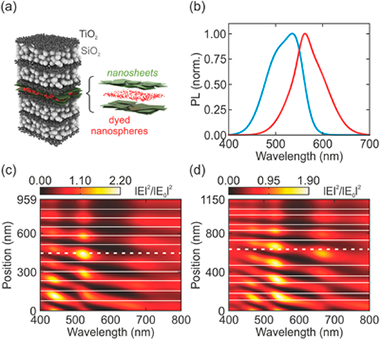
Among the different approaches to humidity sensing available, those based on fluorescent signals are gathering a great deal of attention due to their fast response and versatility of detection and design. So far, all proposals have focused on the use of luminescent probes whose emission is either triggered or inhibited by the presence of water…

Calcium-Looping performance of steel and blast furnace slags for thermochemical energy storage in concentrated solar power plants

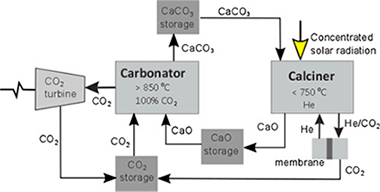
The Calcium Looping (CaL) process, based on the carbonation/calcination of CaO, has been proposed as a feasible technology for Thermochemical Energy Storage (TCES) in Concentrated Solar Power (CSP) plants. The CaL process usually employs limestone as CaO precursor for its very low cost, non-toxicity, abundance and wide geographical distribution. However, the multicycle activity of limestone…

Silver and gold nanoparticles in nanometric confined templates: synthesis and alloying within the anisotropic pores of oblique angle deposited films

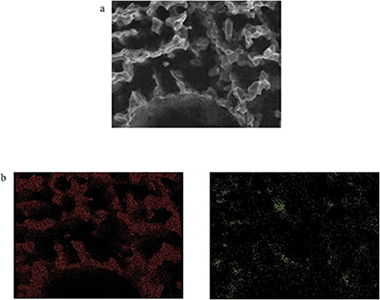
In this work we have developed an infiltration methodology to incorporate metal nanoparticles (NPs) of controlled size and shape into the open voids available in oblique angle deposited thin films. These NPs exhibited well-defined surface plasmon resonances (SPRs). The nanometric confined space provided by their porous microstructure has been used as a template for the…

Chalcogenide Quaternary Cu2FeSnS4 Nanocrystals for Solar Cells: Explosive Character of Mechanochemical Synthesis and Environmental Challenge

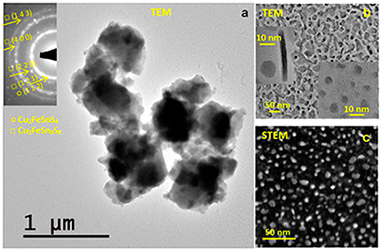
In this study we demonstrate the synthesis of quaternary semiconductor nanocrystals of stannite Cu2FeSnS4/rhodostannite Cu2FeSn3S8 (CFTS) via mechanochemical route using Cu, Fe, Sn and S elements as precursors in one-pot experiments. Methods of X-ray diffraction (XRD), nitrogen adsorption, high-resolution transmission electron microscopy (HRTEM), scanning transmission electron microscopy (STEM), energy-dispersive X-ray spectroscopy (EDX) and X-ray photoelectron…

Microemulsion-Mediated Synthesis and Properties of Uniform Ln:CaWO4 (Ln = Eu, Dy) Nanophosphors with Multicolor Luminescence for Optical and CT Imaging

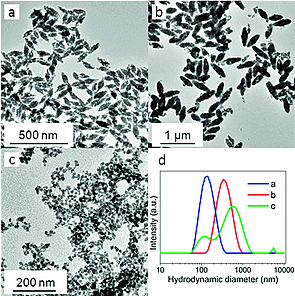
A new room-temperature method has been developed that yields, for the first time in the literature, uniform and well-dispersed CaWO4 nanospindles. This method is based on the use of microemulsions consisting of aqueous solutions of Ca2+ and WO42- precursors, cyclohexane as the organic medium, Triton X-100 as the surfactant, and n-octanol as the cosurfactant. We…

Characterization of ashes from greenhouse crops plant biomass residues using X-ray fluorescence analysis and X-ray diffraction

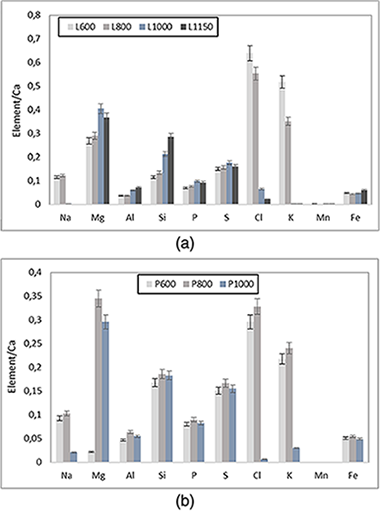
A characterization of ashes obtained by thermal treatments on greenhouse crops plant biomass residues is presented. The chemical analysis, by X-ray fluorescence (wavelength-dispersive X-ray fluorescence), and phase analysis, by X-ray diffraction, of the resultant ashes are reported. Thermal treatments of selected samples of these residues increase the relative amounts of inorganic Mg, Si, P, and…