


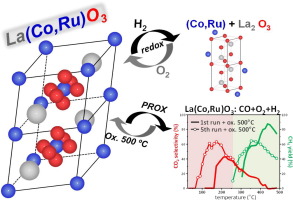
Preferential oxidation of CO on a La-Co-Ru perovskite-type oxide catalyst

A Ru-containing perovskite-type oxide La(Co,Ru)O3 of nominal composition LaCo0.8Ru0.2O3 was prepared by ultrasonic spray combustion and tested for the preferential oxidation of CO (PROX). EXAFS indicated that Ru adopted the coordination environment of Co in LaCoO3 while Co was present as LaCoO3 and Co3O4. PROX activity was replaced by CO hydrogenation activity above 250 °C. Short oxidation at 500 °C between…
Reliability of new poly (lactic-co-glycolic acid) membranes treated with oxygen plasma plus silicon dioxide layers for pre-prosthetic guided bone regeneration processes

Background: The use of cold plasmas may improve the surface roughness of poly(lactic-co-glycolic) acid (PLGA) membranes, which may stimulate the adhesion of osteogenic mediators and cells, thus accelerating the biodegradation of the barriers. Moreover, the incorporation of metallic-oxide particles to the surface of these membranes may enhance their osteoinductive capacity. Therefore, the aim of this…

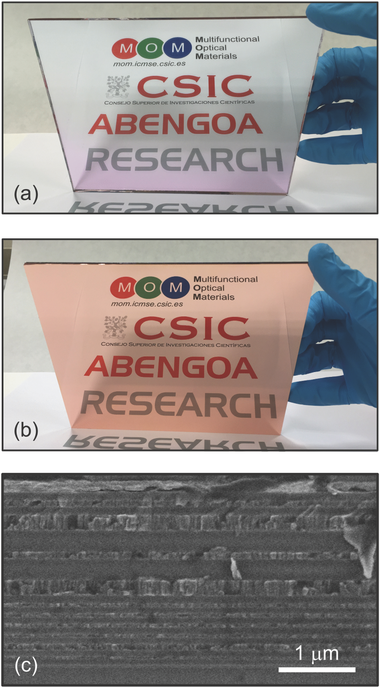
Large-Scale Storage of Concentrated Solar Power from Industrial Waste

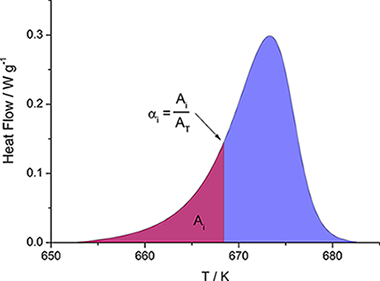
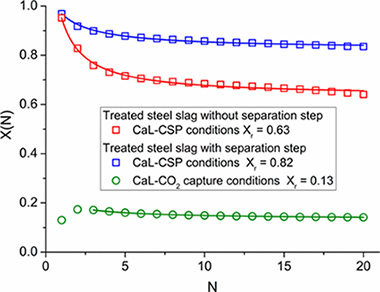
Deep penetration of renewable energies into the grid relies on the development of large-scale energy storage technologies using cheap, abundant, and nontoxic materials. Concentrated solar power (CSP) is particularly suitable to massively store thermal energy for dispatchable electricity generation. This is currently accomplished in a few demonstration plants by using molten salts albeit in a…

Diverse Applications of Nanomedicine

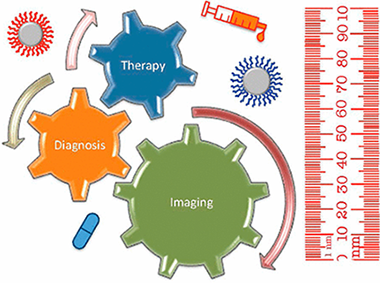
The design and use of materials in the nanoscale size range for addressing medical and health-related issues continues to receive increasing interest. Research in nanomedicine spans a multitude of areas, including drug delivery, vaccine development, antibacterial, diagnosis and imaging tools, wearable devices, implants, high-throughput screening platforms, etc. using biological, nonbiological, biomimetic, or hybrid materials. Many of these…

Morphology control of uniform CaMoO4 microarchitectures and development of white light emitting phosphors by Ln doping (Ln = Dy3+, Eu3+)

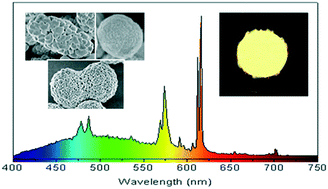
A very simple synthesis procedure based on precipitation reactions at moderate temperature (120 degrees C) from solutions containing calcium nitrate and sodium molybdate, using mixed solvents (polyols and water) has been developed, which produces uniform tetragonal CaMoO4 microarchitectures with different morphologies (peanuts, cocoons, spindles and spheres) composed of self-assembled entities. The morphology and crystal size…

Antibacterial response of titanium oxide coatings doped by nitrogen plasma immersion ion implantation

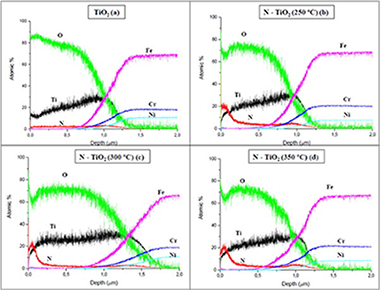
Plasma immersion ion implantation technology has been utilized to enhance the photocatalytic activity of the anatase phase of TiO2 thin films deposited by cathodic arc evaporation PVD. The main objective of this study is to shift the light absorbance of the titania in order to obtain antibacterial activity under visible light irradiation. TiO2 thin films, deposited on…

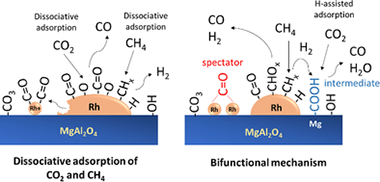
Monitoring the Reaction Mechanism in Model Biogas Reforming by InSitu Transient and Steady-State DRIFTS Measurements

In this work, the reforming of model biogas was investigated on a Rh/MgAl2O4 catalyst. In situ transient and steady-state diffuse reflectance infrared Fourier transform spectroscopy (DRIFTS) measurements were used to gain insight into the reaction mechanism involved in the activation of CH4 and CO2. It was found that the reaction proceeds through of an initial pathway in which…

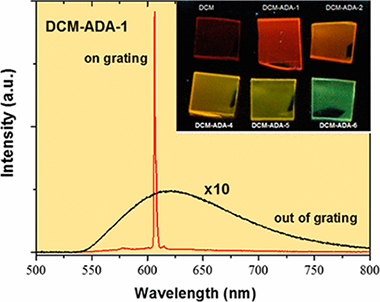
Multicolored Emission and Lasing in DCM-Adamantane Plasma Nanocomposite Optical Films

We present a low-temperature versatile protocol for the fabrication of plasma nanocomposite thin films to act as tunable emitters and optical gain media. The films are obtained by the remote plasma-assisted deposition of a 4-(dicyano-methylene)-2-methy1-6-(4-dimethylamino-styry1)-4Hpyran (DCM) laser dye alongside adamantane. The experimental parameters that determine the concentration of the dye in the films and their…