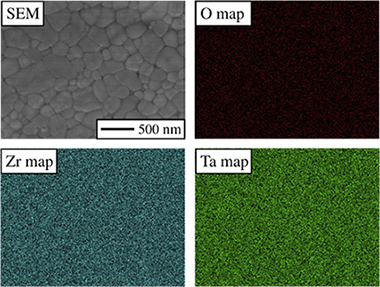
Ceramics of Ta-doping stabilized orthorhombic ZrO2 densified by spark plasma sintering and the effect of post-annealing in air

16 mol% Ta-doped ZrO2 powders were synthesized and densified by spark-plasma sintering (SPS) in vacuum, followed by post-SPS annealing in air, thus obtaining two ultrafine-grained ceramics consisting of Ta-doping stabilized orthorhombic ZrO2. The as-SPSed ceramic is black because it is actually a suboxide essentially with reduced cations and abundant oxygen vacancies, whereas the post-annealed ceramic…

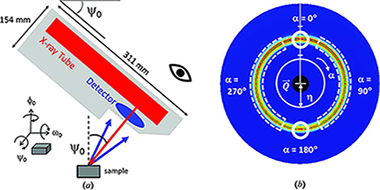
Precision and accuracy of stress measurement with a portable X-ray machine using an area detector

The use of portable X-ray stress analyzers, which utilize an area detector along with the newly adopted ‘cos alpha’ or full-ring fitting method, has recently attracted increasing interest. In laboratory conditions, these measurements are fast, convenient and precise because they employ a single-exposure technique that does not require sample rotation. In addition, the effects of…

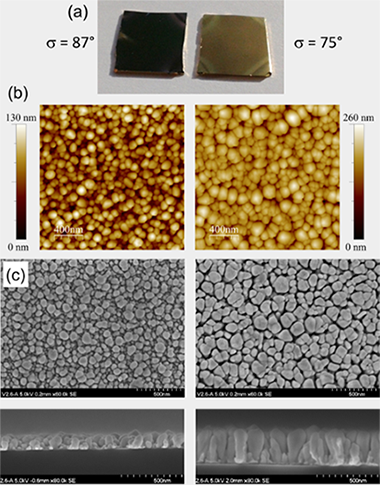
Packaging Materials: All‐Natural Sustainable Packaging Materials Inspired by Plant Cuticles (Adv. Sustainable Syst. 1‐2/2017)

In article number 1600024, José A. Heredia‐Guerrero, Athanassia Athanassiou, and co‐workers present new, sustainable composite materials inspired by plant cuticles. These materials are fabricated by the impregnation of fibrous cellulose substrates with a naturally occurring polyhydroxylated fatty acid, and subsequent polymerization of the latter into a polyester. In the image a piece of this new…

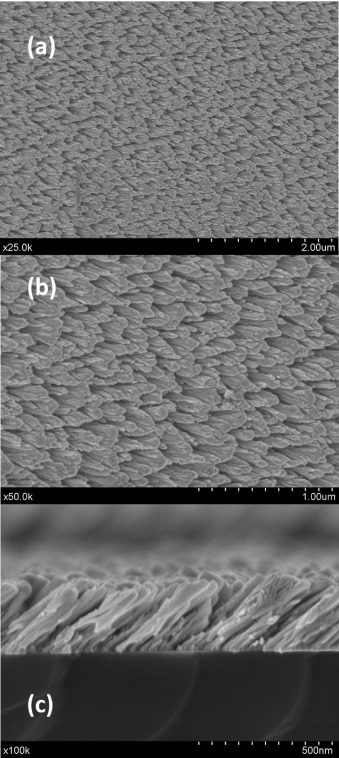
Cholesterol biosensing with a polydopamine-modified nanostructured platinum electrode prepared by oblique angle physical vacuum deposition

This paper reports a novel cholesterol biosensor based on nanostructured platinum (Pt) thin films prepared by Magnetron Sputtering (MS) in an oblique angle (OAD) configuration. Pt thin films were deposited onto a gold screen-printed electrode and characterized using Rutherford Back Scattering (RBS), Scanning Electron Microscopy (SEM), X-ray Diffraction (XRD), Cyclic Voltammetry (CV), X-ray Photo-electron Spectroscopy…

High vacuum synthesis and ambient stability of bottom-up graphene nanoribbons

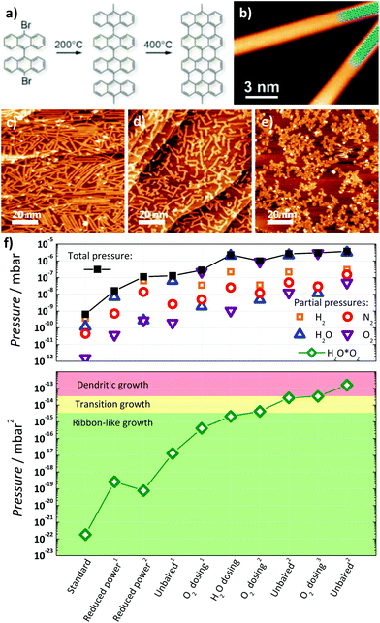
Carbon-based nanomaterials such as graphene are at a crucial point in application development, and their promising potential, which has been demonstrated at the laboratory scale, must be translated to an industrial setting for commercialization. Graphene nanoribbons in particular overcome one limitation of graphene in some electronic applications because they exhibit a sizeable bandgap. However, synthesis…

Identification of Outer and Inner Nickel Particles in a Mesoporous Support: How the Channels Modify the Reducibility of Ni/SBA-15 Catalysts

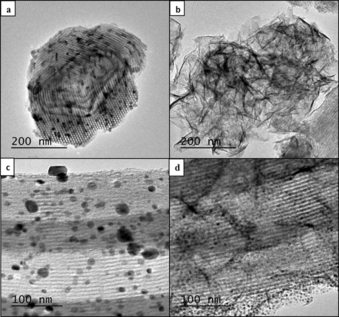
Two different nickel supported on SBA-15 catalytic systems have been prepared by means of impregnation (Ni/SBA-15-ImU) and deposition-precipitation (Ni/SBA-15-DP) methodologies. Upon calcination, Ni/SBA-15DP presents a well-developed nickel phyllosilicate phase, which after reduction gives rise to a dispersed and homogeneous metallic phase, mainly located inside the 5 nm in diameter mesoporous structure of the support. On the…

Preparation and Optimization of Fluorescent Thin Films of Rosamine-SiO2/TiO2 Composites for NO2 Sensing

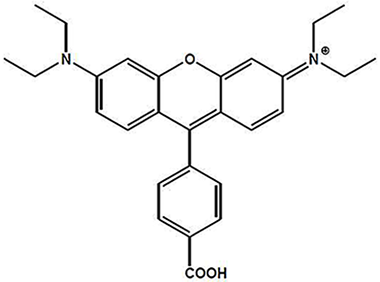
The incorporation of a prototypical rosamine fluorescent dye from organic solutions into transparent and microstructured columnar TiO2 and SiO2 (MO2) thin films, prepared by evaporation at glancing angles (GAPVD), was evaluated. The aggregation of the adsorbed molecules, the infiltration efficiency and the adsorption kinetics were studied by means of UV-Vis absorption and fluorescence spectroscopies. Specifically,…

Comprehensive and Systematic Analysis of the Immunocompatibility of Polyelectrolyte Capsules

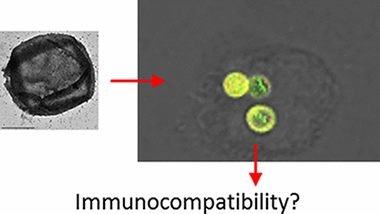
The immunocompability of polyelectrolyte capsules synthesized by layer-by-layer deposition has been investigated. Capsules of different architecture and composed of either non-degradable or biodegradable polymers, with either positively or negatively charged outer surface, and with micrometer size, have been used, and the capsule uptake by different cell lines has been studied and quantified. Immunocompatibility studies were…

Processing and characterization of surrogate nuclear materials with controlled radial porosity

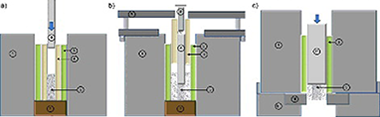
Irradiated fuel pellets present radial gradient porosity. CeO2 has been proven as a surrogate material to understand irradiated mixed oxide (MOX) due to its similar structural and mechanical properties. A novel compaction device was developed to produce CeO2 cylindrical pellets with controlled radial porosity. Three blends of CeO2 with different binder contents (0.5, 3 and…