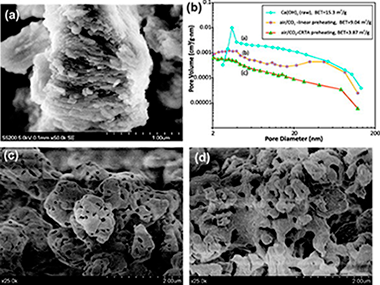
Constant rate thermal analysis for enhancing the long-term CO2 capture of CaO at Ca-looping conditions

Experimental results are reported on the (Ca-looping) multicyclic CO2 capture of CaO and nanosilica/CaO composites derived from Ca(OH)2 and nanosilica/Ca(OH)2 dry mixtures subjected in situ to linear and constant rate thermal analysis (CRTA) preheating programs in either air or air/CO2 atmospheres. By means of CRTA preheating the rates of the reactions taking place during pretreatment…

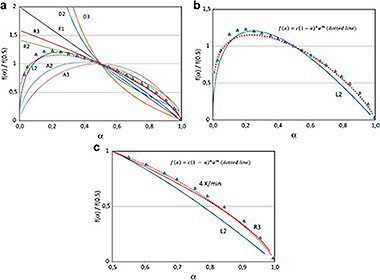
Enhanced general analytical equation for the kinetics of the thermal degradation of poly(lactic acid) driven by random scission

An enhanced general analytical equation has been developed in order to evaluate the kinetic parameters of the thermal degradation of poly(lactic acid) (PLA) at various linear heating rates and at constant rate conditions. This improvement consisted of replacing the n-order conversion function by a modified form of the Sestak-Berggren equation f(α) = c(1−α)nαm, which led…

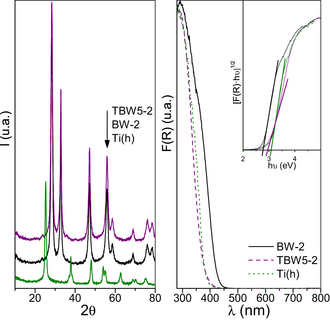
Degradation of Rhodamine B/Phenol Mixtures in Water by Sun-Like Excitation of a Bi2WO6–TiO2 Photocatalyst

Bi2WO6 and Bi2WO6–TiO2 (5% molar Ti) nano-heterostructures were synthesized by a hydrothermal method. The properties of the synthesized catalysts were characterized, having high photoactivity for Rhodamine B degradation under sun-like illumination, explained by a synergetic mechanism previously proposed through UV and visible induced processes, in which the photosensitization effect of Rhodamine B is considered. We…

Thermal Expansion of Rare-Earth Pyrosilicates

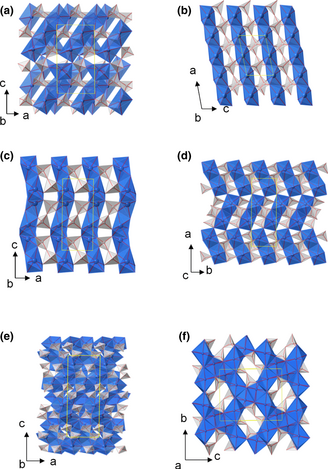
The use of RE2Si2O7 materials as environmental barrier coatings (EBCs) and in the sintering process of advanced ceramics demands a precise knowledge of the coefficient of thermal expansion of the RE2Si2O7. High-temperature X-ray diffraction (HTXRD) patterns were collected on different RE2Si2O7 polymorphs, namely A, G, α, β, γ, and δ, to determine the changes in…

Characterisation of Co@Fe3O4 core@shell nanoparticles using advanced electron microscopy

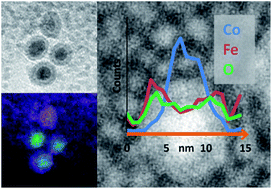
Cobalt nanoparticles were synthesised via the thermal decomposition of Co2(CO)8 and were coated in iron oxide using Fe(CO)5. While previous work focused on the subsequent thermal alloying of these nanoparticles, this study fully elucidates their composition and core@shell structure. State-of-the-art electron microscopy and statistical data processing enabled chemical mapping of individual particles through the acquisition…

Liquids Analysis with Optofluidic Bragg Microcavities

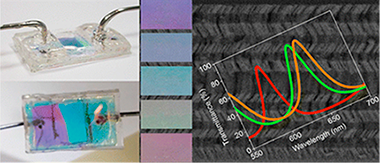
Porous Bragg microcavities formed by stacking a series of porous nanocolumnar layers with alternate low (SiO2) and high (TiO2) refractive index materials have been prepared by physical vapor deposition at glancing angles (GLAD). By strictly controlling the porosity and refractive index of the individual films, as well as the relative orientation of the nanocolumns from…

Monolayer arrangement of fatty hydroxystearic acids on graphite: Influence of hydroxyl groups

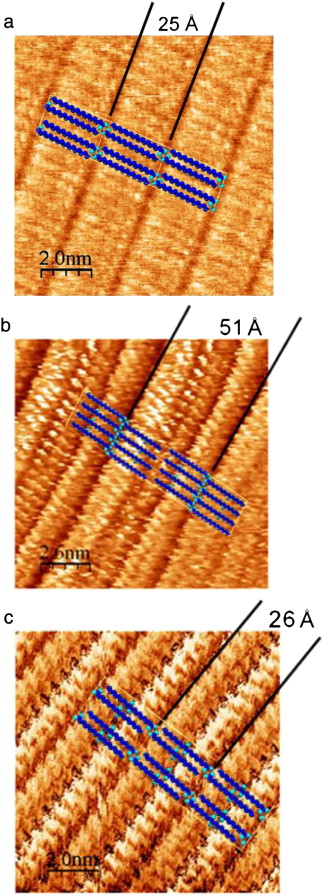
Previous studies have indicated that long-chain linear carboxylic acids form commensurate packed crystalline monolayers on graphite even at temperatures above their melting point. This study examines the effect on the monolayer formation and structure of adding one or more secondary hydroxyl, functional groups to the stearic acid skeleton (namely, 12-hydroxystearic and 9,10-dihydroxystearic acid). Moreover, a…