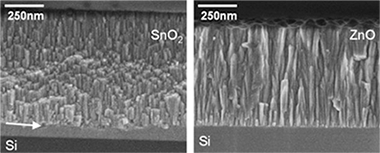
Growth of silver on ZnO and SnO2 thin films intended for low emissivity applications

In the present work we have investigated the relationships existing between the optical properties and the growth mechanism, microstructure and surface roughness of SnO2 and ZnO oxide films prepared by magnetron sputtering under conditions resembling those utilized in industry. Thin films of these oxides with different thicknesses were characterized by atomic force microscopy, glancing incidence…

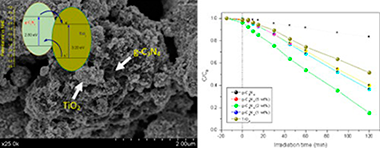
Improved photocatalytic activity of g-C3N4/TiO2 composites prepared by a simple impregnation method

g-C3N4 and TiO2 hybrid structures are synthesized by means of a simple impregnation method having good photoactivities for the degradation of phenol under UV irradiation. From the wide structural and surface characterization we have stated that the presence of g-C3N4 notably affect the surface feature of TiO2 (surface area and pore size distribution). Enhanced photoactivities…

Laser induced enhancement of dichroism in supported silver nanoparticles deposited by evaporation at glancing angles

Silver nanoparticles (NPs) depicting well defined surface plasmon resonance (SPR) absorption were deposited on flat substrates by physical vapor deposition in a glancing angle configuration. The particles were characterized by scanning electron microscopy and atomic force microscopy and their optical properties examined by UV–vis absorption spectroscopy using linearly polarized light. It was found that, depending…

Kinetic approach to partially overlapped thermal decomposition processes

Practical usefulness of the kinetic deconvolution for partially overlapped thermal decomposition processes of solids was examined by applying to the co-precipitated basic zinc carbonate and zinc carbonate. Comparing with the experimental deconvolutions by thermoanalytical techniques and mathematical deconvolutions using different statistical fitting functions, performance of the kinetic deconvolution based on an accumulative kinetic equation for…

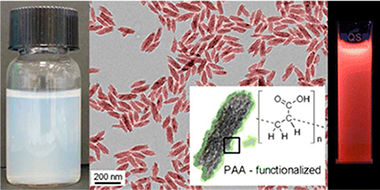
Microwave-Assisted Synthesis of Biocompatible Europium-Doped Calcium Hydroxyapatite and Fluoroapatite Luminescent Nanospindles Functionalized with Poly(acrylic acid)

Europium-doped calcium hydroxyapatite and fluoroapatite nanophosphors functionalized with poly(acrylic acid) (PAA) have been synthesized through a one-pot microwave-assisted hydrothermal method from aqueous basic solutions containing calcium nitrate, sodium phosphate monobasic, and PAA, as well as sodium fluoride in the case of the fluoroapatite particles. In both cases a spindlelike morphology was obtained, resulting from an…

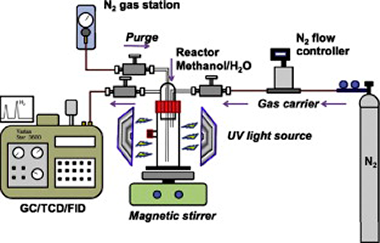
Efficient and affordable hydrogen production by water photo-splitting using TiO2-based photocatalysts

TiO2-based photocatalyst materials were synthesized through a sol–gel method, followed either by: (1) hydrothermal treatment (150 °C/24 h), or (2) heat treatment (calcination) in a temperature range between 400 and 900 °C. The resulting materials were characterized through BET, XRD, TEM, FTIR, RAMAN, laser diffraction and UV–Vis Diffuse Reflectance Spectroscopy. Photoactivity of the various materials…

Preferential oxidation of CO in excess H2 over CuO/CeO2 catalysts: Characterization and performance as a function of the exposed face present in the CeO2 support

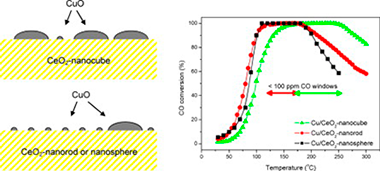
A series of oxidised copper-cerium nanostructured catalysts prepared by impregnation of copper over ceria supports synthesized by different methods (hydrothermal with varying preparation parameters, microemulsion/precipitation), in order to achieve different specific morphologies (nanocubes, nanorods and nanospheres), have been examined with respect to their catalytic properties for preferential oxidation of CO in excess H2 (CO-PROX). The…

Valence band electronic structure characterization of the rutile TiO2 (110)-(1 x 2) reconstructed surface

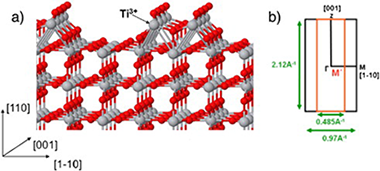
The electronic structure of the TiO2 (110)-(1 × 2) surface has been studied by means of angular resolved ultraviolet photoemission spectroscopy (ARUPS). The valence band dispersion along the high symmetry surface directions, [001] and [1–10], has been recorded. The experimental data show no dispersion of the band-gap Ti 3d states. However, the existence of dispersive…

Allochthonous red pigments used in burial practices at the Copper Age site of Valencina de la Concepción (Sevilla, Spain): characterisation and social dimension

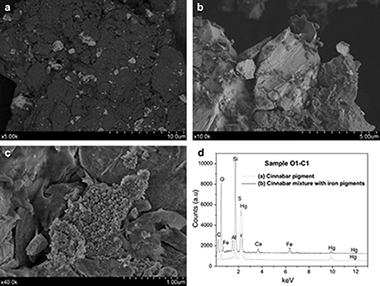
The use of red pigments linked to burial practices is widely documented in the Iberian prehistoric record and very often it has been traditionally interpreted as a ritual practice entailing the utilisation of local raw materials (iron oxides). Some research works, nevertheless, have also detected the use of red pigments which can only be interpreted…