Enhanced carbon nanotube dispersion in 3YTZP/SWNTs composites and its effect on room temperature mechanical and electrical properties

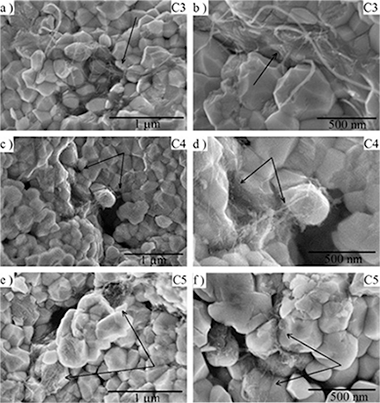
In this work, several modifications of the colloidal processing technique and spark plasma sintering (SPS) to prepare yttria tetragonal zirconia composites (YTZP) with single walled carbon nanotubes (SWNT) have been tested with the aim of eliminating SWNT agglomerates. These modifications include high versus low energy ultrasonic agitation during colloidal processing, lyophilization of the 3YTZP/SWNT slurry…

Magnesium hydride for energy storage applications: The kinetics of dehydrogenation under different working conditions

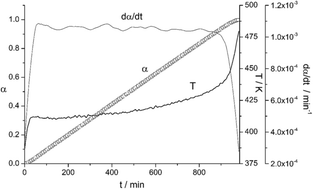
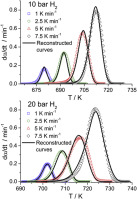
A new approach to the kinetics of magnesium hydride dehydrogenation is considered. A model able to predict the dehydrogenation under different experimental conditions has been proposed. A new combined kinetic analysis method, which considers the thermodynamic of the process according to the microreversibility principle, has been used for performing the kinetic analysis of data obtained…

The role of boron oxide and carbon amounts in the mechanosynthesis of ZrB2–SiC–ZrC nanocomposite via a self-sustaining reaction in the zircon/magnesium/boron oxide/graphite system

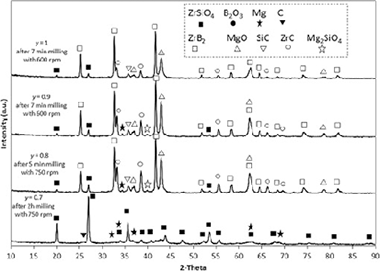
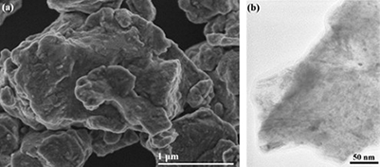
Herein, ZrSiO4/B2O3/Mg/C system was used to synthesize a ZrB2-based composite by means of a high energy ball milling process. A mechanically induced self-sustaining reaction was achieved in this system. A nanocomposite powder of ZrB2–SiC–ZrC was prepared with an ignition time of approximately 6 min of milling. The role of the stoichiometric amounts of B2O3 and…

Structure determination and electronic structure of Cu3Au0.5N

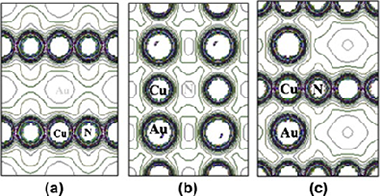
This study investigated the formation of a Cu3Au-nitride alloy using both experimental and computational methods. The alloy was produced as thin film by sputtering a Cu3Au target in a nitrogen atmosphere. The films were characterized for structure and composition by spectroscopic and diffraction techniques. The structure was established by Rietveld and ab inito methods. The…

An investigation on the formation mechanism of nano ZrB2 powder by a magnesiothermic reaction

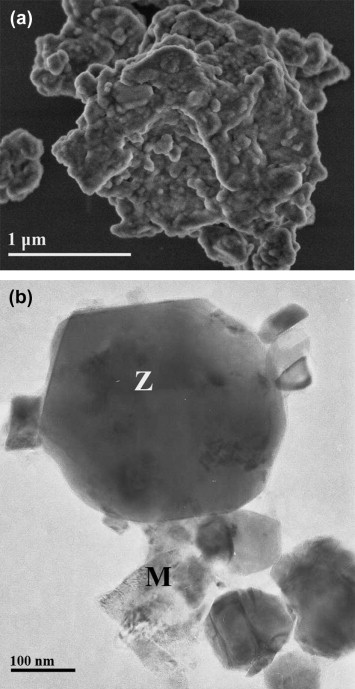
Nanocrystalline zirconium diboride (ZrB2) powder was produced by mechanochemistry from the magnesiothermic reduction in the Mg/ZrO2/B2O3 system. The use of high-energy milling conditions was essential to induce a mechanically induced self-sustaining reaction (MSR) and significantly reduce the milling time required for complete conversion. Under these conditions, it was found that the ignition time for ZrB2…

Spinodal decomposition and precipitation in Cu–Cr nanocomposite

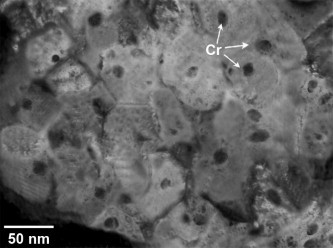
In this study, spinodal decomposition and precipitation mechanism of mechanically alloyed supersaturated Cu–3wt.%Cr and Cu–5wt.%Cr solid solutions was investigated under nonisothermal aging. Decomposition mechanism and kinetics were studied using differential scanning calorimetry (DSC) and X-ray diffraction (XRD) techniques. Also, the microstructure was characterized by transmission electron microscopy (TEM). Effect of Al2O3 reinforcement on the aging…

Mechanochemical synthesis of ZrB2–SiC–ZrC nanocomposite powder by metallothermic reduction of zircon

Aluminium and magnesium were used in the M/ZrSiO4/B2O3/C (M = Al, Mg) system to induce a mechanically induced self-sustaining reaction (MSR). Aluminium was not able to reduce the system to the desired products, and the system became amorphous after 10 h milling. However, nanocomposite powder of ZrB2–SiC–ZrC was in situ synthesized by the magnesiothermic reduction…

Liquid-phase sintering of Ti(C,N)-based cermets. The effects of binder nature and content on the solubility and wettability of hard ceramic phases

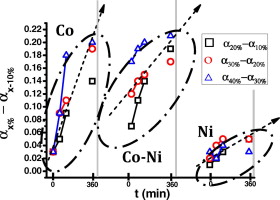
Different commercial TiC–TiN/Co/Ni mixtures were used as raw materials for Ti(C,N) cermets, and the effects of the sintering parameters (binder content, binder nature, sintering time and additives) on the final hard ceramic phase were studied at the sintering temperature of 1400 °C. When Co is used as the binder medium, it is possible to completely…