Impact of Tb4+ and morphology on the thermal evolution of Tb-doped TiO2 nanostructured hollow spheres and nanoparticles

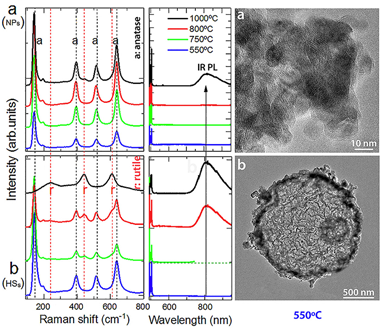
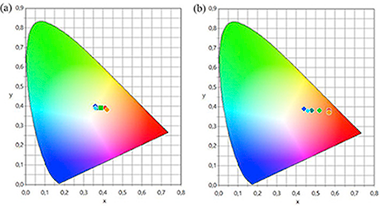
Tb-doped TiO2 hollow spheres (HSs) in the range 0.0-2.0 at.% have been synthesized by the first time to the best of our knowledge. The HSs are compared with nanoparticles (NPs) to evaluate the impact of morphology on their physicochemical and photoluminescence (PL) behavior upon increasing calcination temperature. After calcination at 550 degrees C, the particles…

Morphological effects on the photocatalytic properties of SnO2 nanostructures

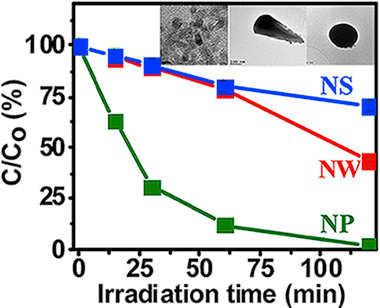
The photocatalytic properties of SnO2 nanocrystals are tuned by varying their morphology and microstructure. SnO2 nanoparticles and nanowedges have been synthesized using hydrothermal methods, while microwave irradiation techniques have given nanospheres. Detailed structural and chemical characterization of these different morphologies has been accomplished. The influence of SnO2 morphology on photocatalytic activity has been examined by…

From structure to luminescence investigation of oxyfluoride transparent glasses and glass-ceramics doped with Eu3+/Dy3+ ions

Glasses and glass-ceramics with nominal composition 73 TeO2- 4BaO-3Bi(2)O(3)-18SrF(2)-2RE(2)O(3) (where RE = Eu, Dy) have been synthesized by conventional melt-quenching technique and subsequent heat treatment at 370 degrees C for 24 h in air atmosphere. Various Eu3+ to Dy3+ molar ratio have been applied to investigate luminescence properties in both glass and glass-ceramic matrices. Especially,…

Sintering kinetics, defect chemistry and room-temperature mechanical properties of titanium nitride prepared by spark plasma sintering

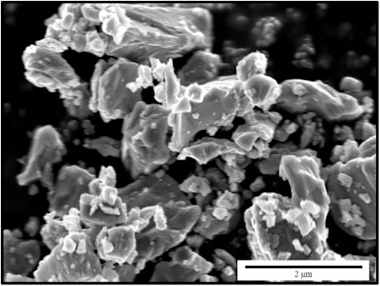
Fully dense titanium nitride polycrystals have been prepared by spark plasma sintering. The kinetics of the sintering process and the optimized conditions for SPS processing have been put forward. Microstructural analyses of the resulting samples have unambiguously shown the coexistence of titanium as Ti2+, Ti3+ and Ti4+, thus driving the presence of cation vacancies. This…

Does grain size have an influence on intrinsic mechanical properties and conduction mechanism of near fully-dense boron carbide ceramics?

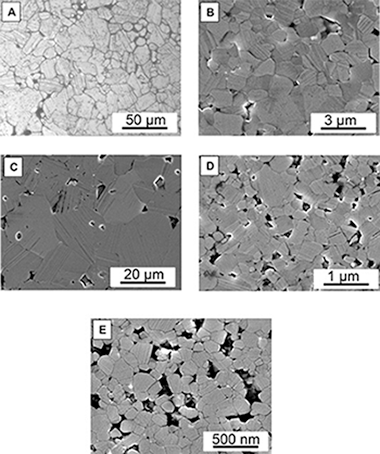
This work is concentrated on getting a reply to the following question: how does the grain size of boron carbide specimens influence on their mechanical and electrical response? It is a common issue that both essential properties are usually affected by the grain boundaries. To this purpose, a set of near fully-dense boron carbide specimens…

Microstructure, interfaces and properties of 3YTZP ceramic composites with 10 and 20 vol% different graphene-based nanostructures as fillers

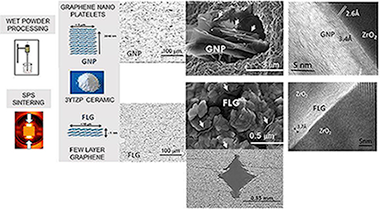
The graphene family comprises not only single layer graphene but also graphene-based nanomaterials (GBN), with remarkably different number of layers, lateral dimension and price. In this work, two of these GBN, namely graphene nanoplatelets (GNP) with n similar to 15-30 layers and few-layer graphene (FLG) with n < 3 layers have been evaluated as fillers…

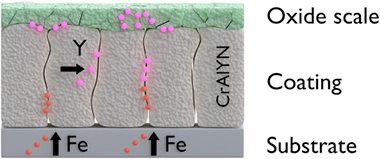
Influence of Al and Y content on the oxidation resistance of CrAlYN protective coatings for high temperature applications: New insights about the Y role

CrAlYN hard coatings with two different average Al contents: similar to 16 at.% and similar to 25 at.%, and Y concentration varying between 1.2 and 5.7 at.% were deposited by direct current reactive magnetron co-sputtering of mixed Cr-Al and Y targets on commercial M2 steel substrates. The samples were heated to 1000 degrees C in…