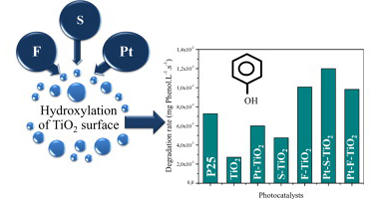
Study of the phenol photocatalytic degradation over TiO2 modified by sulfation, fluorination, and platinum nanoparticles photodeposition

In this work, titanium dioxide has been modified by sulfation, fluorination and simultaneous Pt nanoparticles deposition; the influence of these treatments on the photocatalytic activity of this oxide has been studied. A complete characterization study was carried out and it was observed that sulfation, fluorination and metallization were important factors influencing the TiO2 properties. The photocatalytic…

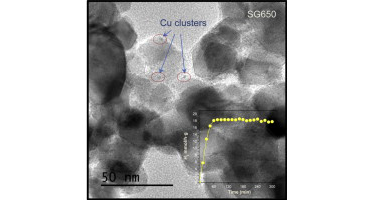
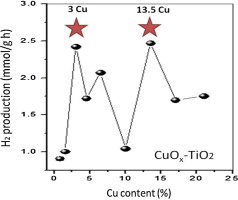
Cu–TiO2 systems for the photocatalytic H2 production: Influence of structural and surface support features

The influence of different TiO2 supports on the Cu active species has been studied. It was found that the photocatalytic H2 evolution is highly affected by the structural and electronic features of surface Cu species. Thus, metal dispersion and oxidation state appears strongly conditioned by the structural and surface properties of the TiO2 support. We have examined three…

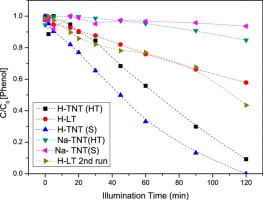
Synthesis and application of layered titanates in the photocatalytic degradation of phenol

This study proposes a direct synthetic route to single titanate sheets through the mild and versatile conditions of the “chimie douce”. The stages of the production include the complexation of the titanium alkoxide precursor by benzoic acid, the formation of titanium oxo-clusters and their controlled transformation into single sheet titanates during the hydrolysis stage. The…

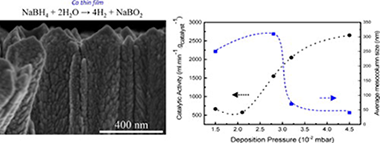
Supported Co catalysts prepared as thin films by magnetron sputtering for sodium borohydride and ammonia borane hydrolysis

Supported Co catalysts were prepared for sodium borohydride and ammonia borane hydrolysis by magnetron sputtering for the first time under different conditions. Ni foam was selected as support. Deposition conditions (time, pressure, and power) were varied to improve catalytic activity. A decrease in deposition power from 200 to 50 W, leads to a decrease in…

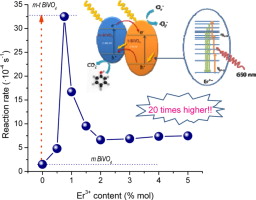
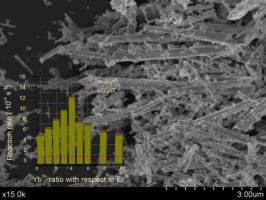
Heterostructured Er3+ doped BiVO4 with exceptional photocatalytic performance by cooperative electronic and luminescence sensitization mechanism

Er-BiVO4 has been synthesized by means of mw-assisted hydrothermal method having good photoactivity under sun-like excitation. It is stated that the precursor addition sequence plays a critical role which determine the further structural feature of BiVO4. From the structural and morphological characterization, it can be demonstrated that the presence of Er3+ would induce the stabilization…

Effect of the type of acid used in the synthesis of titania–silica mixed oxides on their photocatalytic properties

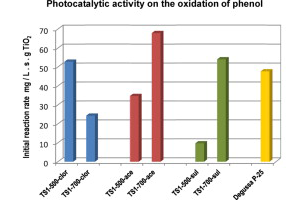
TiO2–SiO2 mixed oxides were synthesized by the sol–gel technique using three different acids, i.e., acetic, sulfuric, or chlorhydric acid. Their photocatalytic behavior was evaluated on the phenol oxidation in liquid phase and correlated with the characterization results. It was found that the kind of acid used during the preparation strongly influences the phase composition and…