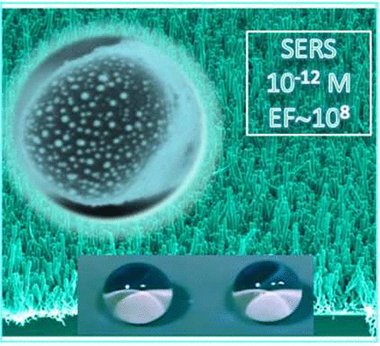
Plasma-Enabled Amorphous TiO2 Nanotubes as Hydrophobic Support for Molecular Sensing by SERS

We devise a unique heteronanostructure array to overcome a persistent issue of simultaneously utilizing the surface-enhanced Raman scattering, inexpensive, Earth-abundant materials, large surface areas, and multifunctionality to demonstrate near single-molecule detection. Room-temperature plasma-enhanced chemical vapor deposition and thermal evaporation provide high-density arrays of vertical TiO2 nanotubes decorated with Ag nanoparticles. The role of the TiO2 nanotubes is…

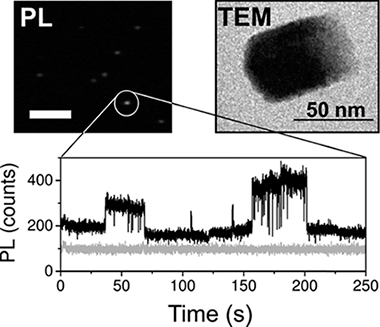
Mechanism of Photoluminescence Intermittency in Organic-Inorganic Perovskite Nanocrystals

Lead halide perovskite nanocrystals have demonstrated their potential as active materials for optoelectronic applications over the past few years. Nevertheless, one issue that hampers their applicability has to do with the observation of photoluminescence intermittency, commonly referred to as «blinking», as in their inorganic counterparts. Such behavior, reported for structures well above the quantum confinement…

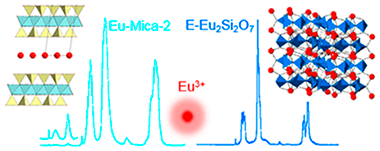
Eu3+ Luminescence in High Charge Mica: An In Situ Probe for the Encapsulation of Radioactive Waste in Geological Repositories

Isolation of high-level radioactive waste (HLW) in deep geological repositories (DGR) through a multibarrier concept is the most accepted approach to ensure long-term safety. Clay minerals are one of the most promising materials to be used as engineered barriers. In particular, high charge micas, as components of the engineered barrier, show superselectivity for some radioactive…

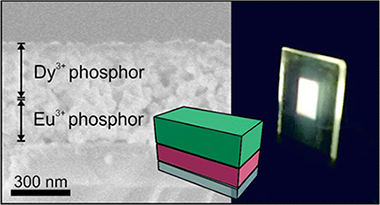
Highly Efficient Transparent Nanophosphor Films for Tunable White-Light-Emitting Layered Coatings

Bright luminescence in rare-earth (RE) nanocrystals, the so-called nanophosphors, is generally achieved by choosing a host that enables an effective excitation of the RE activator through charge or energy transfer. Although tungstate, molybdate, or vanadate compounds provide the aforementioned transfer, a comparative analysis of the efficiency of such emitters remains elusive. Herein, we perform a…

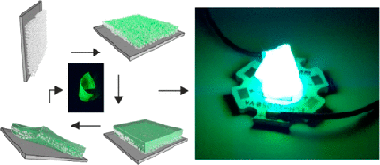
Highly Efficient and Environmentally Stable Flexible Color Converters Based on Confined CH3NH3PbBr3 Nanocrystals

In this work, we demonstrate a synthetic route to attain methylammonium lead bromide (CH3NH3PbBr3) perovskite nanocrystals (nc-MAPbBr(3), 1.5 nm < size < 3 nm) and provide them with functionality as highly efficient flexible, transparent, environmentally stable, and adaptable color converting films. We use nanoparticle metal oxide (MOx) thin films as porous scaffolds of controlled nanopores…

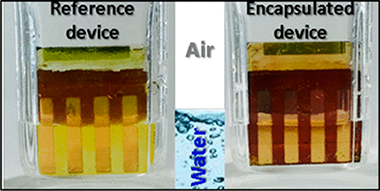
Enhancing Moisture and Water Resistance in Perovskite Solar Cells by Encapsulation with Ultrathin Plasma Polymers

A compromise between high power conversion efficiency and long-term stability of hybrid organic inorganic metal halide perovskite solar cells is necessary for their outdoor photovoltaic application and commercialization. Herein, a method to improve the stability of perovskite solar cells under water and moisture exposure consisting of the encapsulation of the cell with an ultrathin plasma…

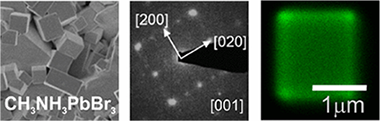
Facile Synthesis of Hybrid Organic–Inorganic Perovskite Microcubes of Optical Quality Using Polar Antisolvents

Herein, we demonstrate a synthetic approach producing highly crystalline methylammonium lead bromide perovskite (MAPbBr3) microcubes at room temperature by injecting a perovskite precursor solution into an environmentally friendly antisolvent (isopropyl alcohol). Confirmed by X-ray and electron diffraction, as well as electron microscopy, these MAPbBr3 microcubes are single crystals and have perfect cubic structure, with sizes varying…

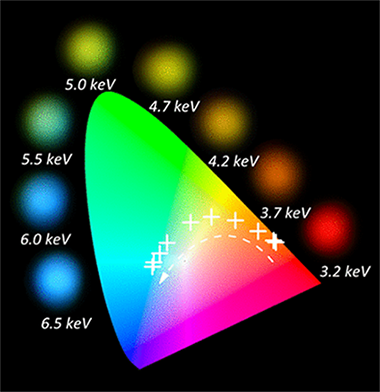
Energy-Sensitive Ion- and Cathode-Luminescent Radiation-Beam Monitors Based on Multilayer Thin-Film Designs

A multilayer luminescent design concept is presented to develop energy sensitive radiation-beam monitors on the basis of colorimetric analysis. Each luminescent layer within the stack consists of rare-earth-doped transparent oxides of optical quality and a characteristic luminescent emission under excitation with electron or ion beams. For a given type of particle beam (electron, protons, alpha…

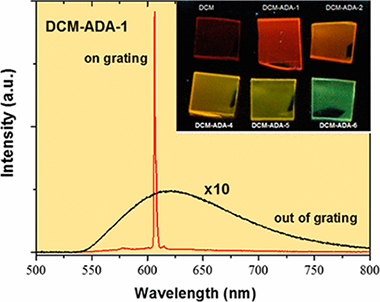
Multicolored Emission and Lasing in DCM-Adamantane Plasma Nanocomposite Optical Films

We present a low-temperature versatile protocol for the fabrication of plasma nanocomposite thin films to act as tunable emitters and optical gain media. The films are obtained by the remote plasma-assisted deposition of a 4-(dicyano-methylene)-2-methy1-6-(4-dimethylamino-styry1)-4Hpyran (DCM) laser dye alongside adamantane. The experimental parameters that determine the concentration of the dye in the films and their…

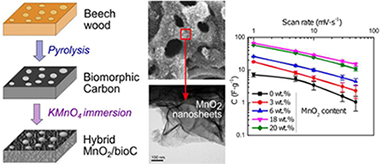
Manganese Dioxide Supported on Porous Biomorphic Carbons as Hybrid Materials for Energy Storage Devices

A facile and low-cost method has been employed to fabricate MnO2/C hybrid materials for use as binder-free electrodes for supercapacitor applications. Biocarbon monoliths were obtained through pyrolysis of beech wood, replicating the microstructure of the cellulosic precursor, and serve as 3D porous and conductive scaffolds for the direct growth of MnO, nanosheets by a solution…