Disclination dipoles are the Holy Grail for high temperature superplasticity in ceramics

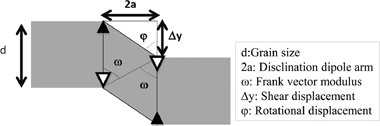
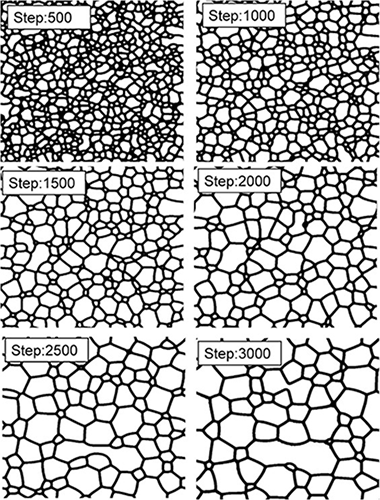
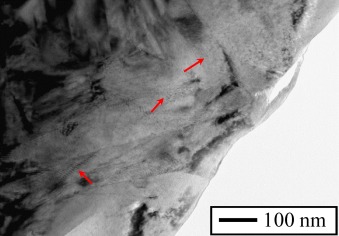
A model for high-temperature plasticity of polycrystals controlled by disclination dipoles is proposed that predict a parabolic dependence of the strain rate versus the applied stress. The presence of a precise stationary disclination density explains the origin of plasticity without microstructural invariance, commonly known as superplasticity. The disclination mechanism is universal, although other processes, such…

Sintering kinetics, defect chemistry and room-temperature mechanical properties of titanium nitride prepared by spark plasma sintering

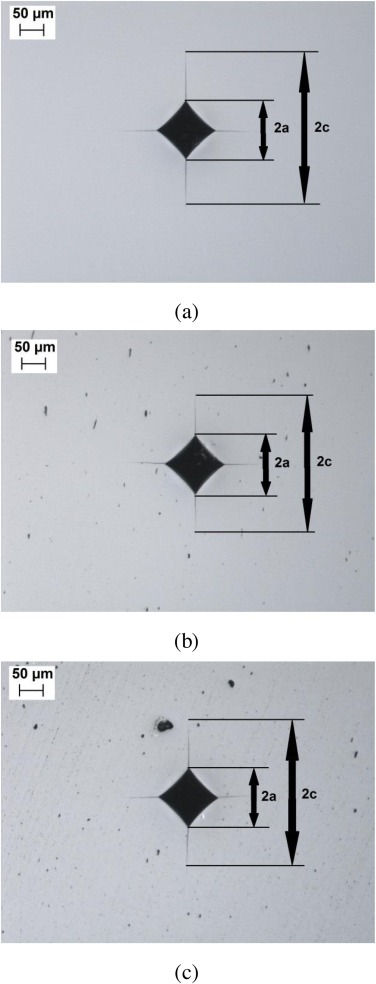
Fully dense titanium nitride polycrystals have been prepared by spark plasma sintering. The kinetics of the sintering process and the optimized conditions for SPS processing have been put forward. Microstructural analyses of the resulting samples have unambiguously shown the coexistence of titanium as Ti2+, Ti3+ and Ti4+, thus driving the presence of cation vacancies. This…

Does grain size have an influence on intrinsic mechanical properties and conduction mechanism of near fully-dense boron carbide ceramics?

This work is concentrated on getting a reply to the following question: how does the grain size of boron carbide specimens influence on their mechanical and electrical response? It is a common issue that both essential properties are usually affected by the grain boundaries. To this purpose, a set of near fully-dense boron carbide specimens…

Grain-boundary diffusion coefficient in alpha-Al2O3 from spark plasma sintering tests: Evidence of collective motion of charge disconnections

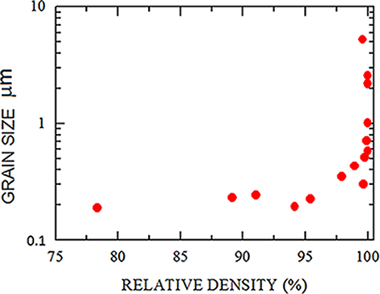
The sintering of fine-grained a-alumina by spark plasma sintering (SPS) was performed to study grain growth under SPS conditions. Grain growth is found to be extensive at relative densities above 95%. A grain growth versus dwell time analysis during SPS allows for the determination of the grain-boundary diffusion coefficient. This study shows that the remarkable…

Graphene or carbon nanofiber-reinforced zirconia composites: Are they really worthwhile for structural applications?

The use of allotropic phases of carbon (i.e. nanotubes, graphene or carbon nanofibers) as second phases to design ceramic composites is a hot topic at present. Researchers try to provide a remarkable improvement of the parent ceramic assuming that some of the outstanding mechanical properties of these phases migrate to the resultant composite. This reasonable…

High-temperature compressive creep of novel fine-grained orthorhombic ZrO2 ceramics stabilized with 12 mol% Ta doping

A novel fine-grained orthorhombic ZrO2 ceramic stabilized with 12 mol% Ta doping was fabricated by spark plasma sintering from home-made powders, and its high-temperature mechanical properties evaluated for the first time by compressive creep tests in both Ar and air. It was found that the high-temperature plasticity of the ceramic deformed in Ar, under which…

Is an alumina-whisker-reinforced alumina composite the most efficient choice for an oxidation-resistant high-temperature ceramic?

The search of a competitive ceramic material for structural applications demands several requisites: a simple microstructure with easy reproducibility, good intrinsic mechanical properties and most of all, an optimal oxidation resistance. This later point is a challenging point for most ultrahigh refractory materials.  In this work an alumina (Al2O3) whisker-reinforced Al2O3 composite prepared by spark…

Spark plasma sintering of titanium nitride in nitrogen: Does it affect the sinterability and the mechanical properties?

Titanium nitride ceramics have an intrinsic interest due to its optical and structural applications. However, the conditions for sintering of dense pieces are not still clarified. This research work is focused on the spark plasma sintering (SPS) of near-fully dense fine-grained TiN. The main goal is giving a response to a longstanding debate: can the…