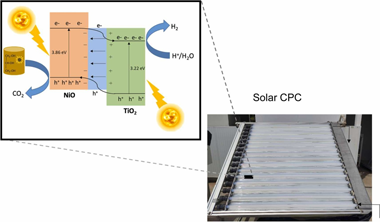
Photoreforming of glycerol to produce hydrogen from natural water in a compound parabolic collector solar photoreactor

To improve TiO2 for H2 generation, one strategy for the separation of photogenerated charges is the formation of heterostructures with other materials. In particular, NiO is a photocatalyst known for its good stability and low cost. However, no studies at pilot scale using solar energy have been described. Consequently, an evaluation of a physical NiO:TiO2 mixture at pilot scale (25 L) with natural irradiation (2.10 m2 of sun-exposed surface) and with simultaneous glycerol photoreforming was explored.…

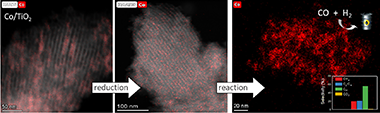
Cobalt Stabilization through Mesopore Confinement on TiO2 Support for Fischer-Tropsch Reaction

Cobalt supported on mesostructured TiO2 catalysts has been prepared by a wet-impregnation method. The Co/TiO2 catalytic system showed better catalytic performance after support calcination at 380 °C. Co nanoparticles appeared well distributed along the mesopore channels of TiO2. After reduction pretreatment and reaction, a drastic structural change leads to mesopore structure collapse and the dispersion of the…

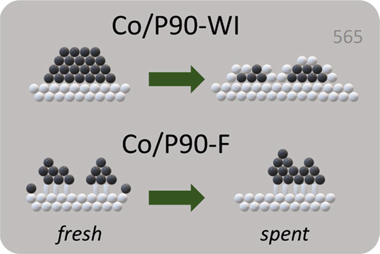
Catalytic performance of cobalt supported onto APTES functionalized TiO2 for Fischer-Tropsch reaction

Cobalt supported TiO2 catalysts have been prepared by wet-impregnation and by immobilization over APTES (3-aminopropyl triethoxysilane) grafted TiO2. Impregnated system showed better catalytic performance after reduction at 260 degrees C but significant deactivation is observed. On the contrary, functionalized catalyst showed better catalytic performance after reduction at 400 degrees C with notable stability. We have…

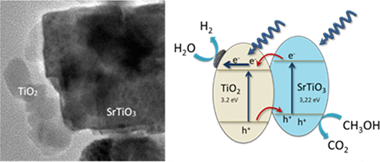
High-Performance Photocatalytic H2 Production Using a Binary Cu/ TiO2/SrTiO3 Heterojunction

Cu/TiO2/SrTiO3 hybrid structures have been synthesized by the simple impregnation method from Cu/TiO2 and SrTiO3 systems. The structural and surface characterization stated that Cu/TiO2/SrTiO3 composites form an effective covering of SrTiO3 by Cu/TiO2. The heterostructured catalysts lead to an outstanding improved photoactivity for hydrogen production from methanol photoreforming that would be related with the efficient…

Facile Synthesis of Heterogeneous Indium Nanoparticles for Formate Production via CO2 Electroreduction

In this study, a simple and scalable method to obtain heterogeneous indium nanoparticles and carbon-supported indium nanoparticles under mild conditions is described. Physicochemical characterization by X-ray diffraction (XRD), X-ray photoelectron microscopy (XPS), scanning electron microscopy (SEM) and transmission electron microscopy (TEM) revealed heterogeneous morphologies for the In nanoparticles in all cases. Apart from In-0, XPS…

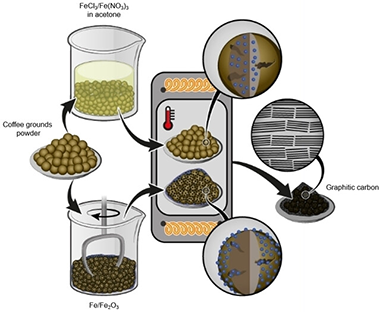
Revealing the Impact of Different Iron-Based Precursors on the ‘Catalytic’ Graphitization for Synthesis of Anode Materials for Lithium Ion Batteries

Low cost and environmentally friendly production of graphite anodes from naturally available biomass resources is of great importance to satisfy the increasing material demand for lithium ion batteries. Herein, graphitization of coffee ground was performed using four different iron-based activating additives, including iron (III) chloride, iron (III) nitrate, iron (III) oxide and pure iron, following…

Methanation of CO2 over High Surface Nickel/Aluminates Compounds Prepared by a Self-Generated Carbon Template

Catalytic gas-phase hydrogenation of CO2 into CH4 was tested under three different nickel/aluminate catalysts obtained from precursors of hexaaluminate composition (MAl16O19, M = Mg, Ca, Ba). These catalysts were prepared using a carbon template method, where carbon is self-generated from a sol-gel that contains an excess of citric acid and the Al and M salts…