Towards Extending Solar Cell Lifetimes: Addition of a Fluorous Cation to Triple Cation-Based Perovskite Films

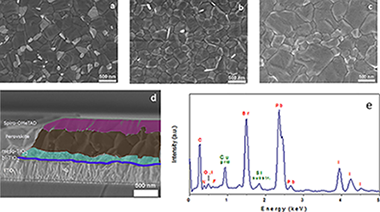
Organohalide perovskites have emerged as highly promising replacements for thin-film solar cells. However, their poor stability under ambient conditions remains problematic, hindering commercial exploitation. The addition of a fluorous-functionalized imidazolium cation during the preparation of a highly stable cesium-based mixed perovskite material Cs-0.05(MA(0.15)FA(0.85))(0.95)Pb(I0.85Br0.15)(3) (MA= methylammonium; FA= formamidinium) has been shown to influence its stability. The…

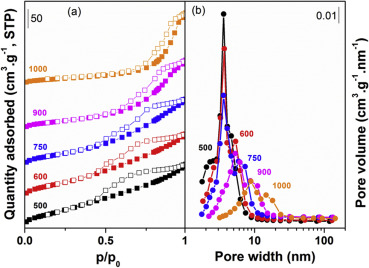
Analysis of Ni species formed on zeolites, mesoporous silica and alumina supports and their catalytic behavior in the dry reforming of methane

The presented investigation is focused on the analysis of Ni species formed on microporous (zeolites MFI and FAU) and mesoporous materials (Al-MCM- 41 and SBA-15) and alumina supports and their catalytic behavior in the dry reforming of methane. The paper lays emphasis on the relationship between the catalytic behavior of Ni-based catalysts and their textural/structural…

Critical Role of Oxygen in Silver-Catalyzed Glaser-Hay Coupling on Ag(100) under Vacuum and in Solution on Ag Particles

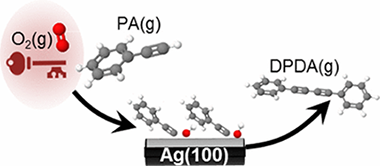
The essential role of oxygen in enabling heterogeneously catalyzed Glaser–Hay coupling of phenylacetylene on Ag(100) was elucidated by STM, laboratory and synchrotron photoemission, and DFT calculations. In the absence of coadsorbed oxygen, phenylacetylene formed well-ordered dense overlayers which, with increasing temperature, desorbed without reaction. In striking contrast, even at 120 K, the presence of oxygen…

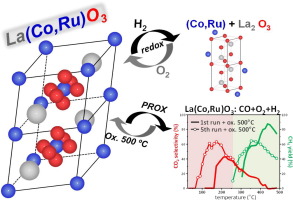
Preferential oxidation of CO on a La-Co-Ru perovskite-type oxide catalyst

A Ru-containing perovskite-type oxide La(Co,Ru)O3 of nominal composition LaCo0.8Ru0.2O3 was prepared by ultrasonic spray combustion and tested for the preferential oxidation of CO (PROX). EXAFS indicated that Ru adopted the coordination environment of Co in LaCoO3 while Co was present as LaCoO3 and Co3O4. PROX activity was replaced by CO hydrogenation activity above 250 °C. Short oxidation at 500 °C between…

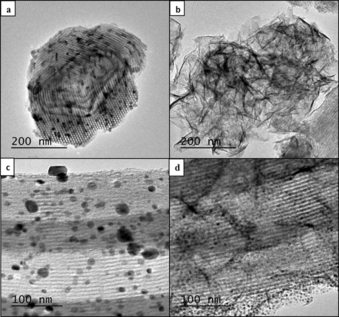
Identification of Outer and Inner Nickel Particles in a Mesoporous Support: How the Channels Modify the Reducibility of Ni/SBA-15 Catalysts

Two different nickel supported on SBA-15 catalytic systems have been prepared by means of impregnation (Ni/SBA-15-ImU) and deposition-precipitation (Ni/SBA-15-DP) methodologies. Upon calcination, Ni/SBA-15DP presents a well-developed nickel phyllosilicate phase, which after reduction gives rise to a dispersed and homogeneous metallic phase, mainly located inside the 5 nm in diameter mesoporous structure of the support. On the…

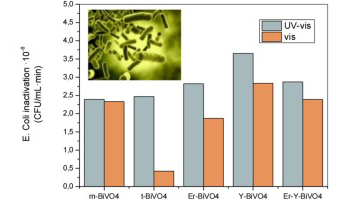
Photocatalytic Escherichia coli inactivation by means of trivalent Er3+, Y3+ doping of BiVO4 system

BiVO4 samples doped with different contents of Er3+ and Y3+ were prepared by a simple surfactant free hydrothermal method. X-ray diffraction reveals that the doped materials consist of a heterogeneous structure formed by a mixture of tetragonal and monoclinic phases, being found Er3+ and Y3+ co-doping clearly stabilize the tetragonal structure of BiVO4. The monoclinic…

Nickel catalyst with outstanding activity in the DRM reaction prepared by high temperature calcination treatment

The catalytic performance of some Ni-Ce/Al2O3 catalytic systems (11 wt.% Ni and 3 wt.% Ce) were checked after being submitted to different calcination and reduction treatments. It was found that, the reduced Ni-Ce/Al2O3 catalysts were more active and stable in the dry reforming reaction of methane than thecorresponding not-reduced catalysts. This high activity was initially connected with the smaller size of pre-reduced Ni species, which at the same time leads on to the formation of filamentous…

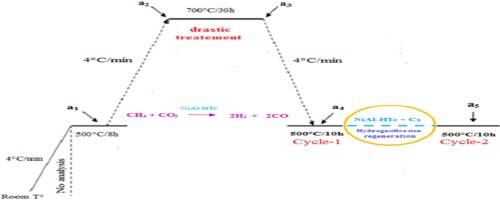
In-situ hydrogasification/regeneration of NiAl-hydrotalcite derived catalyst in the reaction of CO2 reforming of methane: A versatile approach to catalyst recycling

A novel approach describing the in-situ regeneration of NiAl hydroalcite derived catalyst between two cycle reaction systems of CO2 reforming of methane, also known as dry reforming of methane (DRM) is described herein. The catalyst was initially prepared by co-precipitation method at pH = 11 and calcined at 450 degrees C for 6 h. The…

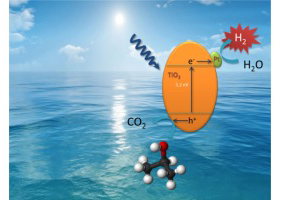
Towards the hydrogen production by photocatalysis

Nowadays, problems derived from climate change urgently demand us to focus our attention on new alternatives to fossil fuels. Within this framework, the photocatalytic production of hydrogen as a clean fuel from oxygenates arises as a necessary option that must be considered. Thus, the development of highly efficient photocatalyst is crucial in order to achieve…