Photo-assisted degradation of rhodamine B with H₂O₂: Kinetics, modern machine learning prediction, and insights into a novel iron oxide catalyst

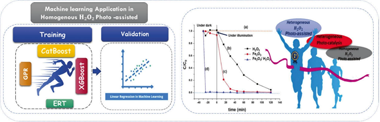
This study introduces a dual strategy that combines kinetic modeling and advanced machine learning (ML) models to enhance the prediction and optimization of Rhodamine B (RhB) degradation using an H2O2/UV system. As a novel scientific contribution, we report the first-time synthesis of an iron-based catalyst, integrating α-Fe2O3 with structural ions (SO₄2−, OH−, Cl−), synthesized via a…

Enhanced photocatalytic activity of TiO2/WO3 nanocomposite from sonochemical-microwave assisted synthesis for the photodegradation of ciprofloxacin and oxytetracycline antibiotics under UV and sunlight

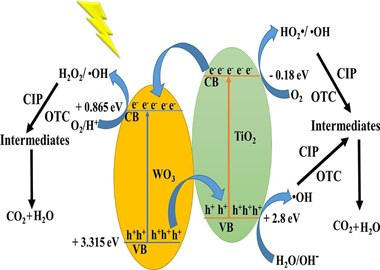
The TiO2/WO3 photocatalysts were prepared by a simple assisted sonochemical -microwave combination. The wide surface and structural characterization of synthesized material confirmed that the adopted preparation method resulted in nanoparticulated crystallite anatase phase of TiO2 with a large surface area (> 200 m(2)/g), and the dispersion of WO3 on the surface of TiO2. The photoactivity…

Microwave-assisted sol-gel synthesis of TiO2 in the presence of halogenhydric acids. Characterization and photocatalytic activity

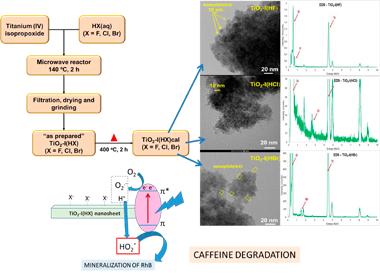
The synthesis of mesoporous TiO2 nanosheets is reported using Ti(IV) Isopropoxide as Ti(IV) precursor. A sol-gel process combined with microwave activation is used. Three different halogenhydric acids (HX), were used to peptise the sol: HF(ac), HCl (ac) and HBr (ac). The three obtained TiO2-I(HX) samples were characterized by XRD, XRF, N2-adsorption, SEM, TEM, DRS and…

Preparation of ZnFe2O4/ZnO composite: Effect of operational parameters for photocatalytic degradation of dyes under UV and visible illumination

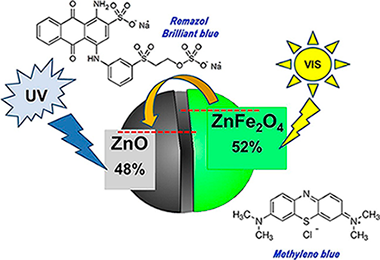
An ZnFe2O4/ZnO composite catalyst was prepared by solution combustion method. In this study, one nominal molar percentage of iron was used in the synthesis, corresponding to 20 % molar relative to ZnO. The samples were characterized by X-ray diffraction (XRD), X-ray photoelectron spectroscopy (XPS), X-ray Fluorescence (XRF), Scanning Electronic Microscopy (SEM), Transmission Electronic Microscopy (TEM)…

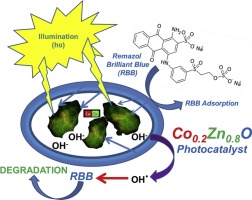
Extraordinary visible photocatalytic activity of a Co0.2Zn0.8O system studied in the Remazol BB oxidation

Nanoparticles of CoxZn1-xO system with a nominal composition of x=0.2 were synthesized by the Solution Combustion Method (SCM). Structural and morphological studies as well as the chemical composition of the material were widely investigated by different techniques. Photocatalytic activity under UV and Visible illumination was studied by means of the Remazol Brilliant Blue dye (RBB)…

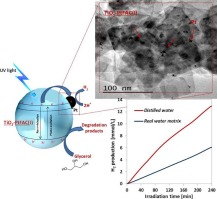
Photocatalytic H2 production from glycerol aqueous solutions over fluorinated Pt-TiO2 with high {001} facet exposure

An optimized fluorinated TiO2 catalyst with high {001} facet exposure loaded with platinum (TiO2-PtFAC) was tested in the photocatalytic hydrogen production from glycerol solution under UV light irradiation. The samples were synthesized by direct hydrothermal treatment starting from two different types of precursors that are titanium tetraisopropoxide (I) or titanium butoxide (B), while platinisation was performed…

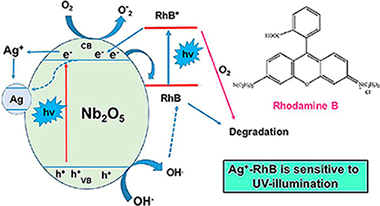
Photo-induced processes on Nb2O5 synthesized by different procedures

The properties of Nb2O5 strongly depend on its synthesis procedure as well as the conditions of ulterior thermal treatment. We report the synthesis of Nb2O5 powders prepared by sol-gel precipitation method using niobium(V) ethoxide as precursor. Two chemical routes were chosen: the presence of tryethyl amine (TEA) as precipitant/template agent, or the oxidant peroxide method.…

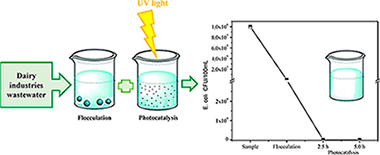
Study of the effectiveness of the flocculation-photocatalysis in the treatment of wastewater coming from dairy industries

The aim of the present work was to evaluate the effectiveness of flocculation-photocatalysis as combined processes in the treatment of dairy industries wastewater. Different commercial and lab prepared flocculants and photocatalysts were evaluated. All the materials prepared were extensively characterized. Commercial materials presented the best physicochemical properties and performance in the treatment of the studied…

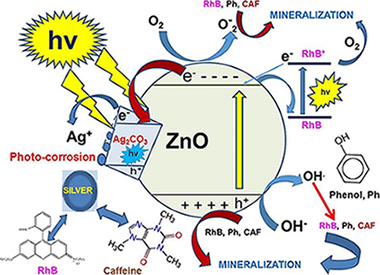
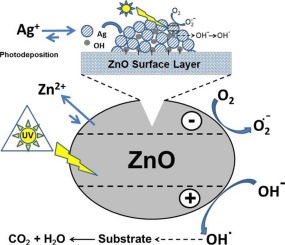
Silver-modified ZnO highly UV-photoactive

ZnO nanoparticles were successfully synthesized by a controlled precipitation procedure by mixing aqueous solutions of Zn(II) acetate and dissolved Na2CO3 at pH ca. 7.0 without template addition and ulterior calcination at 400 °C for 2 h. The Ag-ZnO catalysts (ranging from 0.5 to 10 Ag wt.-%) were obtained by photochemical deposition method at the surface of the prepared ZnO…