Nanoparticulated Bimodal Contrast Agent for Ultra-High-Field Magnetic Resonance Imaging and Spectral X-ray Computed Tomography

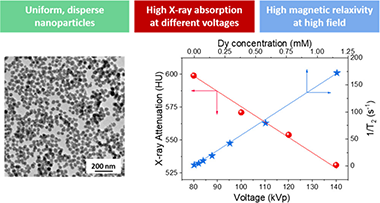
Bimodal medical imaging based on magnetic resonance imaging (MRI) and computed tomography (CT) is a well-known strategy to increase the diagnostic accuracy. The most recent advances in MRI and CT instrumentation are related to the use of ultra-high magnetic fields (UHF-MRI) and different working voltages (spectral CT), respectively. Such advances require the parallel development of…

B-site deficient hexagonal perovskites: Structural stability, ionic order-disorder and electrical properties

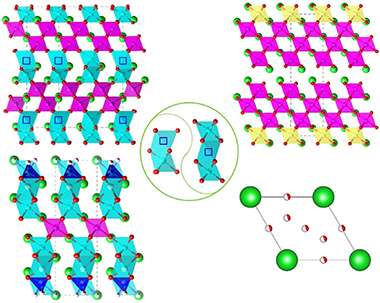
This review presents an overview on the structures and electrical properties of B-site deficient hexagonal perovskite oxides, which have been receiving increasing attention as key components as dielectric resonators in microwave telecommunications, as well as solid-state oxide ion and proton conductors in solid oxide fuel cells. The structural evolution and stability, order-disorder of cation and…

Lanthanide vanadate-based trimodal probes for near-infrared luminescent bioimaging, high-field magnetic resonance imaging, and X-ray computed tomography

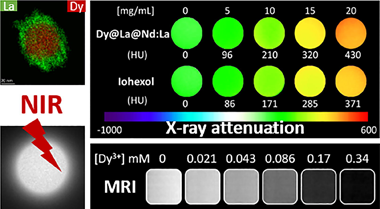
We have developed a trimodal bioimaging probe for near-infrared luminescent imaging, high-field magnetic resonance imaging, and X-ray computed tomography using Dy3+ as the paramagnetic component and Nd3+ as the luminescent cation, both of them incorporated in a vanadate matrix. Among different essayed architectures (single phase and core-shell nanoparticles) the one showing the best luminescent properties is that consisting of uniform DyVO4 nanoparticles coated with a first uniform layer of LaVO4 and a second layer…

Persistent Luminescence Zn2GeO4:Mn2+Nanoparticles Functionalized with Polyacrylic Acid: One-Pot Synthesis and Biosensing Applications

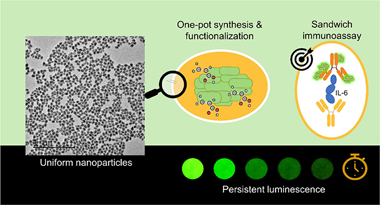
Zinc germanate doped with Mn2+ (Zn2GeO4:Mn2+) is known to be a persistent luminescence green phosphor with potential applications in biosensing and bioimaging. Such applications demand nanoparticulated phosphors with a uniform shape and size, good dispersibility in aqueous media, high chemical stability, and surfacefunctionalization. These characteristics could be major bottlenecks and hence limit their practical applications.…

Europium doped-double sodium bismuth molybdate nanoparticles as contrast agents for luminescence bioimaging and X-ray computed tomography

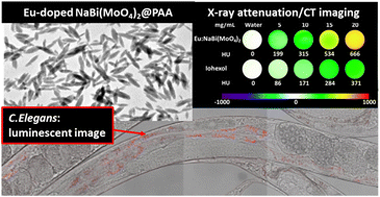
A one-pot method for the synthesis of uniform Eu3+-doped NaBi(MoO4)2 nanoparticles with an ellipsoidal shape and tetragonal crystal structure functionalized with polyacrylic acid is reported for the first time in the literature. The method is based on a homogeneous precipitation reaction from solutions in an ethylene glycol/water medium containing appropriate bismuth, sodium, and molybdate precursors and…

Carboxylate functionalized NaDy(MoO4)(2) nanoparticles with tunable size and shape as high magnetic field MRI contrast agents

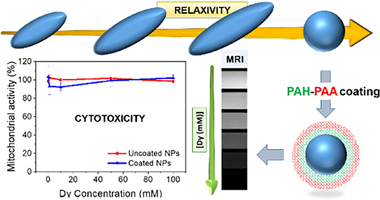
Uniform sodium-dysprosium double molybdate (NaDy(MoO4)(2)) nanoparticles having different morphologies (spheres and ellipsoids) and tunable size have been synthesized for the first time in literature. The procedure is based on a homogeneous precipitation process at moderated temperatures (<= 220 ?) from solutions containing appropriated precursors dissolved in ethylene glycol-water mixtures, in the absence (spheres) or the…

Biosondas basadas en lantánidos para la obtención de bioimagen mediante resonancia magnética y luminiscencia persistente

El objetivo general de este proyecto es el desarrollo de nuevos agentes de contraste (CAs) para mejorar el diagnóstico médico mediante el uso de dos técnicas avanzadas de imagen como la resonancia magnética (MRI) y la imagen luminiscente. Específicamente, se planea desarrollar CAs de MRI duales (T1-T2) y sondas con luminiscencia persistente (PersL). La obtención…