Quantitative Characterization of Multicomponent Polymers by Sample-Controlled Thermal Analysis

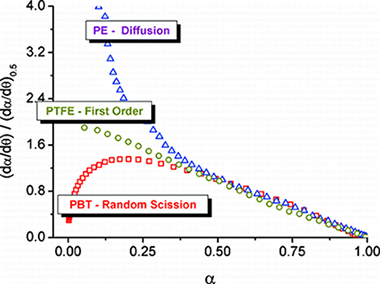
This paper explores the potential of sample-controlled thermal analysis (SCTA) in order to perform compositional analysis of multicomponent polymeric materials by means of thermogravimetric experiments. In SCTA experiments, the response of the sample to the temperature determines the evolution of the temperature by means of a feedback system; thus, what is controlled is not the…

Modified cryptomelane-type manganese dioxide nanomaterials for preferential oxidation of CO in the presence of hydrogen

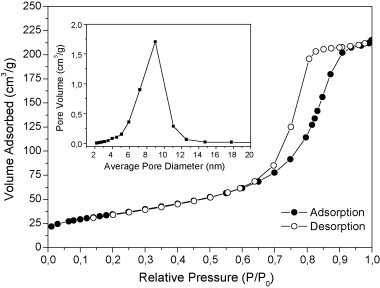
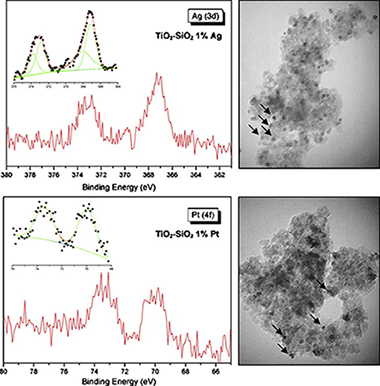
Transition metal (Cu Co Ni and Zn)-modified cryptomelane-type manganese dioxide nanomaterials were synthesized by the milling method The obtained solids have been characterized by means of Xray diffraction (XRD) scanning electron microscopy and transmission electron microscopy (SEM and TEM) N-2 adsorption-desorption measurements at 77 K Raman spectroscopy and temperature programmed reduction (TPR-H-2) showing similar structural…

Operando XAS and Raman study on the structure of a supported vanadium oxide catalyst during the oxidation of H2S to sulphur

The modification of crystalline phases of a vanadium oxide supported on mesoporous zirconium phosphate during the partial oxidation of H2S to sulphur has been studied by using an operando Raman-GC approach and XAS in reaction conditions. The catalyst, mainly presenting crystalline V2O5, is transformed during the oxidation of H2S at 200 degrees C, presenting crystals…

Si-doped multifunctional bioactive nanostructured films

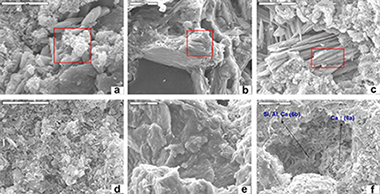
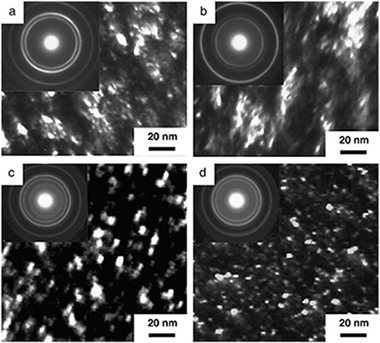
Si-doped multifunctional bioactive nanostructured films (MuBiNaFs) were deposited by DC magnetron sputtering of composite TiC0.5 + CaO + Si (A) and TiC0.5 + CaO + Si3N4 (B) targets produced by self-propagating high-temperature synthesis method. The films were characterized in terms of their structure, elemental and phase composition using X-ray diffraction, scanning and transmission electron microscopy,…

Tilt angle control of nanocolumns grown by glancing angle sputtering at variable argon pressures

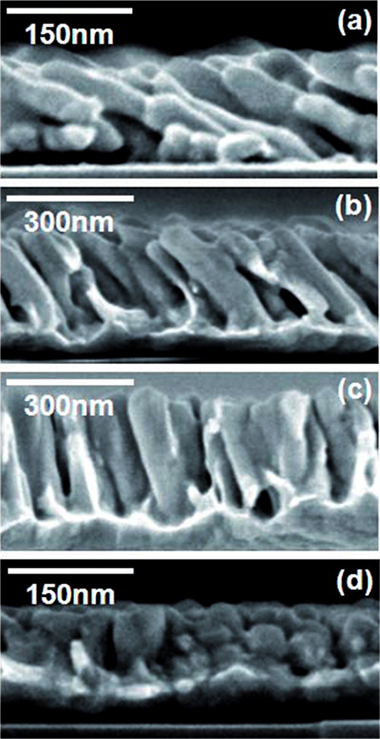
We show that the tilt angle of nanostructures obtained by glancing angle sputtering is finely tuned by selecting the adequate argon pressure. At low pressures, a ballistic deposition regime dominates, yielding high directional atoms that form tilted nanocolumns. High pressures lead to a diffusive regime which gives rise to vertical columnar growth. Monte Carlo simulations…

Wetting Properties of Polycrystalline TiO2 Surfaces: A Scaling Approach to the Roughness Factors

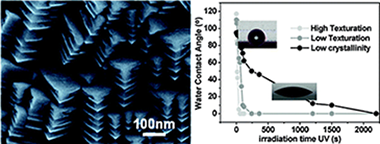
This work presents a thorough study on the wettability of polycrystalline anatase TiO2 thin films prepared at 250 degrees C in a microwave plasma enhanced chemical vapor deposition (MW-PECVD) reactor with Ar/O-2 plasmas. Anatase polycrystalline thin films with different microstructures, textures, and surface roughness were obtained as a function of their thickness. The water contact…

Microstructural study of the LiBH4-MgH2 reactive hydride composite with and without Ti-isopropoxide additive

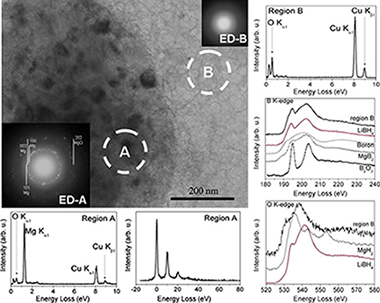
An exhaustive microstructural characterization is reported for the LiBH4-MgH2 reactive hydride composite (RHC) system with and without titanium isopropoxide additive. X-ray diffraction with Rietveld analysis, transmission electron microscopy coupled to energy dispersive X-ray analysis, selected-area electron diffraction and electron energy loss spectroscopy are presented in this paper for the first time for this system for…

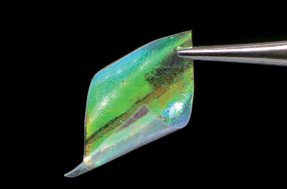
Versatility and multifunctionality of highly reflecting Bragg mirrors based on nanoparticle multilayers

The use of both supported and flexible self-standing nanoparticle-based one dimensional photonic crystal films as effective frequency selective filters in the UV-vis-NIR is herein evaluated. The requirements to achieve a flat spectral response at the desired frequency range are analyzed and a synthetic route to realize materials with such properties presented. Strict control over the…