


Synthesis, Characterisation, and Photocatalytic Behaviour of Mesoporous ZnS Nanoparticles Prepared Using By-Product Templating

High surface area mesoporous ZnS nanoparticles (MZN) were obtained with the aid of the by-product of the synthesising reaction. This by-product, namely NaNO3, can be considered as a soft template responsible for the formation of pores. Ethanol and water were chosen as the synthesis media. Ultrasonic waves were used as an accelerator for the synthesis…
New findings on thermal degradation properties of fluoropolymers

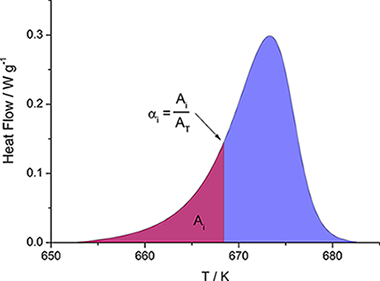
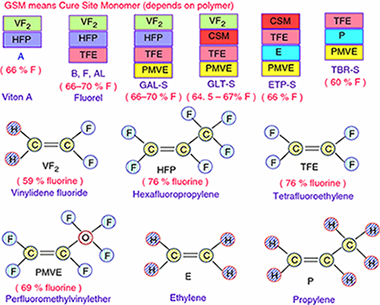
In this paper, the thermal degradation properties of Viton A and Fluorel are investigated by both isoconversional and combined kinetic analysis methods using non-isothermal thermogravimetry technique. It has been found that the heating rate has little affect on the degradation residue of Fluorel and Viton A, where around 1.3% char was formed for Fluorel and…

Structure evolution in the LaMn1 − xFexO3 + δ system by Rietveld analysis

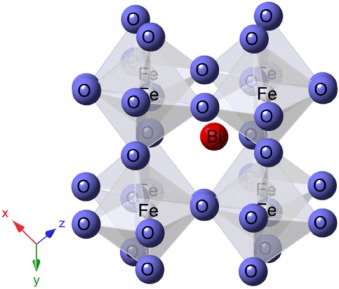
The synthesis of LaMn1 − xFexO3 + δ (0 ≤ x ≤ 1) solid solutions perovskite powder was carried out using high-energy milling from the constituent oxides, and further crystallization by high temperature treatment. The compositions of the crystalline phases as a function of x were determined by X-ray powder diffraction using a Rietveld refinement. The relationship between composition and structure was covered. This showed that…

Mechanochemical Solvent-Free Synthesis of Quaternary Semiconductor Cu-Fe-Sn-S Nanocrystals

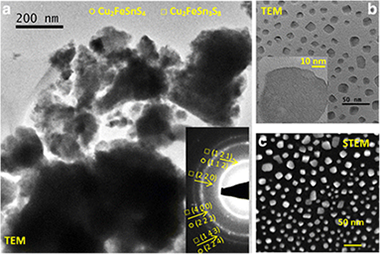
In this study, we demonstrate a one-pot mechanochemical synthesis of the nanocomposite composed of stannite Cu2FeSnS4 and rhodostannite Cu2FeSn3S8 nanocrystals using a planetary ball mill and elemental precursors (Cu, Fe, Sn, S). By this approach, unique nanostructures with interesting properties can be obtained. Methods of XRD, Raman spectroscopy, UV-Vis, nitrogen adsorption, SEM, EDX, HRTEM, STEM,…

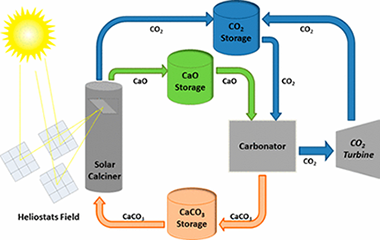
Effect of Thermal Pretreatment and Nanosilica Addition on Limestone Performance at Calcium-Looping Conditions for Thermochemical Energy Storage of Concentrated Solar Power

The share of renewable energies is growing rapidly, partly in response to the urgent need for mitigating CO2 emissions from fossil fuel power plants. However, cheap and efficient large-scale energy storage technologies are not yet available to allow for a significant penetration of renewable energies into the grid. Recently, a potentially low-cost and efficient thermochemical…

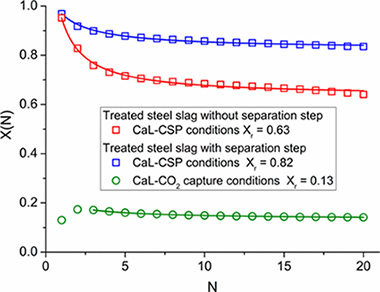
Large-Scale Storage of Concentrated Solar Power from Industrial Waste

Deep penetration of renewable energies into the grid relies on the development of large-scale energy storage technologies using cheap, abundant, and nontoxic materials. Concentrated solar power (CSP) is particularly suitable to massively store thermal energy for dispatchable electricity generation. This is currently accomplished in a few demonstration plants by using molten salts albeit in a…

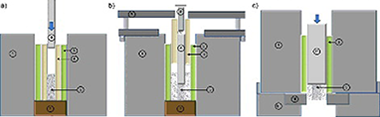
Processing and characterization of surrogate nuclear materials with controlled radial porosity

Irradiated fuel pellets present radial gradient porosity. CeO2 has been proven as a surrogate material to understand irradiated mixed oxide (MOX) due to its similar structural and mechanical properties. A novel compaction device was developed to produce CeO2 cylindrical pellets with controlled radial porosity. Three blends of CeO2 with different binder contents (0.5, 3 and…