Optimizing the homogenization technique for graphene nanoplatelet/yttria tetragonal zirconia composites: Influence on the microstructure and the electrical conductivity

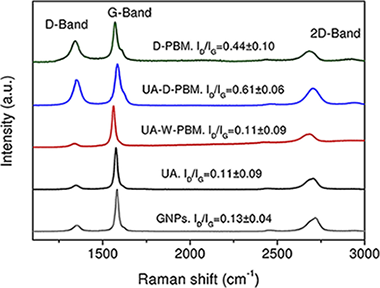
3 mol% yttria tetragonal zirconia polycrystalline (3YTZP) ceramic composite powders with 10 vol% nominal content of graphene nanoplatelets (GNPs) were prepared using four different homogenization routines: dispersion of the powder mixture by ultrasonication in isopropyl alcohol, homogenization in a high-energy planetary ball mill in wet or dry conditions after ultrasonication, and milling of the powders…

Study of the thermal decomposition of historical metal threads

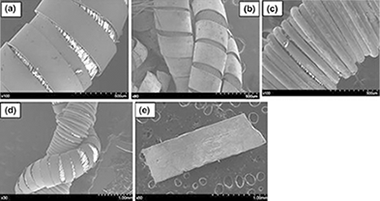
In this work, it is reported that thermal analysis techniques such as differential thermal analysis and thermogravimetric analysis are very useful for evaluating metals threads and fibres used in the manufacture of historical artifacts. Thermal analysis has been used to characterize the silk, cotton and linen employed as supports and the copper, silver and aluminium…

Isosymmetric structural phase transition of the orthorhombic lanthanum gallate structure as a function of temperature determined by Rietveld analysis

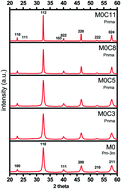
High energy planetary ball milling has been used to synthesize pseudo-cubic highly-pure LaGaO3 in one hour from its oxide components in an air atmosphere. Calcination at different temperatures led to the crystallization of lanthanum gallate in an orthorhombic structure with its local lanthanum coordination number environment changing from 12 to 7 when the temperature was…

The role of carbon nanotubes on the stability of tetragonal zirconia polycrystals

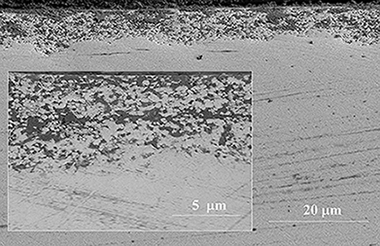
The effect of single walled carbon nanotubes (SWNT) at zirconia grain boundaries on the stability of a tetragonal zirconia polycrystalline matrix has been explored in as-sintered composites and after low temperature hydro thermal degradation (LTD) experiments. For this purpose, highly-dense 3 mol% Y2O3-doped tetragonal zirconia polycrystalline (3YTZP) ceramics and SWNT/3YTZP composites were prepared by spark…

Nanostructured vanadium carbonitride prepared by combustion synthesis during mechanical milling

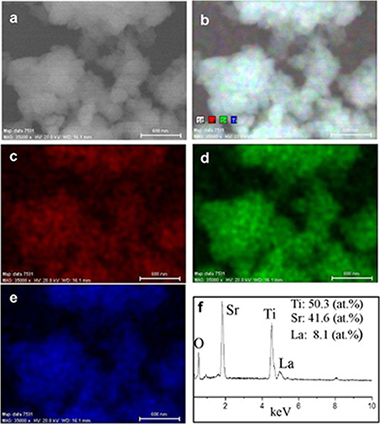
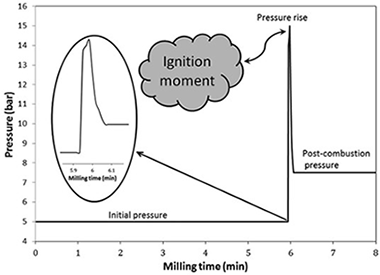
Vanadium carbonitride (VCN) nanoparticles were synthesized by a mechanically induced magnesiothermic combustion in a Mg/V2O5/C3H6N6 system. Initial materials ignited after a short milling time of 6 min. Various characterizations such as X-ray diffraction (XRD), X-ray photoelectron spectroscopy (XPS), energy-dispersive X-ray spectroscopy (EDX), high-resolution transmission electron microscopy (HRTEM) and elemental mapping confirmed that the product of…

Combined kinetic analysis of multistep processes of thermal decomposition of polydimethylsiloxane silicone

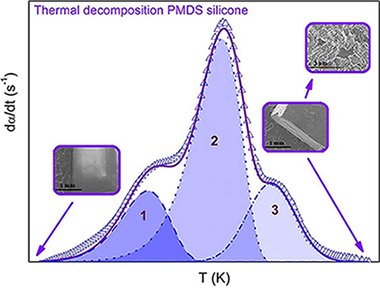
In this work, we studied the thermal decomposition of a widely employed silicone elastomer, polydimethylsiloxane, in an inert atmosphere. This silicone elastomer has several applications due to its high thermal stability such as MEMS (microelectromechanical systems) precursors, microfluidic components, adhesives, lubricants, and precursors for non-porous ceramics. Therefore, a reliable description of the thermal decomposition kinetics…

Synthesis, characterization and combined kinetic analysis of thermal decomposition of hydrotalcite (Mg6Al2(OH)(16)CO3 center dot 4H(2)O)

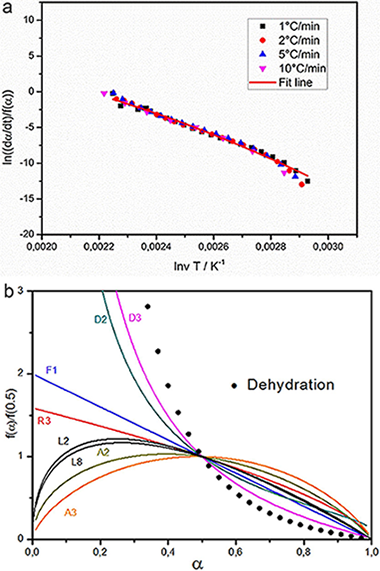
Here, a kinetic study of the thermal decomposition of synthesized hydrotalcite, Mg-6 Al-2 CO3(OH)(16)center dot H2O, has been carried out using thermogravimetric experiments in air atmosphere. It is shown that the thermal decomposition occurs in two well differentiated stages. The first one is a single-step dehydration process that comprises the release of four water molecules.…