A theoretical study of the bonding capabilities of the zinc-zinc double bond

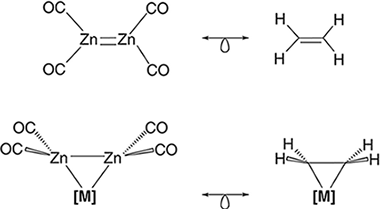
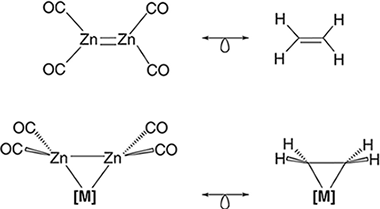
The theoretical knowledge about the zinc-zinc bond has been recently expanded after the proposal of a zinc-zinc double bond in several [Zn-2(L)(4)] compounds (Angew. Chem. Int. Ed.2017, 56, 10151-10155). Prompted by these results, we have selected the [Zn-2(CO)(4)] species, isolobally related to ethylene, and theoretically investigated the possible (2)-Zn-2-coordination to several first-row transition metal fragments.…

A theoretical study of the bonding capabilities of the zinc-zinc double bond

The theoretical knowledge about the zinc-zinc bond has been recently expanded after the proposal of a zinc-zinc double bond in several [Zn-2(L)(4)] compounds (Angew. Chem. Int. Ed.2017, 56, 10151-10155). Prompted by these results, we have selected the [Zn-2(CO)(4)] species, isolobally related to ethylene, and theoretically investigated the possible (2)-Zn-2-coordination to several first-row transition metal fragments.…

Anisotropic lattice expansion determined during flash sintering of BiFeO3 by in-situ energy-dispersive X-ray diffraction

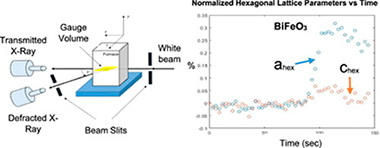
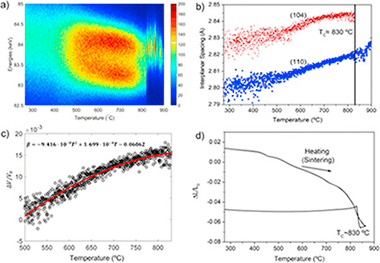
BiFeO3 has a Curie temperature (T-c) of 825 degrees C, making it difficult to sinter using conventional methods while maintaining the purity of the material, as unavoidably secondary phases appear at temperatures above T-c Flash sintering is a relatively new technique that saves time and energy compared to other sintering methods. BiFeO3 was flash sintered…

Mechanochemical combustion synthesis of vanadium carbide (VC), niobium carbide (NbC) and tantalum carbide (TaC) nanoparticles

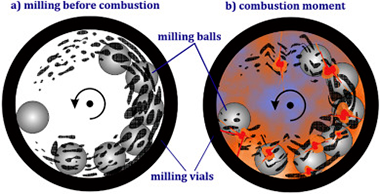
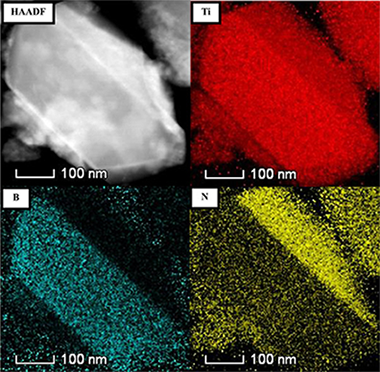
The nanoparticles of vanadium, niobium, and tantalum carbides were synthesized by a mechanically induced magnesiothermic combustion in the separate Mg/V2O5/C, Mg/Nb2O5/C, and Mg/Ta2O5/C systems. Initial materials in these systems ignited after short milling times of 10, 10, and 23 min, respectively. X-ray diffraction (XRD), X-ray photoelectron spectroscopy (XPS), energy-dispersive X-ray spectroscopy (EDS), high-resolution transmission electron…

Multicycle CO2 capture activity and fluidizability of Al-based synthesized CaO sorbents

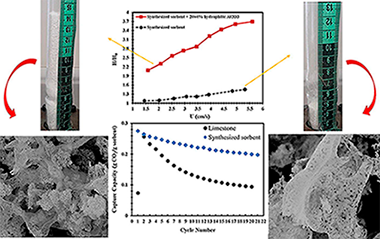
CaO-based materials have been identified as promising sorbents for highly efficient pre-combustion and post-combustion CO2 capture in fluidized beds operated at high temperatures by means of the Calcium Looping (CaL) process. However, Ca-based sorbents suffer from a decline of the capture capacity over multiple sorption/desorption cycles, mainly due to sintering, and from a markedly heterogeneous fluidization…

Insight into the BiFeO3 flash sintering process by in-situ energy dispersive X-ray diffraction (ED-XRD)

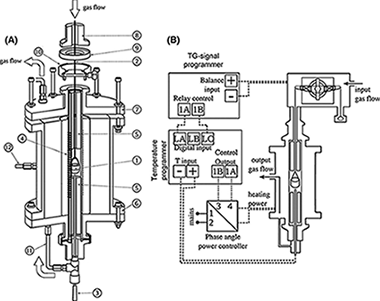
The sintering mechanism of BiFeO3 has been investigated in-situ by energy dispersive X-ray diffraction (ED-XRD) using a high-energy white collimated X-ray beam from the Advanced Photon Source (Argonne National Laboratories). Such radiation is very penetrating thereby allowing measurements of the sample even when placed inside the flash sintering set up. Additionally, the fast ED-XRD measurements permit monitoring the flash sintering process by…

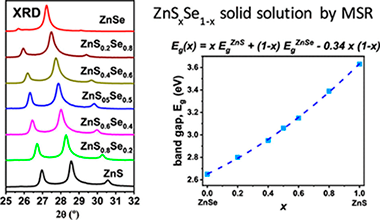
Tailoring the Band Gap in the ZnS/ZnSe System: Solid Solutions by a Mechanically Induced Self-Sustaining Reaction

The complete ZnSxSe1-x solid solution was successfully obtained by the mechanochemical process denoted as a mechanically induced self-sustaining reaction. Excellent control of the chemical stoichiometry of the solid solution was possible by adjusting the atomic ratio of the starting Zn/S/Se elemental mixture subjected to milling. A mixture of both wurtzite-2H (hexagonal) and zinc blende (cubic)…

Production of Ag-ZnO powders by hot mechanochemical processing

Ag-CdO composites are still one of the most commonly used electrical contact materials in low-voltage applications owing to their excellent electrical and mechanical properties. Nevertheless, considering the restriction on using Cd due to its toxicity, it is necessary to find alternative materials that can replace these composites. In this study, the synthesis of Ag-ZnO alloys…