Critical Influence of the Processing Route on the Mechanical Properties of Zirconia Composites with Graphene Nanoplatelets

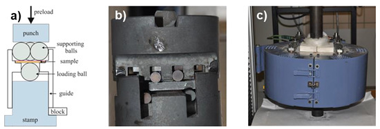
Graphene-based nanostructures, used as potential reinforcement in ceramic composites, have a great tendency to agglomerate. This requires the use of homogenization techniques during the powder processing, posing the need to evaluate how these techniques affect the microstructure and the mechanical properties of the resulting composites. The influence of the processing route on the properties of…

Control of experimental conditions in reaction flash-sintering of complex stoichiometry ceramics

The inherent potential of reaction flash-sintering for the preparation of complex oxides is evidenced by the one-step synthesis and densification of a ceramic of complex stoichiometry. The system Bi0.93La0.07FeO3, a multi-ferroic ceramic with promising technological applications, has been chosen. This system presents three different metals in its composition and it is extremely challenging to prepare…

Graphene-coated Ti-Nb-Ta-Mn foams: A promising approach towards a suitable biomaterial for bone replacement

The design of bone implants with proper biological and mechanical properties remains a challenge in medical implantology. The use of bioactive coatings has been shown to improve the biocompatibility of the implant surface. In this study, a new approach including porous scaffolds, beta-Ti alloys and nanocoatings to design new bone implants is presented. Porous Ti-Nb-Ta-xMn…

Synthesis of all equiatomic five-transition metals High Entropy Carbides of the IVB (Ti, Zr, Hf) and VB (V, Nb, Ta) groups by a low temperature route

The six possible equiatomic five-transition metal High Entropy Carbides (HECs) of the IVB (Ti, Zr, Hf) and VB (V, Nb, Ta) groups of the periodic table, i.e., TiZrHfVNbC5, TiZrHfVTaC5, TiZrHfNbTaC5, TiZrVNbTaC5, TiHfVNbTaC5 and ZrHfVNbTaC5, were successfully obtained via a powder metallurgy route at room temperature, specifically, by one-step diffusion mechanosynthesis starting from the elemental constituents…

Calcium-Looping Performance of Biomineralized CaCO3 for CO2 Capture and Thermochemical Energy Storage

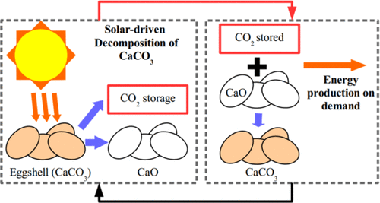
The commercial deployment of calcium-looping (CaL)-based technologies relies on the availability of nontoxic, widely available and cheap CaCO3 rich materials. Biomineralized CaCO3 from waste amply fulfills the aforementioned requirements. In the present work, we study the performance of eggshell and snail shell from food waste as CaO precursors for CaL applications. The results obtained suggest…

ICTAC Kinetics Committee recommendations for analysis of multi-step kinetics

The present recommendations have been developed by the Kinetics Committee of the International Confederation for Thermal Analysis and Calorimetry (ICTAC). The recommendations provide guidance on kinetic analysis of multi-step processes as measured by thermal analysis methods such as thermogravimetry (TGA) and differential scanning calorimetry (DSC). Ways of detecting the multi-step kinetics are discussed first. Then,…

Role of particle size on the multicycle calcium looping activity of limestone for thermochemical energy storage

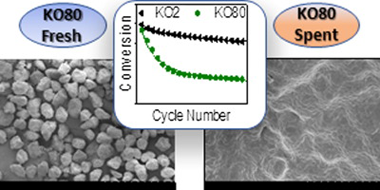
The calcium looping process, based on the reversible reaction between CaCO3 and CaO, is recently attracting a great deal of interest as a promising thermochemical energy storage system to be integrated in Concentrated Solar Power plants (CaL-CSP). The main drawbacks of the system are the incomplete conversion of CaO and its sintering-induced deactivation. In this work,…