Evaluation of rare earth on layered silicates under subcritical conditions: Effect of the framework and interlayer space composition

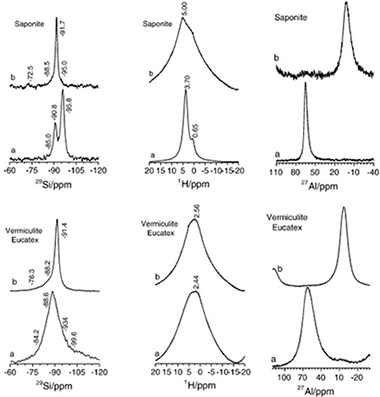
Clay-based minerals are considered to be an important component in backfill barriers due to both their ability to seal and adsorb radioactive waste and to interact chemically with it under subcritical conditions. Herein, we describe a systematic study of the properties of layered silicates that could affect their hydrothermal reactivity, namely type of layers, octahedral…

Solution Properties of the System ZrSiO4–HfSiO4: A Computational and Experimental Study

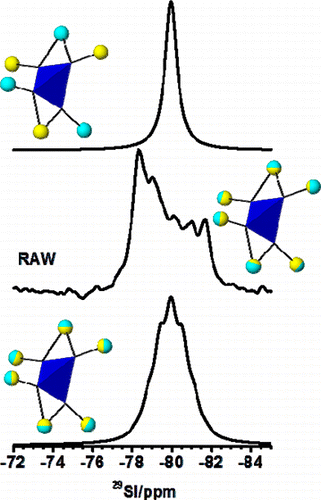
ZrSiO4 and HfSiO4 are of considerable interest because of their low thermal expansions, thermal conductivities, and the optical properties of HfSiO4. In addition, silicate phases of both are studied as model radioactive waste disposal materials. Previous first principles calculations reported near ideal mixing in the Zr1–xHfxSiO4 system, with a very weak propensity for phase separation.…

Effects of thermal and mechanical treatments on montmorillonite homoionized with mono- and polyvalent cations: Insight into the surface and structural changes

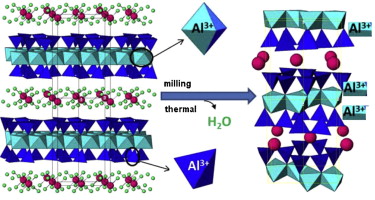
Smectite is a family of clay minerals that have important applications. In the majority of these clay minerals, the hydrated interlayer cations play a crucial role on the properties of the clay. Moreover, many studies have revealed that both thermal and grinding treatments affect the MMT structure and that interlayer cations play an important role…

Joining and interface characterization of in situ reinforced silicon nitride

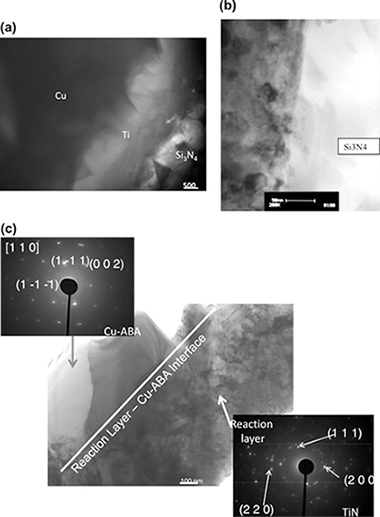
Copper-base active metal interlayers were used to bond in situ reinforced silicon nitride (Honeywell AS800) at 1317 K for 5 and 30 min in vacuum. The joints were characterized using scanning electron microscopy (SEM), energy dispersive spectroscopy (EDS), electron back scattered diffraction (EBSD), and transmission electron microscopy (TEM). A Ti-rich interaction zone (∼3.0–3.5 μm thick)…

Hydration properties of synthetic high-charge micas saturated with different cations: An experimental approach

An understanding of the interaction mechanisms between exchangeable cations and layered silicates is of interest from both a basic and an applied point of view. Among 2:1 phyllosilicates, a new family of swelling high-charge synthetic micas has been shown to be potentially useful as decontaminant. However, the location of the interlayer cations, their acidity and…

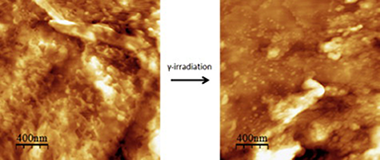
Chemical–physical characterization of isolated plant cuticles subjected to low-dose γ-irradiation

Isolated tomato fruit cuticles were subjected to low dose (80 Gy) γ-irradiation, as a potential methodology to prevent harvested fruit and vegetables spoilage. Both irradiated and non-irradiated samples have been morphologically and chemically characterized by scanning electron (SEM), atomic force (AFM), attenuated total reflectance Fourier transform infrared (ATR-FTIR) and X-ray photoelectron (XPS) spectroscopies. Additionally, electrochemical…

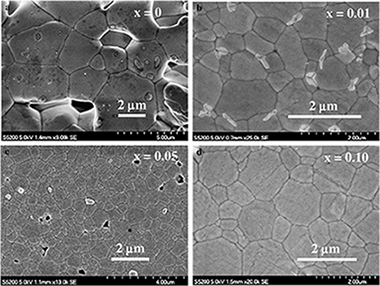
Effect of ytterbium doping on the microstructure and plastic deformation of BaCeO3 perovskite oxide

Trivalent cation-doped barium cerate perovskites are attractive materials for clean-energy applications, in particular solid oxide fuel cells, due to their singular proton conductivity in wet environments. Furthermore, these devices operate at high temperatures, where creep and other deformation processes determine the lifetime and overall performance. In this work, the structural and microstructural characteristics of undoped…