


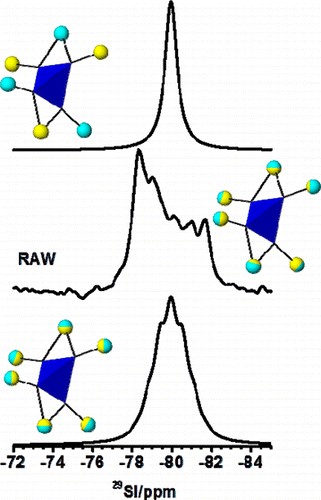
ZrSiO4 and HfSiO4 are of considerable interest because of their low thermal expansions, thermal conductivities, and the optical properties of HfSiO4. In addition, silicate phases of both are studied as model radioactive waste disposal materials. Previous first principles calculations reported near ideal mixing in the Zr1–xHfxSiO4 system, with a very weak propensity for phase separation. Density functional theory (DFT)/cluster-expansion first principles calculations presented in this work indicate near ideal mixing with a very weak propensity for ordering. Zr1–xHfxSiO4 samples (x = 0, 0.25, 0.5, 0.75, and 1.0) were synthesized from intimate stoichiometric mixtures of constituent-oxides and annealing at 1823 K for 20 days in a platinum crucible. Samples were characterized by X-ray diffraction (XRD; Rietveld analysis) and 29Si MAS NMR. The XRD data exhibited a pronounced negative deviation from Vegard’s law in the excess volume of mixing, and the 29Si MAS NMR spectra also suggest nonideal mixing. Given the very weak energetics that favor cation ordering, it is clear that there must be some other cause(s) for the observed deviations from ideal mixing behavior.