Antibacterial response of titanium oxide coatings doped by nitrogen plasma immersion ion implantation

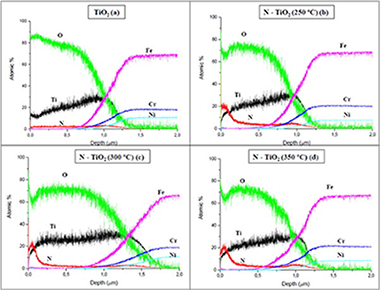
Plasma immersion ion implantation technology has been utilized to enhance the photocatalytic activity of the anatase phase of TiO2 thin films deposited by cathodic arc evaporation PVD. The main objective of this study is to shift the light absorbance of the titania in order to obtain antibacterial activity under visible light irradiation. TiO2 thin films, deposited on…

Tribological comparison of different C-based coatings in lubricated and unlubricated conditions

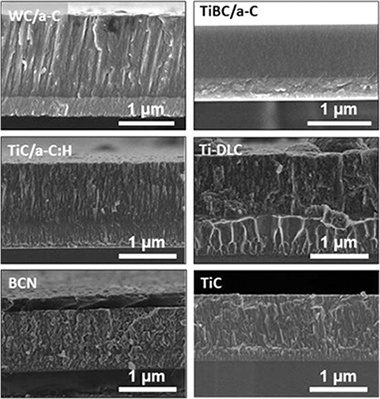
The use of carbon-based coatings (hydrogenated and non-hydrogenated DLC, doped and alloyed-DLC) is of wide interest due to its applications in mechanical components submitted to friction and wear including sliding parts in automotive engines. A tribological comparative analysis using a reciprocating (SRV) tester in lubricated and unlubricated conditions with a 4-stroke motor oil has been…

Combined reactive magnetron sputtering and plasma decomposition of non-volatile precursors to grow luminescent thin films

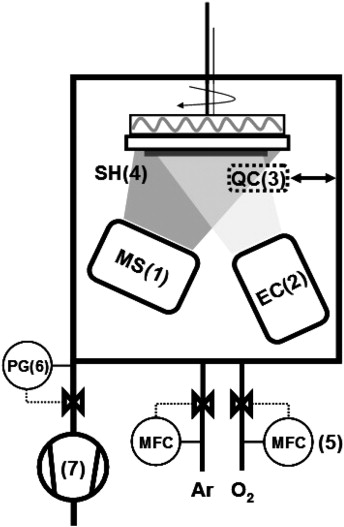
This paper reports a new procedure of the preparation of mixed oxide thin films that combines the traditional reactive magnetron sputtering deposition with the plasma activated decomposition of non-volatile precursors sublimated by means of an effusion cell. The possibilities of this new experimental procedure are illustrated with the preparation of luminescent thin films consisting of…

XPS and AES analyses of cerium conversion coatings generated on AA5083 by thermal activation

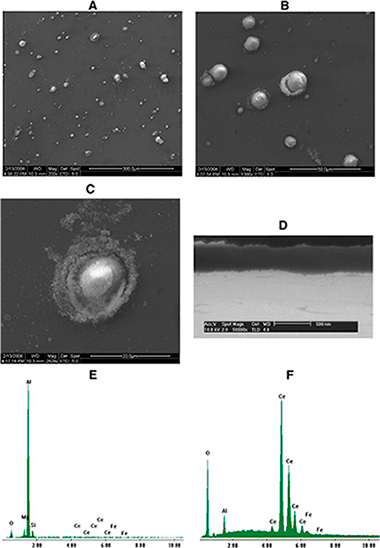
This paper describes the deep analysis of cerium conversion coatings developed with thermal activation on AA5083 under optimum processing conditions. Scanning electron microscopy (SEM), electron dispersive spectroscopy (EDX), X-ray photoelectron spectroscopy (XPS) and Auger electron spectroscopy (AES) were employed to study these layers. Ar+ sputtering was also employed to analyse the coatings’ core. Although conversion…

Influence of silver content on the tribomechanical behavior on Ag-TiCN bioactive coatings

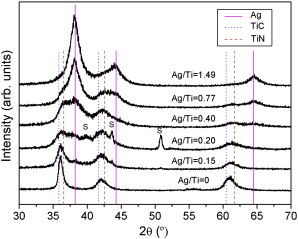
Surface modification of bulk materials used in biomedical applications has become an important prerequisite for better biocompatibility. In particular, to overcome the particle generation, low-wear coatings based on carbon (nitrogen) and containing antimicrobial elements such as silver are promising candidates. Thus, the present work explores the potentialities of silver-containing carbonitride-based (Ag-TiCN) thin films prepared by…

Analysis of multifunctional titanium oxycarbide films as a function of oxygen addition

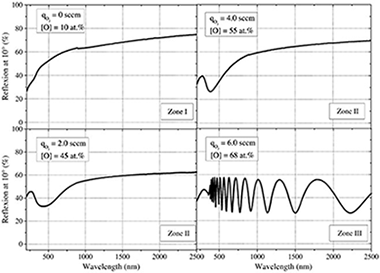
Reactive magnetron sputtering was used to deposit titanium oxycarbide thin films. The overall set of results showed that the oxygen flow rate, and thus the composition of the atmosphere in the deposition chamber, controls the composition of the titanium oxycarbide thin films obtained by reactive sputtering. Rutherford Backscattering Spectroscopy analysis revealed the existence of three…

Electrical properties and applications of carbon based nanocomposite materials: An overview

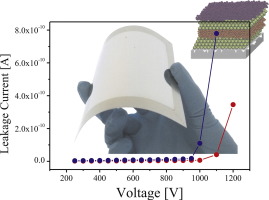
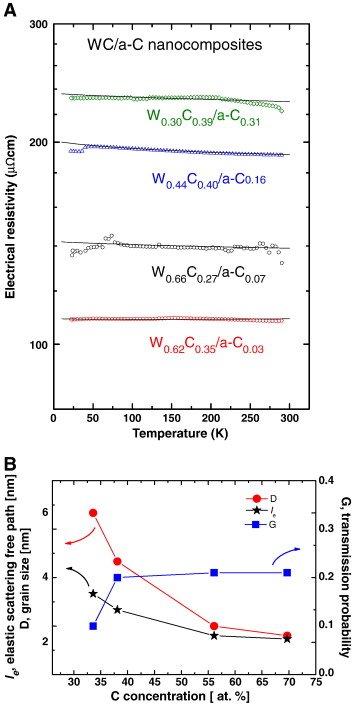
The allotropic forms of carbon (amorphous and polycrystalline graphite, carbon black, fullerenes, nanotubes, graphene) exhibit a large variety of charge transport properties which have been stimulating fundamental and applied research for the development of new devices based on micro and nano-sized electronic systems. Carbon based nanocomposites offer the possibility to improve the device performances and…