An overview of polymeric composite scaffolds with piezoelectric properties for improved bone regeneration

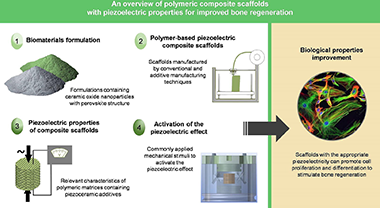
  Despite the dramatic change that Tissue Engineering or stem cell therapies have brought to current therapeutic strategies, there is a lack of functionalities in the available biomaterials for manufacturing scaffolds to treat several highly prevalent osseous diseases (osteochondral defects, osteoporosis, etc.). One promising approach to fill this gap involves the development of innovative piezoelectric scaffolds for improved bone regeneration. Scaffolds with the appropriate piezoelectricity can positively influence the proliferation and differentiation of mesenchymal…

Exchange bias and two steps magnetization reversal in porous Co/CoO layer

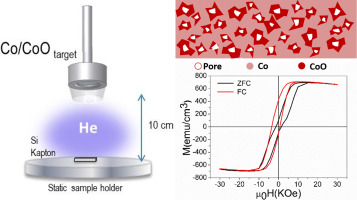
In this paper Co/CoO thick layers (hundreds of nanometers) of different porosity and oxidation degree were prepared in a magnetron sputtering deposition processby tailoring the DC sputtering power, as well as the process gas and target composition. The control of the synthesis parameters allowed the nanostructuration of the films with a singular distribution of closed pores and a controlled…

Development of a novel TiNbTa material potentially suitable for bone replacement implants

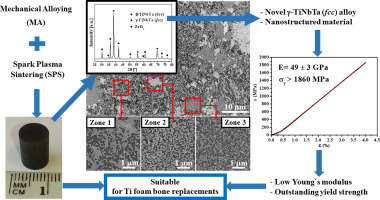
A novel (beta + gamma)-TiNbTa alloy has been developed by a combined low energy mechanical alloying (LEMA) and pulsed electric current sintering process (PECS). Microstructurally, this material presents interesting characteristics, such as a submicrometric range of particle size, a body-centered phase (beta-TiNbTa) and, mainly, a novel face-centered cubic Ti-based alloy (gamma-TiNbTa) not previously reported. Related…

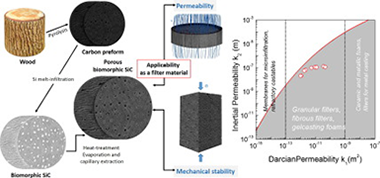
Permeability and mechanical integrity of porous biomorphic SiC ceramics for application as hot-gas filters

Biomorphic SiC is a biotemplated material fabricated by Si melt-infiltration of carbon preforms from wood pyrolysis. In this work, porous bioSiC ceramics from five different wood precursors, with porosities between 45 and 72% were studied for their feasibility in filtering applications. Gas permeability and mechanical stability were investigated as a function of the microstructure of…

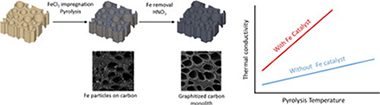
Thermal conductivity of Fe graphitized wood derived carbon

Graphitic porous carbon materials from pyrolysis of wood precursors were obtained by means of a nanosized Fe catalyst, and their microstructure and electrical and thermal transport properties investigated. Thermal and electrical conductivity of graphitized carbon materials increase with the pyrolysis temperature, indicating a relationship between the degree of graphitization and thus in crystallite size with…

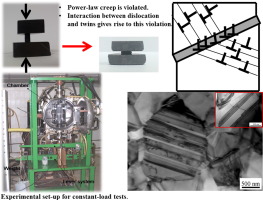
High-temperature deformation of fully-dense fine-grained boron carbide ceramics: Experimental facts and modeling

Boron carbide ceramics are the hardest material in Nature after diamond and the cubic phase of boron nitride. Due to this fact, their room-temperature fracture properties are the object of intense research. Paradoxically, high-temperature deformation is essentially unknown, because very high temperatures and stresses are necessarily required and high-quality specimens have not been available until…

Processing and characterisation of cermet/hardmetal laminates with strong interfaces

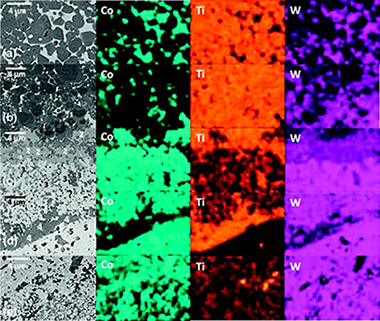
Cemented carbides and cermets are potential materials for high speed machining tools. However, cemented carbides are not chemically stable at high temperature and cermets present poor fracture toughness. Novel cermet/hardmetal multilayer systems show a huge potential for this intended application. It would be possible to achieve the right balance of the required thermomechanical properties using…

Analysis on the mechanical strength of WC-Co cemented carbides under uniaxial and biaxial bending

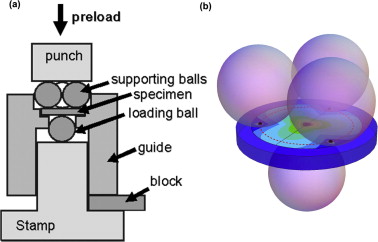
The mechanical strength of three WC-Co grades was determined and compared under uniaxial and biaxial bending. Uniaxial four-point bending was conducted on bar-shaped specimens; biaxial testing was performed on discs using the ball-on-three-balls (B3B) method. Strength results were analysed within the frame of the Weibull theory. Differences in characteristic strength between uniaxial and biaxial bending…