New findings on thermal degradation properties of fluoropolymers

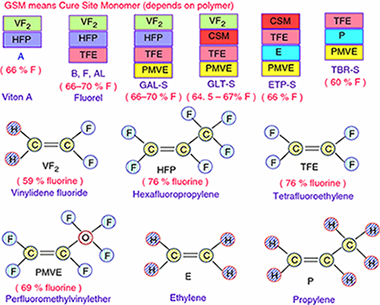
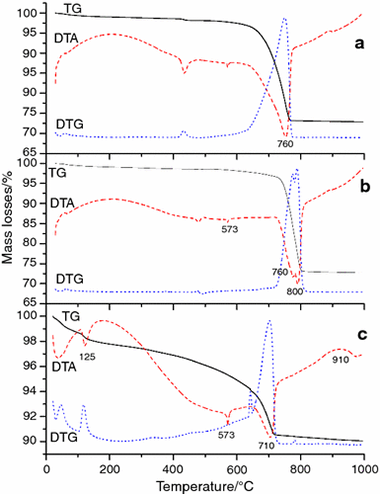
In this paper, the thermal degradation properties of Viton A and Fluorel are investigated by both isoconversional and combined kinetic analysis methods using non-isothermal thermogravimetry technique. It has been found that the heating rate has little affect on the degradation residue of Fluorel and Viton A, where around 1.3% char was formed for Fluorel and…

Study of coatings by thermal analysis in a monument built with calcarenite

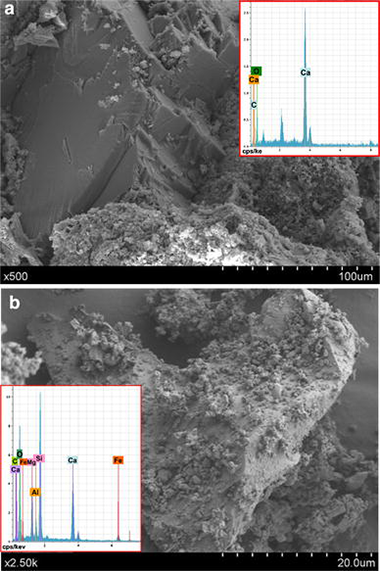
In this research, characterization of materials either added during restoration or formed by environmental contamination in the Seville City Hall, built with calcarenite stone, was investigated by thermal methods. Three different mortars for restoration have been characterized: (a) lime micro-mortar for internal consolidation of mortar itself, (b) mortar for reconstruction of deteriorated areas and (c)…

Kinetic approach to partially overlapped thermal decomposition processes

Practical usefulness of the kinetic deconvolution for partially overlapped thermal decomposition processes of solids was examined by applying to the co-precipitated basic zinc carbonate and zinc carbonate. Comparing with the experimental deconvolutions by thermoanalytical techniques and mathematical deconvolutions using different statistical fitting functions, performance of the kinetic deconvolution based on an accumulative kinetic equation for…

Thermal behaviour of ground and unground acid leached vermiculite

Acid leaching of vermiculite is an interesting procedure to prepare high surface area porous silica. Thermal behaviour of unground and ground vermiculite leached with HCl solutions has been studied by TG, DTA, ETA and high temperature XRD. Important differences have been observed in the thermal behaviour of unground and ground vermiculite after the acid treatments.…

Thermal study of unaltered and altered dolomitic rock samples from ancient monuments – The case of Villarcayo de Merindad de Castilla la Vieja (Burgos, Spain)

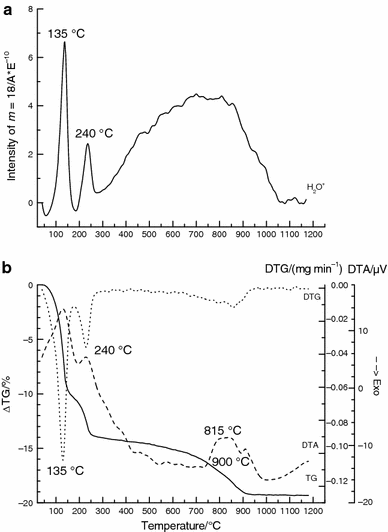
In this study, the decomposition behaviour of unaltered and altered dolomitic rock samples used in Cultural Heritage buildings was studied by simultaneous TG-DTA experiments at different atmospheres, X-ray diffraction in a high-temperature chamber, and evolved gas analysis. The components of dolomite rock samples and hydrated calcium oxalate formed during the alteration processes of the rocks…

Nonisothermal calorimetric study of the precipitation processes in a Cu-1Co-0.5Ti alloy

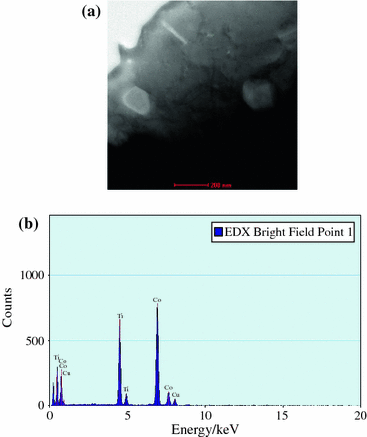
The precipitation processes in a Cu-1.0 at.%Co-0.5 at.%Ti (Cu-1.5 at.%Co2Ti) alloy were studied using differential scanning calorimetry (DSC), transmission electron microscopy (TEM), and microhardeness measurements. The analysis of the calorimetric curves from room temperature to 900 K shows the presence of two exothermic reactions attributed to the formation of CoTi and Co2Ti particles in the…

A thermal study approach to roman age wall painting mortars

Roman ancient mortars have been widely studied, in connection with both diagnosis and application required for restoring. Thermoanalytical experiments performed on mortars from Pompeii and Herculaneum provided a very good understanding of the technology employed. The mortars from Pompeii were obtained by the proper mixing of lime and marble grains while mortars of Herculaneum by…