Combined x-ray photoelectron spectroscopy and scanning electron microscopy studies of the LiBH4-MgH2 reactive hydride composite with and without a Ti-based additive

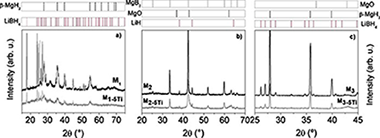
A detailed electronic and microstructural characterization is reported for the LiBH4-MgH2 reactive hydride composite system with and without titanium isopropoxide as additive. Surface characterization by x-ray photoelectron spectroscopy combined to a morphological study by scanning electron microscopy as well as elemental map composition analysis by energy dispersive x-ray emission are presented in this paper for…

On the microstructure of thin films grown by an isotropically directed deposition flux

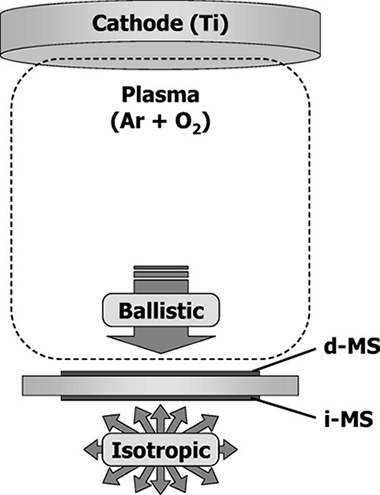
The influence of isotropically directed deposition flux on the formation of the thin film microstructure at low temperatures is studied. For this purpose we have deposited TiO2 thin films by two different deposition techniques: reactive magnetron sputtering, in two different experimental configurations, and plasma enhanced chemical vapor deposition. The obtained results indicate that films grown…

Magnetometry and electron paramagnetic resonance studies of phosphine- and thiol-capped gold nanoparticles

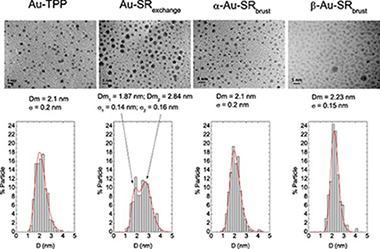
In the last years, the number of studies performed by wholly independent research groups that confirm the permanent magnetism, first observed in our research lab, for thiol-capped Au nanoparticles (NPs) has rapidly increased. Throughout the years, the initial magnetometry studies have been completed with element-specific magnetization measurements based on, for example, the x-ray magnetic circular…

Morphological evolution of pulsed laser deposited ZrO2 thin films

Morphological evolution of ZrO2 thin films deposited during pulsed laser deposition of Zr in O-2 atmosphere has been experimentally studied at two different film deposition temperatures, 300 and 873 K. The roughness exponent, alpha, the growth exponent, beta, the coarsening exponent, 1/z, and the exponent defining the evolution of the characteristic wavelength of the surface,…

WC/a-C nanocomposite thin films: Optical and electrical properties

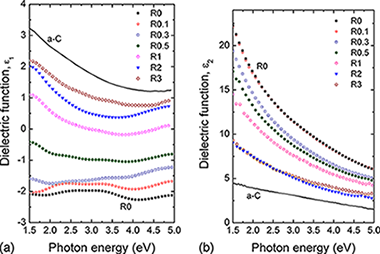
WC/amorphous carbon (a-C) thin films were deposited by dual magnetron sputtering from individual WC and graphite targets. The influence of film composition and microstructure on the optical and electrical properties was investigated. As evidenced by x-ray photoelectron spectroscopy and grazing angle x-ray diffraction measurements, the WC/a-C films are composite materials made of hexagonal W2C and/or…

Polymorphic transformation from body-centered to face-centered cubic vanadium metal during mechanosynthesis of nanostructured vanadium nitride determined by extended x-ray absorption fine structure spectroscopy

The pathway for vanadium nitride (VN) formation obtained by milling treatment has been traced out. At the initial stages of the process, the reactant, vanadium metal, showing body-centered cubic (bcc) structure, becomes highly distorted. Simultaneously, the formation of a small nucleus of the product, VN, takes place. X-ray absorption spectroscopy (XAS) has allowed the quantification…

Influence of the chemical and electronic structure on the electrical behavior of zirconium oxynitride films

This work is devoted to the investigation of decorative zirconium oxynitride, ZrOxNy, films prepared by dc reactive magnetron sputtering, using a 17:3 nitrogen-to-oxygen-ratio gas mixture. The color of the films changed from metallic-like, very bright yellow pale, and golden yellow, for low gas mixture flows [from 0 to about 9 SCCM (SCCM denotes cubic centimeter…