Dry Reforming of Ethanol and Glycerol: Mini-Review

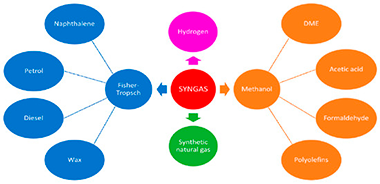
Dry reforming of ethanol and glycerol using CO2 are promising technologies for H-2 production while mitigating CO2 emission. Current studies mainly focused on steam reforming technology, while dry reforming has been typically less studied. Nevertheless, the urgent problem of CO2 emissions directly linked to global warming has sparked a renewed interest on the catalysis community…

Differences in the Catalytic Behavior of Au-Metalized TiO2 Systems During Phenol Photo-Degradation and CO Oxidation

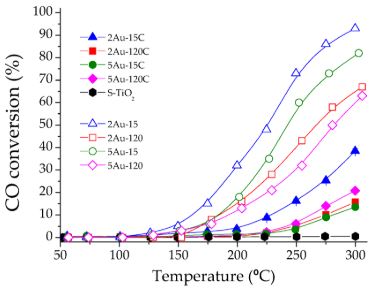
For this present work, a series of Au-metallized TiO2 catalysts were synthesized and characterized in order to compare their performance in two different catalytic environments: the phenol degradation that occurs during the liquid phase and in the CO oxidation phase, which proceeds the gas phase. The obtained materials were analyzed by different techniques such as XRF,…

Immobilization of Stabilized Gold Nanoparticles on Various Ceria-Based Oxides: Influence of the Protecting Agent on the Glucose Oxidation Reaction

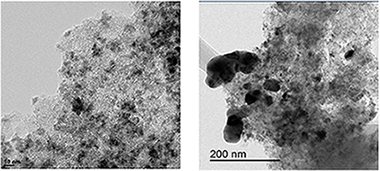
The influence of the protecting agent’s nature on gold particle size and dispersion was studied in this work over a series of gold-based catalysts. CO and glucose oxidation were chosen as catalytic reactions to determine the catalyst’s structure-activity relationship. The nature of the support appeared to be the predominant factor for the increase in activity,…

Fluorinated and Platinized Titania as Effective Materials in the Photocatalytic Treatment of Dyestuffs and Stained Wastewater Coming from Handicrafts Factories

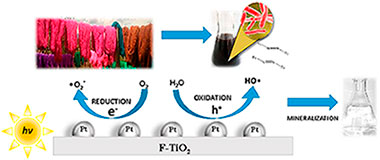
In this study, commercial and lab-prepared TiO2 were modified by fluorination and platinum photodeposition; and the effect of these modifications over the physicochemical and photocatalytic properties of TiO2 was evaluated. It was found that F and Pt addition leads to the modification of the optical and textural properties of TiO2. The materials prepared were tested in the…

Policies and Motivations for the CO2 Valorization through the Sabatier Reaction Using Structured Catalysts. A Review of the Most Recent Advances

The current scenario where the effects of global warming are more and more evident, has motivated different initiatives for facing this, such as the creation of global policies with a clear environmental guideline. Within these policies, the control of Greenhouse Gase (GHG) emissions has been defined as mandatory, but for carrying out this, a smart…

Understanding the differences in catalytic performance for hydrogen production of Ni and Co supported on mesoporous SBA-15

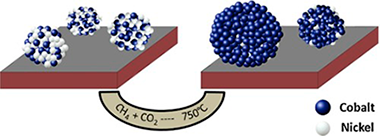
Three mono and bimetallic NixCo1-x/SBA-15 catalysts (x = 1, 0.5 and 0) with a total metallic content of 10 wt% have been prepared by a deposition-precipitation (DP) method. The catalytic performances on the dry reforming of methane reaction (DRM) have been determined and correlated with their physical and chemical state before and after the catalytic…

Au/CeO2 Catalysts: Structure and CO Oxidation Activity

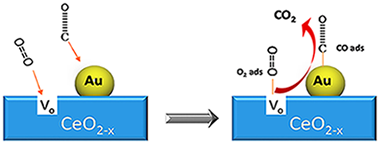
In this comprehensive review, the main aspects of using Au/CeO2 catalysts in oxidation reactions are considered. The influence of the preparation methods and synthetic parameters, as well as the characteristics of the ceria support (presence of doping cations, oxygen vacancies concentration, surface area, redox properties, etc.) in the dispersion and chemical state of gold are revised.…

Ni-CeO2/C Catalysts with Enhanced OSC for the WGS Reaction

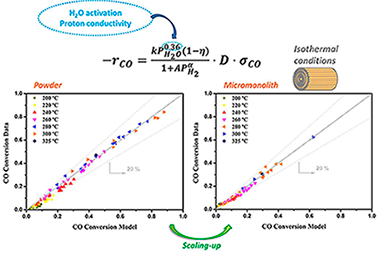
In this work, the WGS performance of a conventional Ni/CeO2 bulk catalyst is compared to that of a carbon-supported Ni-CeO2 catalyst. The carbon-supported sample resulted to be much more active than the bulk one. The higher activity of the Ni-CeO2/C catalyst is associated to its oxygen storage capacity, a parameter that strongly influences the WGS…