Formic Acid Dehydrogenation over a Monometallic Pd and Bimetallic Pd:Co Catalyst Supported on Activated Carbon

In this study, palladium is proposed as an active site for formic acid dehydrogenation reaction. Pd activity was modulated with Co metal with the final aim of finding a synergistic effect that makes possible efficient hydrogen production for a low noble metal content. For the monometallic catalysts, the metal loadings were optimized, and the increase in the reaction temperature and presence of additives were carefully considered. The…

CO2 Methanation over Nickel Catalysts: Support Effects Investigated through Specific Activity and Operando IR Spectroscopy Measurements

Renewed interest in CO2 methanation is due to its role within the framework of the Power-to-Methane processes. While the use of nickel-based catalysts for CO2 methanation is well stablished, the support is being subjected to thorough research due to its complex effects. The objective of this work was the study of the influence of the…

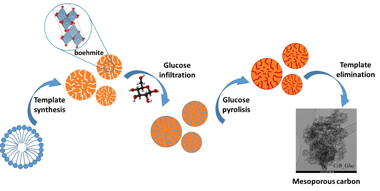
Methanation of CO2 over High Surface Nickel/Aluminates Compounds Prepared by a Self-Generated Carbon Template

Catalytic gas-phase hydrogenation of CO2 into CH4 was tested under three different nickel/aluminate catalysts obtained from precursors of hexaaluminate composition (MAl16O19, M = Mg, Ca, Ba). These catalysts were prepared using a carbon template method, where carbon is self-generated from a sol-gel that contains an excess of citric acid and the Al and M salts…

LaFeO3 Modified with Ni for Hydrogen Evolution Via Photocatalytic Glucose Reforming in Liquid Phase

In this work, the optimization of Ni amount on LaFeO3 photocatalyst was studied in the photocatalytic molecular hydrogen production from glucose aqueous solution under UV light irradiation. LaFeO3 was synthesized via solution combustion synthesis and different amount of Ni were dispersed on LaFeO3 surface through deposition method in aqueous solution and using NaBH4 as reducing agent. The prepared samples…

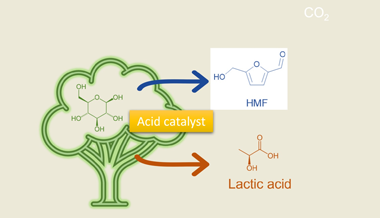
Recent Advances in the Bronsted/Lewis Acid Catalyzed Conversion of Glucose to HMF and Lactic Acid: Pathways toward Bio-Based Plastics

One of the most trending topics in catalysis recently is the use of renewable sources and/or non-waste technologies to generate products with high added value. That is why, the present review resumes the advances in catalyst design for biomass chemical valorization. The variety of involved reactions and functionality of obtained molecules requires the use of…

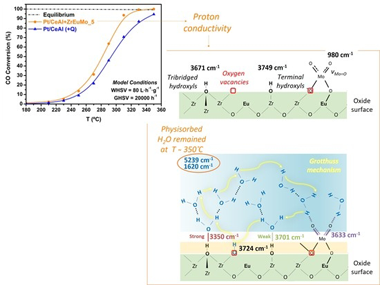
Elucidation of Water Promoter Effect of Proton Conductor in WGS Reaction over Pt-Based Catalyst: An Operando DRIFTS Study

A conventional Pt/CeO2/Al(2)O(3)catalyst physically mixed with an ionic conductor (Mo- or Eu-doped ZrO2) was tested at high space velocity (20,000 h(-1)and 80 L h(-1)g(cat)(-1)) under model conditions (only with CO and H2O) and industrial conditions, with a realistic feed. The promoted system with the ionic conductor physically mixed showed better catalytic activity associated with better…

Catalytic Performance of Bulk and Al2O3-Supported Molybdenum Oxide for the Production of Biodiesel from Oil with High Free Fatty Acids Content

Non-edible vegetable oils are characterized by high contents of free fatty acids (FFAs) that prevent from using the conventional basic catalysts for the production of biodiesel. In this work, solid acid catalysts are used for the simultaneous esterification and transesterification with methanol of the FFAs and triglycerides contained in sunflower oil acidified with oleic acid.…